
Israel–Hamas Ceasefire Agreement: A Step Toward Peace? – OpEd
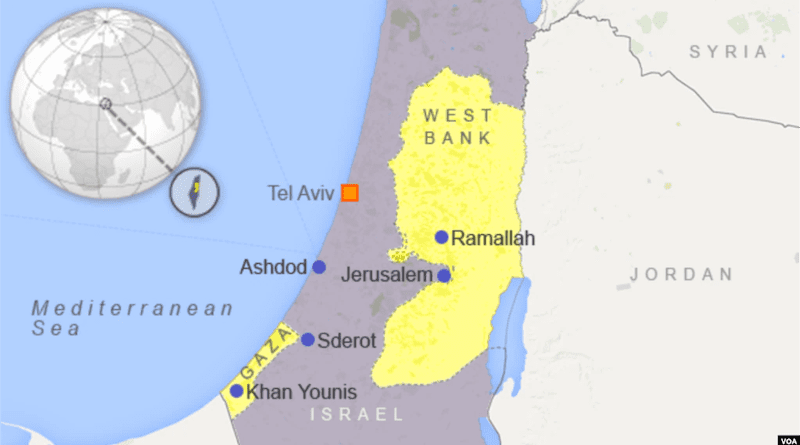
On 9 October 2025, a historic ceasefire deal was declared between Israel and Hamas, which could mark the end of a long and destructive war in Gaza. Following prolonged negotiations facilitated by Qatar, Egypt, and Turkey, both countries accepted a gradual settlement.
The initial step is the liberation of all Israeli prisoners of Hamas as well as a partial Israeli withdrawal from Gaza. In its turn, Israel is supposed to set free a range of 1,700 Palestinian detainees over 72 hours. This historic agreement that involves the biggest-ever prisoner exchange is being celebrated as a breakthrough particularly following years of bloodshed and diplomatic failure. The key to these negotiations is President of the U.S., Donald Trump, whose involvement in the agreement has been central, although he had an unpopular rule.
Humanitarian Impact and Global Efforts
The value of this ceasefire cannot be overestimated. The war that has been going on for more than two years has taken the lives of an estimated 67,000 Palestinians and Gaza was devastated. The total amount of suffering, the human toll of the conflict, including the demolition of hospitals, schools, and important infrastructure, has led to an epic humanitarian emergency. The world community, fed up with the failure of the earlier peace initiatives, has been trying desperately hard to find a way to bring the violence to a stop. The ceasefire is a significant step in that quest, as it provided a beacon of hope on both sides of the war which were tired of it.
Trump’s Diplomatic Role
The least expected, perhaps, is the part played by Donald Trump in mediating this ceasefire. Trump has been a controversial figure in his career partly due to his unusual method of diplomacy. In this case though, his talent to take both Israel and Hamas to the table has been very essential. The controversies that were characteristic of his foreign policy notwithstanding, the role that Trump played in this negotiation highlights the idea of pragmatism which, this time, at least, achieved tangible outcomes. His interaction with both and his way of drawing them to a solution shows a side of his diplomatic style that has not been well noticed and that is his capacity to make things happen however unorthodox the methods might be where conventional diplomacy fails to succeed.
The Prisoner Swap Disagreement
However, even though the ceasefire is a spectacular success, it is not a panacea to the larger Israeli-Palestinian battle. The prisoner swap is the direct subject of the agreement, but this is already one of the issues that spark disagreement. Hamas has also insisted on the release of high-profile prisoners including Marwan Barghouti who is perceived as a symbol of Palestinian resistance yet a terrorist to Israel. Israel has made it clear that it will not free people who organised fatal attacks to add a complexity to the bargain. This stalemate concerning the issue of releasing prisoners demonstrates one of the key problems in the future which is to tackle the long-standing resentment of both parties.
Political Challenges in Israel
There are other challenges brought about by the political situation in Israel. Far-right personalities, especially Finance Minister Bezalel Smotrich, have spoken against the ceasefire with a lot of force, stating that it would compromise the security interests of Israel by letting go of the prisoners who were involved in the acts of violence. This in-house rift is the echoing of the greater political divide in Israel, where national security matters are routinely given precedence over humanitarian ones. The ceasefire will not only be successful when Hamas has to be committed but also when Israel can cope with these internal challenges.
Unresolved Core Issues
The agreement fails to cover the fundamental issues that have been the source of the conflict over the decades. The issue of Jerusalem as the status, the right of returning Palestinian refugees, and the future control of the territory of Gaza are unsolved. Hamas is still in control of Gaza even after signing the ceasefire and this is why any lasting peace agreement between the two will be hard. The international community has been pushing to have a two-state solution to solve these problems, yet this has not been forthcoming. The ceasefire is important, but it is merely a stop-gap action that does not do much to solve the political and territorial issues that remain to be at the root causes of violence.
Regional Mediation Efforts
Other key players in the mediation process have included the role of the regional players like Qatar and Turkey. The two countries have been criticised as encouraging Hamas in the recent past, however the fact that they were the ones that brokered the ceasefire shows that even those actors with complicated relationships to the conflict can aid the peace. Their interest is a sign of the changing aspect of the diplomacy in the Middle East whereby old blocs are occasionally put aside to embrace practical negotiations. The possibility of other regional actors, who were considered as the enemies, to positively contribute to conflict resolution is also brought to light through this ceasefire.
Global Role and Future Prospects
In the future, the global community should also not be complacent so that the ceasefire is not just a moment of calmness between the fighting but the first step towards permanent peace. Although the influence of Trump in the deal is undeniably critical, it is evident that the entire world community will be critical in endorsing its implementation. An example is the Biden administration, which should strive to make sure that Israel and Hamas comply with the conditions of the ceasefire and international attention is not diverted too soon with the humanitarian needs of Gaza. Whether this ceasefire is successful and any other possible peace agreement is to be achieved will rely on the long-term diplomacy and the global power.
Implementation and Outlook
The fate of this ceasefire will be identified in its implementation. Although the conditions have been accepted by both parties, the real issue will be to keep the peace. To Israel and Hamas, this agreement is a slim point of potential but history has proved that such moments are very brief unless it is followed by further dialogue and dedication. The global community will be keen on whether this ceasefire can be expanded and both parties can be able to take a step forward towards a more sustainable solution.
Conclusion
To sum up, the ceasefire of Israel and Hamas is a chance to be silent and peaceful in the country after years of violence and suffering. Although the roles of Donald Trump in brokering this deal cannot be ignored, the actual difficulty is yet to be faced. To have a lasting peace, none of the parties should be stuck in their trenches and the international community should maintain the efforts to resolve the bigger concern of the conflict. Peace will not come easily and the process will be lengthy and difficult but this ceasefire has given a ray of hope that this part can achieve success notwithstanding the odds. It will be determined how this moment is expanded to a wider resolution whether all the parties involved are committed to develop on the fragile peace that is currently in existence.

Like what you read?
Please consider supporting Eurasia Review. Thank you for your consideration!
