
Mamdani’s Victory And The Future Of US Politics – OpEd
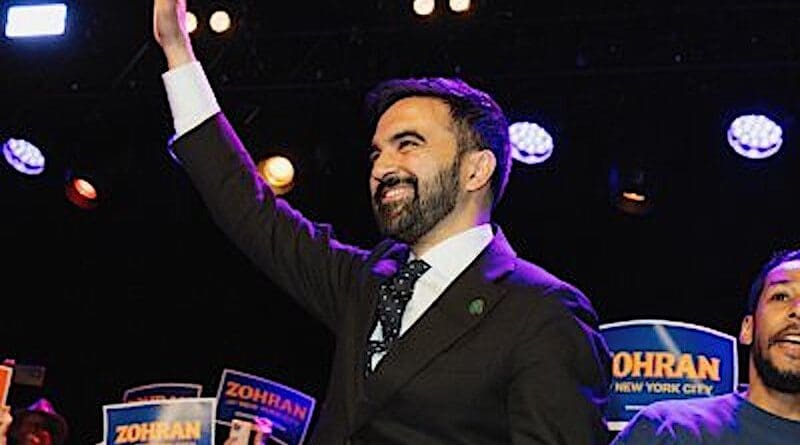
Zohran Mamdani’s election as the next mayor of New York City on November 4, 2025, is far more than a local political event. The 34-year-old democratic socialist’s victory is a seismic event in American politics. It signals a profound generational and ideological shift, posing a direct challenge to both the Democratic Party establishment and the national Republican leadership.
Mamdani’s win is historic on multiple levels. He is set to become New York’s first Muslim mayor, its first of South Asian heritage, and the youngest person to hold the office in more than a century. He achieved this not by moderating his message, but by amplifying it.
His victory was the culmination of a two-stage political upset. First, he defeated established party figures, including former Governor Andrew Cuomo, in the Democratic primary. Then, he won the general election decisively against Cuomo, who ran as an independent, and Republican Curtis Sliwa.
Mamdani’s platform was unapologetically progressive. He campaigned on, and won a mandate for, policies long considered radical in mainstream U.S. politics. These include a city-wide rent freeze, fare-free public buses, universal childcare, and the establishment of city-owned grocery stores to combat high food prices.
A New Political Playbook
The significance of Mamdani’s victory lies not just in what he promised, but how he won. His campaign discarded the traditional playbook of courting big-money donors and seeking establishment endorsements. Instead, it built a massive grassroots movement.
Reports indicate his campaign mobilized over 100,000 volunteers. It focused on small-dollar donations, contrasting sharply with the billionaire-backed effort of his rival, Andrew Cuomo. Mamdani’s team skillfully used social media to engage and activate a younger, more diverse electorate, leading to a surge in voter registration and turnout among citizens under 40.
This victory came despite, or perhaps because of, a hostile reception from establishment media. The New York Post, for example, greeted his win with a cover labeling the city “The Red Apple” and the headline, “On your Marx, get set, Zo!” The cover, intended as a warning, was ironically embraced by Mamdani’s supporters. Reports indicated the edition quickly sold out across the city, as people sought to buy a copy as a collector’s item. The incident demonstrated the declining power of old political labels and the establishment’s miscalculation of public sentiment.This “Mamdani model” proves that a candidate can win a major election by focusing on working-class economic issues. His campaign centered on a single theme: affordability. He argued that the city’s housing, transit, and food crises were not natural outcomes but the result of policy choices that favored profit over people. This message resonated deeply in a city struggling with a high cost of living.
A Divided Democratic Party
Mamdani’s rise exposes a deep and growing fracture within the Democratic Party. He is a member of the Democratic Socialists of America (DSA), and his win is the most significant victory for the American left since Alexandria Ocasio-Cortez’s congressional primary win in 2018.
The Democratic establishment, including national leaders like Senator Chuck Schumer, did not endorse Mamdani. His victory is widely seen as an indictment of the party’s elite, who are perceived by a growing number of progressive voters as being too close to corporate interests and disconnected from the economic anxieties of ordinary people.
This win now forces a difficult choice upon the national Democratic leadership. They can either embrace the energy and popular policies of their progressive wing or risk further alienating a base that is clearly demanding more fundamental change.
Moderate Democrats warn that Mamdani’s socialist-inspired platform is not transferable to more politically competitive states and districts. They fear that the “socialist” label will be a potent weapon for Republicans in the 2026 midterm elections. This internal ideological conflict is set to define the party’s future.
A New National Flashpoint
The implications of Mamdani’s victory extend directly to the White House. President Donald Trump, who returned to office in January 2025, actively campaigned against Mamdani. He called the candidate a “Communist lunatic” and threatened to cut federal funding to New York City if he won.
This has set the stage for a major political collision. Mamdani, in his victory speech, directly addressed the president, vowing that New York would be a center of resistance to his administration’s policies.
This creates a new, high-profile flashpoint in U.S. politics: a deeply progressive, immigrant-led city administration in direct opposition to a nationalist federal government. The battle over federal funding, immigration, and public policy between New York City and Washington D.C. will likely become a central narrative in American politics.
Furthermore, Mamdani’s success has altered the political calculus on sensitive issues. He was a vocal critic of Israel’s policies, a position long considered politically disqualifying. His victory suggests a generational shift, particularly among younger voters, who are less bound by traditional foreign policy orthodoxies.
The Future
Zohran Mamdani’s election is not a local anomaly. It is a powerful illustration of emerging political trends. It demonstrates the growing power of grassroots organizing over traditional political machinery and high-dollar fundraising.
His victory validates a political strategy centered on clear, material, working-class issues. It also signals a generational revolt against the economic and political status quo.
The “Mamdani model” will be studied by aspiring progressive candidates across the country. Simultaneously, the Republican Party will use his win to paint the entire Democratic Party as extremist. The Democratic establishment is caught in the middle. Mamdani’s victory did not just win him an office; it has-fundamentally altered the terms of the debate about the future of U.S. politics.

Like what you read?
Please consider supporting Eurasia Review. Thank you for your consideration!
