
Pakistan Emerges As China’s Third-Largest Construction Stone Supplier In 2025 – OpEd
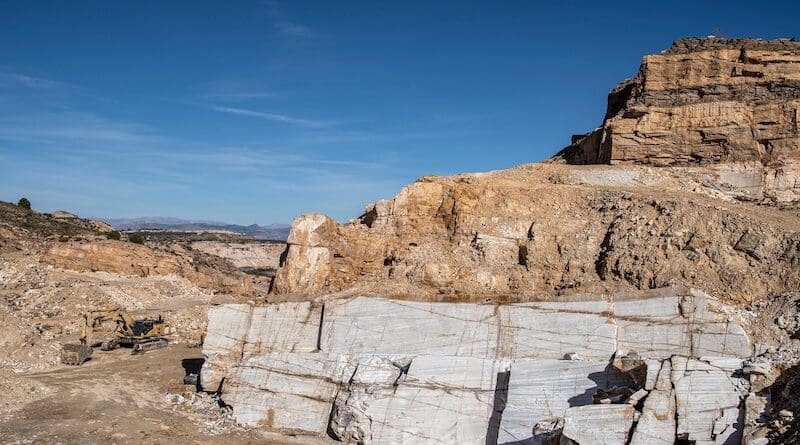
Pakistan has achieved a significant breakthrough in its mineral export sector, ranking as China’s third-largest supplier of construction stone in 2025. The development reflects strengthening trade ties between Islamabad and Beijing and highlights Pakistan’s growing competitiveness in the global stone market. With exports reaching 31.74 million kilograms of calcareous building stone valued at $8.10 million, Pakistan has demonstrated its expanding footprint in one of the world’s largest construction economies.
The milestone not only underscores rising Chinese demand for building materials but also signals Pakistan’s gradual transition toward value-added mineral exports.
Official Trade Data Confirms Pakistan’s Rising Position
According to figures released by the General Administration of Customs of China (GACC), Pakistan exported 31.74 million kilograms of calcareous building stone to China in 2025, with a total value of $8.10 million. In this category, Türkiye secured first position, followed by Bulgaria, while Pakistan claimed third place.
Although Türkiye and Bulgaria continue to dominate in volume and market share, Pakistan’s ascent to third position represents a notable achievement. The ranking demonstrates that Pakistani stone products are increasingly competitive in terms of quality, pricing, and supply consistency.
China’s construction industry—driven by urban development, infrastructure expansion, and interior design trends—remains one of the largest consumers of natural stone globally. Securing a strong position in this market provides Pakistan with both economic opportunity and long-term trade leverage.
Growing Demand from China’s Construction and Interior Sectors
China’s rapid urbanization and ongoing infrastructure projects continue to fuel demand for imported construction materials, including marble, onyx, and calcareous stone. Pakistani stone is widely appreciated for its natural textures, distinctive patterns, and color variations, making it suitable for flooring, wall cladding, countertops, and decorative installations.
Industry representatives note that demand for Pakistani marble and onyx typically rises ahead of the Chinese New Year. During this period, decorative installations, commercial refurbishments, and culturally inspired architectural designs increase significantly. Onyx, in particular, is favored for high-end interior décor due to its translucent qualities and aesthetic appeal.
This seasonal surge provides a timely revenue boost to Pakistani exporters and supports production cycles in mining regions across the country.
Shift Toward Value-Added Marble Exports
Beyond raw stone shipments, 2025 has witnessed a slight increase in exports of cut marble products. This development signals gradual progress toward value addition in Pakistan’s stone industry.
For decades, Pakistan’s mineral exports largely consisted of raw blocks or minimally processed materials, limiting profit margins and reducing potential foreign exchange earnings. However, the rise in processed marble exports suggests that industry players are beginning to invest in modern cutting, polishing, and finishing facilities.
Value-added exports not only command higher prices in international markets but also strengthen branding opportunities and improve long-term sustainability. By exporting finished and semi-finished products rather than raw materials, Pakistan can significantly enhance its revenue potential and reduce vulnerability to price volatility.
Boost for Small and Medium-Sized Enterprises (SMEs)
The marble and onyx sector in Pakistan is predominantly composed of Small and Medium-sized Enterprises (SMEs). These businesses operate quarries, processing units, and polishing facilities in regions such as Khyber Pakhtunkhwa, Balochistan, and Punjab.
Increased exports to China are expected to generate higher revenues for these enterprises, creating employment opportunities and stimulating local economies. Seasonal demand spikes before major Chinese festivals further support cash flow and production planning for SMEs.
As export volumes grow, smaller operators may also gain greater access to financing, improved machinery, and training programs aimed at enhancing product quality and meeting international standards.
Strengthening Pakistan–China Trade Diversification
Pakistan’s improved ranking in construction stone exports also contributes to broader trade diversification between the two countries. Historically, Pakistan’s exports to China have been concentrated in textiles, agricultural goods, and a limited range of raw materials.
The expansion of non-textile exports such as construction stone reduces dependence on a narrow export base and enhances trade resilience. Diversification is particularly important in a volatile global economic environment, where reliance on a few sectors can increase vulnerability to market fluctuations.
As bilateral trade deepens under broader economic cooperation frameworks, mineral exports may become a stronger pillar of Pakistan–China commercial relations.
Investment Potential in Mining and Mineral Development
Pakistan possesses vast reserves of marble, granite, and onyx, yet much of the sector continues to rely on outdated extraction techniques. High wastage rates and inconsistent quality standards have historically constrained competitiveness.
The growing Chinese market presence could attract fresh investment into Pakistan’s mining and mineral development sector. Technological upgrades, improved quarrying methods, and advanced processing equipment can enhance recovery rates and product quality.
Furthermore, partnerships with Chinese firms may facilitate knowledge transfer, quality certification improvements, and access to advanced machinery—positioning Pakistan as a more reliable and globally competitive supplier.
Enhancing Global Competitiveness Through Quality Standards
Sustaining third-place ranking will require consistent quality control and adherence to international environmental and safety standards. Global buyers are increasingly prioritizing responsible sourcing and sustainability in procurement decisions.
By investing in modern grading systems, standardized packaging, and environmentally responsible mining practices, Pakistan can strengthen its reputation in premium markets. Quality enhancement will be essential if the country aims to challenge higher-ranked suppliers in the future.
A Strategic Step Toward Export Resilience
Pakistan’s emergence as China’s third-largest construction stone supplier in 2025 is more than a statistical achievement. It represents a strategic step toward export resilience, value addition, and broader trade diversification.
With 31.74 million kilograms of calcareous building stone exported at a value of $8.10 million, alongside a gradual rise in processed marble shipments, Pakistan’s stone industry is positioning itself for sustainable growth.
If supported by policy facilitation, technological modernization, and continued engagement with Chinese markets, the sector has the potential to move beyond raw material exports and establish itself as a competitive player in the global value-added stone industry.

Like what you read?
Please consider supporting Eurasia Review. Thank you for your consideration!

Export of raw construction material is a double-edged sword. On one hand, becoming China’s third-largest construction stone supplier reflects Pakistan’s growing export strength and economic potential. On the other, unchecked extraction without sustainable planning could denude local resources and harm future domestic construction needs. The real pride lies not just in exporting more, but in managing resources wisely for long-term national benefit.