
A War That Is Redrawing The Global Order – OpEd
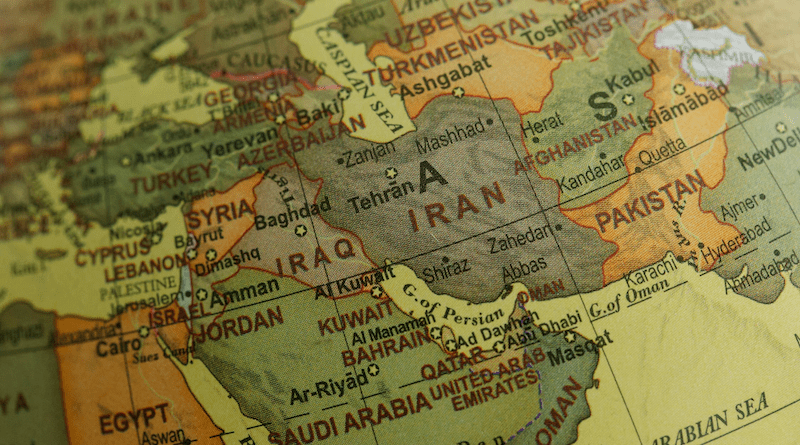
Wars often begin with the language of security and deterrence. Yet their consequences rarely remain confined to the battlefields where they start. The escalating confrontation involving Iran, the United States and Israel is increasingly revealing itself as more than a regional conflict. It is becoming a geopolitical turning point—one that could reshape the global order in ways that extend far beyond the Middle East.
For decades, the international system rested on a fragile balance. The United States maintained military dominance in key regions, global trade networks expanded under relatively stable rules and energy flows from the Gulf sustained economic growth across Asia and Europe. That order was imperfect, but it provided a degree of predictability.
Today, that predictability is eroding.
The conflict surrounding Iran has exposed how quickly regional crises can disrupt global systems. The Persian Gulf sits at the center of the world’s energy arteries, and even the threat of disruption to the Strait of Hormuz has sent tremors through oil markets and shipping networks. Insurance costs for tankers have surged, freight routes have been reconsidered and investors are increasingly wary of geopolitical risk. In a globalized economy, the geography of war is also the geography of commerce.
But the implications go far beyond energy.
The war is accelerating the fragmentation of the international system into competing blocs. The United States and its allies have framed the confrontation largely in terms of security and deterrence. Iran, meanwhile, increasingly finds support or strategic sympathy among countries that view Western dominance of the global system with skepticism. Russia and China, though cautious about direct involvement, see in the crisis an opportunity to challenge American influence and promote a more multipolar world.
The result is not merely a conflict between states, but a contest between visions of international order.
One vision favors a system still anchored by American power and alliances. The other envisions a looser multipolar structure where regional powers assert greater autonomy and Western dominance recedes. The Iran crisis has become one of the arenas in which this larger struggle is unfolding.
The ripple effects are already visible across regions far removed from the battlefield.
In South Asia, countries heavily dependent on Middle Eastern energy are confronting the economic consequences of instability in the Gulf. Rising oil prices strain fragile economies and deepen inflationary pressures. Millions of South Asian workers in Gulf states also depend on the region’s stability for their livelihoods, making the conflict a source of concern far beyond the immediate participants.
Europe faces its own vulnerabilities. Still recovering from the energy disruptions caused by the war in Ukraine, European economies remain sensitive to global fuel prices and trade disruptions. Another prolonged crisis in the Middle East could exacerbate inflation and complicate economic recovery across the continent.
Even global supply chains—already weakened by the pandemic and geopolitical tensions—are once again under strain. Airspace closures, shipping risks and energy volatility remind policymakers that globalization rests on assumptions of stability that can quickly collapse when conflict spreads.
Yet perhaps the most profound consequence of the crisis lies in the gradual normalization of confrontation in international politics. As diplomacy falters and military responses become the default tool of statecraft, the risk grows that regional conflicts will increasingly trigger wider systemic shifts.
History offers sobering lessons. Major transformations of the global order—from the aftermath of the First World War to the end of the Cold War—have often followed periods of intense conflict. The current crisis does not necessarily guarantee such an outcome, but it is accelerating trends that were already reshaping international politics: the erosion of unipolarity, the rise of competing power centers and the politicization of trade and energy networks.
None of this suggests that the grievances or security concerns of states should be dismissed. But the experience of the past century demonstrates that wars rarely resolve the deeper disputes that produce them. More often they redraw maps of influence while leaving underlying tensions unresolved.
If the present conflict continues to escalate, it could deepen divisions across regions and push the world further toward a fractured geopolitical landscape.
The alternative—however difficult—remains diplomacy. Negotiation does not erase differences, but it offers a mechanism for managing them without plunging entire regions into instability. In a world where the consequences of war reverberate through energy markets, trade routes and financial systems, restraint is not merely a moral preference. It is a strategic necessity.
The war unfolding around Iran is already reshaping the geopolitical landscape. The question now is whether the world will allow it to harden into a new era of confrontation—or whether diplomacy can still redirect the course of a global order under strain.

Like what you read?
Please consider supporting Eurasia Review. Thank you for your consideration!
