
From FATA To Balochistan: Pakistan’s Resolve Against Terrorism And External Destabilization – OpEd
Pakistan’s security scenario has always been dictated by intricate regional politics and militancy in the country. In such a scenario, it is often seen that the approach of the Pakistan Armed Forces towards dealing with internal and external aggressors is considered measured and defensive. There have often been complaints and perceptions of weakness and indecisiveness in the approach of the Armed Forces of Pakistan. However, it is essential to understand that history always proves that professionalism and measured approach should not be equated with weakness. Pakistan’s approach and capabilities in dealing with terrorism and internal militancy have always been commendable. For decades, Pakistan has been fighting against terrorism and militancy in the country. These forces of terrorism originated in the volatile region of Pakistan’s western border. The militancy in the erstwhile Federally Administered Tribal Areas (FATA) posed a direct threat to the sovereignty of Pakistan and its citizens. Pakistan was able to eliminate all such forces of terrorism and militancy with its sustained efforts and support of its citizens. These efforts were made at a huge cost for the country and its people.
One of the problems with which Pakistan has had to contend has been the presence of militant havens beyond its borders. There have been instances when Pakistan has struck with resolute purpose against the threats to its security and stability, which were indicated by reliable intelligence reports of an imminent threat. Such instances are important because they remind the world that, despite its love for diplomacy and stability, Pakistan has the capability to defend itself and ensure security against those who would challenge its authority. The armed forces of any country are not one to act rashly; they do so with purpose and only when the need arises.
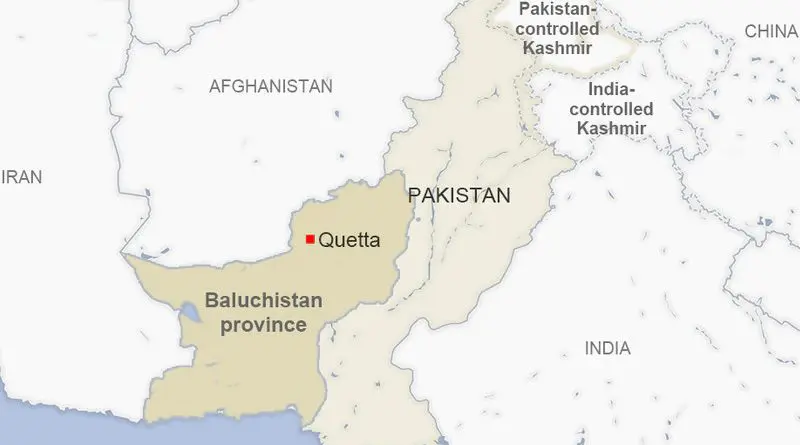
The context in which Pakistan has had to operate with regard to its security and the factors which impact its security must be considered. The tensions with India are one factor which has been a part of the geopolitics of the region for many years. Pakistan has been concerned, as has been clearly indicated, with the instability in places such as Balochistan, which has been caused by external interference with the objective of disrupting strategic projects such as the China-Pakistan Economic Corridor (CPEC).
Despite all these external factors, it is a matter of significant achievement that Pakistan has managed to bring peace to previously troubled areas. The merger of FATA into Khyber Pakhtunkhwa is a significant step in this regard. Such a step is a part of a larger policy that seeks to incorporate military action with political and social reforms. It is not possible to succeed in counterterrorism operations solely through military action. Such operations also require strengthening institutions and creating economic opportunities in areas that were previously affected by terrorism and conflict.
Another aspect of national resilience is a country’s ability to respond to crises that occur internally. One of the crises that Pakistan frequently experiences is economic in nature, specifically in the areas of fuel and energy management. In such a situation, it is important that coordination takes place between civil and state authorities to respond to such a crisis. Such a situation requires immediate administrative action to mitigate the impact of such a shortage and to sustain stability in a difficult situation.
The larger lesson from this recent history in Pakistan is that professionalism, preparation, and institutional discipline are far more important than rhetoric. History has consistently shown us throughout this conflict and countless others throughout history that speeches and rhetoric are not enough to win wars; strategy, capability, and unity are.
Pakistan’s future will continue to require this balance of strength and discipline, ensuring that military capability is married with restraint, and security is married with economic development and diplomacy. In a region marked by uncertainty, Pakistan’s future will not only be marked by military capability, but also by building strong institutions, developing its economy, and engaging in regional dialogue.
Professionalism should never be confused with weakness; rather, it is the hallmark of a state that desires peace but is prepared to defend its sovereignty when necessary.

Like what you read?
Please consider supporting Eurasia Review. Thank you for your consideration!
