
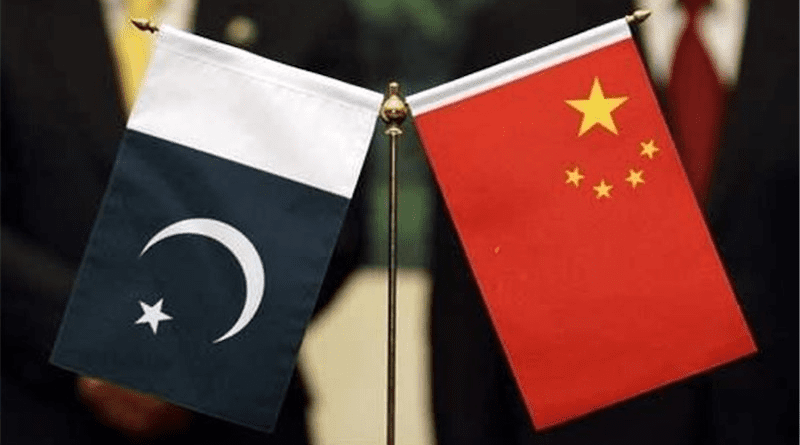
China And Pakistan: An Ironclad Alliance In A Shifting World – OpEd
In Beijing this week, China and Pakistan did what they have done for decades: they reaffirmed an “ironclad” partnership. What made the moment notable was not the language — familiar, ritualized, almost immune to irony — but the timing.
On Jan. 5, 2026, senior Chinese and Pakistani officials met to deepen cooperation across diplomacy, security, trade and investment, with a clear decision to upgrade the China–Pakistan Economic Corridor. The talks unfolded as Pakistan cautiously rebuilds ties with the United States and as the broader region tilts under the weight of great-power competition. In another era, such parallel diplomacy might have raised eyebrows in Beijing. This time, it did not.
That alone says much about how China now views Pakistan — and how both countries are recalibrating their roles in a shifting geopolitical landscape.
For Beijing, Pakistan remains indispensable. It is China’s strategic anchor in South Asia, its most reliable defense partner in the Muslim world and the geographic hinge connecting western China to the Arabian Sea. CPEC, often described as the flagship of the Belt and Road Initiative, was never merely an economic project. It was conceived as a long-term bet on access, influence and strategic depth. Upgrading it now signals that China is doubling down, not retreating, even as Belt and Road investments elsewhere slow or are reassessed.
For Islamabad, the reaffirmation carries a different urgency. Pakistan’s economy remains fragile, its security environment volatile and its diplomatic room for maneuver constrained. In recent months, Islamabad has sought to stabilize relations with Washington, driven by financial necessity and regional security concerns. Yet Pakistan’s leadership appears keen to demonstrate that renewed engagement with the United States is not a pivot away from China, but an attempt at balance.
The Beijing talks were designed to send precisely that message.
Chinese officials publicly acknowledged Pakistan’s enhanced security measures for Chinese nationals and CPEC projects — an implicit recognition of past vulnerabilities. Militant attacks targeting Chinese engineers and workers have been among the most serious tests of the relationship in recent years. Beijing’s patience, often overstated, is not infinite. Its decision to praise Pakistan’s security efforts suggests cautious reassurance rather than blind trust.
This security dimension is central to understanding why CPEC is being “upgraded” rather than merely expanded. The first phase focused heavily on energy projects and basic infrastructure. The next phase, as both sides now signal, will prioritize industrial zones, trade facilitation, agriculture and technology — areas that demand stability, predictability and long-term confidence. China is no longer content with pouring concrete; it wants returns.
That shift mirrors a broader change in China’s global posture. Beijing is becoming more selective, more risk-conscious and more demanding of host governments. Pakistan’s ability to protect Chinese interests has thus become a strategic variable, not a peripheral concern. The emphasis on security cooperation during the talks was not rhetorical; it was foundational.
The regional context sharpens these dynamics. India’s deepening alignment with the United States, the growing militarization of the Indo-Pacific and uncertainty surrounding Afghanistan have all reinforced Beijing’s interest in reliable partners on its western flank. Pakistan, for all its internal challenges, still offers something few others can: strategic consistency. Governments change in Islamabad, crises erupt, relations with Washington ebb and flow — but the China relationship endures.
That endurance, however, should not be mistaken for stagnation.
An upgraded CPEC reflects China’s recognition that the corridor must adapt to new realities. Pakistan’s population pressures, climate stress, energy transitions and digital ambitions all demand a different model of engagement. Projects that fail to generate jobs or local buy-in now carry political risk. Beijing’s willingness to recalibrate suggests a maturing partnership, less driven by symbolism and more by sustainability.
For Pakistan, the challenge is equally clear. An “ironclad” partnership does not absolve Islamabad of hard choices. It must reconcile its security obligations to China with domestic sensitivities, manage debt responsibly and ensure that CPEC delivers tangible benefits beyond elite circles. The success of the upgrade will depend less on announcements in Beijing than on execution in Gwadar, Faisalabad and Gilgit.
The elephant in the room, of course, is Washington. Pakistan’s warming ties with the United States add complexity, but they need not spell contradiction. Beijing appears to have accepted — perhaps reluctantly, perhaps pragmatically — that Pakistan cannot afford exclusivity in a polarized world. What China seems to demand is not loyalty at the expense of others, but assurance that its core interests will not be compromised.
That is a subtle but significant evolution.
In reaffirming their partnership, China and Pakistan are not defying geopolitics; they are navigating it. The decision to upgrade CPEC amid shifting alignments suggests a relationship that is adjusting rather than ossifying. Whether this recalibration succeeds will depend on security, governance and economic realism — not slogans.
“Ironclad” friendships, like corridors, require maintenance. Beijing’s message this week was that it is willing to invest in that upkeep. Pakistan’s task now is to prove that it can do the same.

Like what you read?
Please consider supporting Eurasia Review. Thank you for your consideration!
