
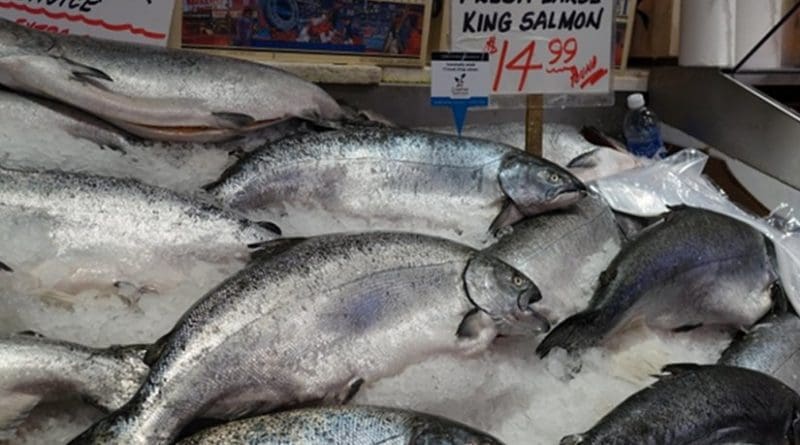
Climate Change May Reduce Vulnerable Salmon Populations
New research in north-central Mongolia illuminates the effects of global climate change on certain vulnerable species of salmon.
Air temperature records demonstrate that in the last 40 years, Northern Mongolia’s rate of warming has been 3-times greater than the northern hemisphere average. Streamside measurements indicate that salmon metabolism has increased exponentially with temperature, and the fish are now experiencing temperatures near their upper levels for growth during summer.
“Because of the remote location of many Northern Mongolian rivers, the fish populations are generally in great shape. However, many of the salmonid species in Mongolia are already living near the limits of their ability to withstand warm water,” said Dr. Kyle Hartman, co-author of the Ecology of Freshwater Fish study.
“As the climate here continues to warm, these species could be pushed out of one of their last refuges in the world,” added co-author Dr. Olaf Jensen.

Like what you read?
Please consider supporting Eurasia Review. Thank you for your consideration!
