
Kabul’s Reckless Gambit: How The Taliban Are Threatening Regional Peace – OpEd
When Afghan forces opened unprovoked fire late Saturday night across multiple locations along the Pakistan-Afghanistan border—from Angoor Adda to Bajaur, Kurram, Dir, Chitral, and Baramcha—the violence was more than just another border skirmish. It was a calculated act of aggression.
According to official sources, the firing appeared designed to facilitate the crossing of Khawarij formations—terrorist groups that Pakistan has long accused of operating with impunity from Afghan soil. But this time, the response was swift and severe: Pakistan’s vigilant forces launched a powerful counterattack that reportedly destroyed multiple Afghan posts and inflicted heavy losses.
What makes this episode particularly alarming is its timing. The attacks came as Afghanistan’s acting foreign minister was visiting India—a country whose growing closeness with Kabul under the Taliban has raised eyebrows in Islamabad and Tehran alike. The synchronization of diplomatic outreach with military provocation suggests something deeper: a Taliban regime testing boundaries, both literal and political, as it seeks leverage in a rapidly shifting regional order.
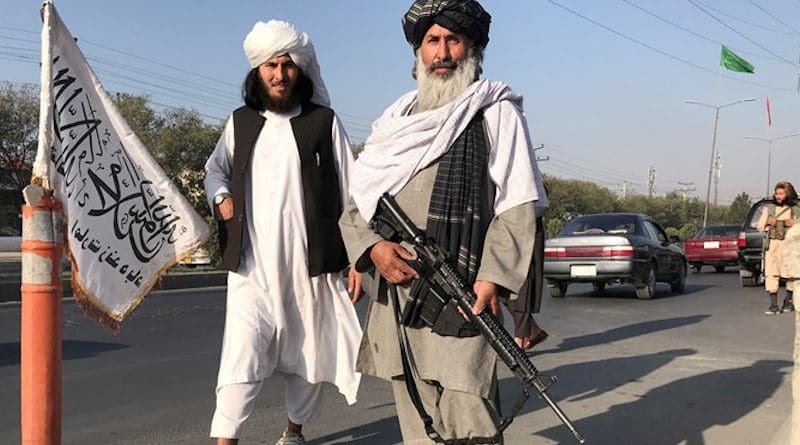
For years, Pakistan has warned that the Taliban’s rise would not bring stability to the region but embolden extremist factions and disrupt hard-won security arrangements. The events of this weekend are a grim confirmation of those fears. Despite Pakistan’s consistent calls for dialogue and restraint, the Taliban continue to harbor, and in some cases, facilitate cross-border attacks carried out by the Tehreek-e-Taliban Pakistan (TTP)—a group ideologically aligned with them but hostile to Islamabad.
This deliberate provocation underscores the Taliban’s fundamental contradiction: they claim to be a government seeking international legitimacy while simultaneously enabling violent non-state actors that threaten the sovereignty of their neighbors. In doing so, the Taliban are not only isolating Afghanistan further but also jeopardizing the fragile equilibrium that keeps South and Central Asia from descending into chaos.
The irony is sharp. When the Taliban took control of Kabul in 2021, many in the region hoped that stability—however imperfect—might return. Instead, Afghanistan has turned into a sanctuary for militancy. The Taliban’s refusal to act against the TTP and other transnational terrorist outfits, coupled with its growing economic desperation, has made its behavior increasingly erratic. Border hostilities serve as both a distraction from domestic failure and a tool to rally nationalist sentiment.
But this brinkmanship comes with perilous consequences. Pakistan’s response on Saturday night was decisive and forceful, signaling that it will no longer tolerate incursions or provocations. The message is clear: any violation of its sovereignty will meet a swift military reprisal. Yet, the escalation also exposes the deepening security vacuum in the region—a vacuum created by the absence of a coherent international engagement with the Taliban regime.
The global community, particularly the neighboring powers, must recognize the broader implications. An unstable Afghanistan is not merely a domestic issue; it is a regional contagion. Militant spillover threatens Pakistan’s western provinces, while drug trafficking and refugee flows destabilize Iran and Central Asia. India’s overtures to the Taliban, meanwhile, appear short-sighted—driven by a desire to counter Pakistan rather than to promote genuine stability. By engaging a regime that refuses to curb terrorism, New Delhi risks legitimizing a force that thrives on perpetual instability.
The Taliban’s aggression also exposes the hollowness of their diplomatic promises. While they have pledged to prevent Afghan territory from being used against other countries, Saturday’s coordinated assault tells a different story. It reveals an emboldened leadership increasingly comfortable with using violence as an instrument of foreign policy. This should serve as a warning not only to Pakistan but to all regional actors who believe they can manage or manipulate the Taliban’s behavior through engagement alone.
If the Taliban continue down this path, they risk transforming Afghanistan into what it once was: a hub of global militancy. The stakes are higher than ever. Pakistan’s restraint will be tested, but so too will the resolve of the international community. Silence in the face of this aggression will only embolden extremist forces that feed on chaos.
The border may have quieted for now, but the message from Kabul is loud and unmistakable: the Taliban’s ambitions extend beyond Afghanistan’s frontiers. It is time the region—and the world—confront that reality before it is too late.

Like what you read?
Please consider supporting Eurasia Review. Thank you for your consideration!
