
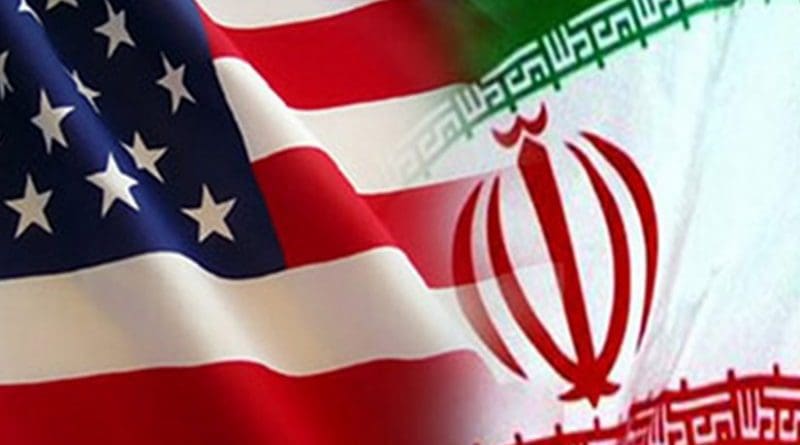
Donald Trump’s Victory And The Iranian Regime’s Concerns Over His Return To The White House – OpEd
Contrary to polls and predictions that anticipated a tight race between the Democratic and Republican candidates, Donald Trump made a historic return to the White House by defeating his opponent, Kamala Harris, Vice President under President Joe Biden. According to CNN’s exit polls, slightly over half of voters preferred Trump over Harris for economic management, with 31% of voters identifying it as their top issue.
Following the announcement of Trump’s victory and his return to the White House, Iran’s currency, the Rial (Iran currency) hit a record low. Speculations about the impact of Trump’s second term on Iran largely stem from his policies during his previous presidency, which included “maximum pressure” on Iran. These policies could mean additional sanctions and heightened military tensions.
On Thursday evening, October 7, Brian Hook, former head of the “Iran Action Group” in Trump’s previous administration, accused the Biden administration in a CNN interview of seeking “compromise with the Iranian regime,” which he claimed has led to a “failure of deterrence policy.” The former U.S. envoy on Iran emphasized that Trump understands that the primary source of instability in the Middle East today is the Iranian regime.” But “Trump has no interest in regime change” in Tehran but is focused on isolating and weakening the Islamic Republic. He also stated that Trump’s “Peace Plan” for resolving the Israeli-Palestinian conflict, known as the “Deal of the Century,” is likely to return to the table.
With Trump’s return, Iran’s state-controlled media have acknowledged that the various crises confronting the Iranian regime, including economic turmoil and social discontent, will intensify. This time, however, the situation is markedly different from Trump’s first term. The regime is grappling with a severe economic crisis, having withstood two nationwide uprisings demanding its overthrow, with no end to the economic crisis in sight. The escalating conflict with Israel, efforts to dismantle Iran’s regional proxies, and attempts to acquire nuclear weapons as a survival guarantee have raised global concern.
On Thursday, November 7, the newspaper Ham-Mihan noted: “Iran’s economy today in November 2024 is weaker than in 2018. The internal challenges and crises we have faced are now more extensive than ever. According to our foreign minister, international conditions are vastly different from the period when the JCPOA was signed and subsequently abandoned by Trump. We are dealing with the fallout from the wars in Ukraine and Gaza, and issues between Iran and the West have become more complicated over the past six years. There is no short- or medium-term solution in sight. Hardliners are trying to promote BRICS as a substitute for addressing Iran’s sanctions issues, but even the most optimistic experts believe it will take decades for BRICS to yield significant results. At least two of its most influential members, China and India, remain among the top ten U.S. trading partners.”
Donald Trump’s potential policies may follow the same path as his previous term but with greater intensity and a focus on threats beyond Iran’s nuclear program. Trump’s policies toward Iran were based on maximum pressure and targeting Iran’s oil revenues, which in 2020 reduced Iran’s oil exports to an unprecedented level.
These policies would likely be repeated in a new term with a stronger emphasis on economic pressure and limiting Iran’s regional influence and its support for proxy groups. Given that Trump and his team see the Iranian regime as the “axis of evil” in the Middle East, the focus of their policies could be on Iran’s nuclear threat and its regional policies and support for armed groups and militias. The goal of these actions could be an attempt to isolate the regime and weaken its bases of influence and survival in the region, which, according to some analysts, could lead to internal weakening of the regime and make it more vulnerable to domestic protests and organized resistance.
Trump and his team would likely use stronger sanctions and a more extensive crackdown on Iran’s oil trade and its supporters to push Iran into the most restricted economic and strategic position possible. These pressures, disregarding new regional conditions and developments, would pose a serious challenge for Iran and might lead to responses and decisions from Iran.
In this regard The Wall Street Journal wrote: Donald Trump intends to significantly increase sanctions against Iran and reduce the country’s oil sales. His new team will quickly move to choke off Iran’s oil revenue, including targeting ports and foreign traders handling Iranian oil.

Like what you read?
Please consider supporting Eurasia Review. Thank you for your consideration!
