
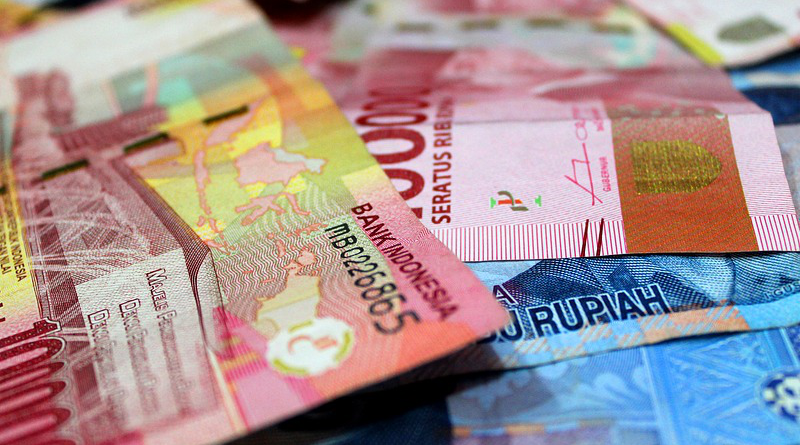
Rupiah Redenomination: Symbolism Over Substance – OpEd
The Indonesian government announced a rupiah redenomination plan through Finance Minister Purbaya Yudhi Sadewa as part of its 2025–2029 financial strategy.
Although this move appears strong, it brings limited actual changes, except for its ceremonial value. By eliminating three zeros from the currency, transforming Rp1,000 into Rp1, the government aims to simplify transactions, modernise the financial system, and enhance credibility. The actual economic effects will be restricted by public confidence levels and institutional preparedness, and their success in minimising public misunderstandings.
The purpose behind this change becomes evident. The Indonesian currency faces difficulties with its large number of zeros, which creates problems for financial record-keeping and market pricing and everyday money handling. The digital economy requires basic communication methods because it continues to grow. The implementation of redenomination will help to reduce payment errors and create more efficient financial reporting systems that will provide a better user experience for both cash and digital payment systems. International investors and tourists would view a simplified rupiah as a stable currency because it would make Indonesia’s economy comparable to Turkey and Brazil, which have already adopted similar currency simplification programs. The current economic conditions appear suitable for this initiative because Indonesia shows 5.1% growth in 2025 while maintaining 3% inflation and the rupiah exchange rate at Rp15,500 per U.S. dollar. The government aims to demonstrate their economic management skills through the redenomination process while avoiding any perception that it indicates an economic crisis.
The process of redenomination exists solely for appearance purposes. A loaf of bread priced at Rp30,000 will cost Rp30 in the new system, with no change in affordability. This adjustment does not affect purchasing power, productivity, or competitiveness. The government receives criticism because it describes the reform as an economic revolution, although it actually involves only a small technical adjustment. The main problems of the economy are not resolved yet because the country needs to solve more important issues like increasing productivity in the workforce and enhancing supply chain operations, and industrial growth. The manufacturing sector of Indonesia operates at a lower level than its neighbouring countries, although digital infrastructure development continues to advance, rural areas experience major connectivity problems. The main danger occurs when people mistake symbolic actions for actual change during periods when society requires fundamental structural shifts.
The reform requires major financial support along with intricate administrative procedures for its execution. All systems that handle financial transactions, including ATMs and accounting systems and financial software and retail price tags, need to be updated. Banks require system updates and retailers need to modify their menu displays and labelling materials, and government agencies need to create new reporting systems. The transition process poses difficulties for small businesses, which drive Indonesia’s economy, because it may lead to communication problems and insufficient technical support. Public confusion is another potential risk. The general public tends to confuse redenomination with devaluation because they do not receive adequate information about the process. The nation remains vulnerable to currency instability because people still remember past financial instability, which makes them more likely to panic and hoard money or engage in speculative activities. The government needs to make substantial investments in outreach programs that present redenomination as a system simplification while making sure people understand that Rp1 in the new system equals Rp1,000 in the old system.
The political aspects of this situation make it more difficult to handle. The government needs to obtain parliamentary approval for redenomination by 2027. The Indonesian government needs to prove that the reform expenses are worth it because the country requires more funds for infrastructure development and welfare programs, and energy transformation initiatives. The government will encounter rising fiscal difficulties in 2025 because it plans to expand social programs and support renewable energy projects to achieve its climate objectives. The critics believe that resources should go toward real development projects instead of building this empty monument. The government must demonstrate that redenomination is both affordable and strategically aligned with modernisation goals, rather than a distraction from pressing priorities.
Every individual can observe the upcoming obstacles. The government needs to keep macroeconomic stability because any sign of inflation or rupiah devaluation would make redenomination seem like a last-ditch effort. The success of digital transformation requires institutional readiness because banks and retailers, and agencies need to stay in continuous coordination to stop payment system disruptions and accounting process interruptions. The public needs ongoing, simple explanations about denomination matching between old and new systems to understand their relationship. The digital transformation requires specific solutions for different regions because rural areas with restricted digital infrastructure networks will implement new technology at varying rates, which creates uneven development patterns. Finally, investors will closely monitor the reform as an indicator of Indonesia’s economic management. Successful implementation could enhance credibility; conversely, failure could raise doubts about policy priorities and institutional competence.
Despite these risks, redenomination carries symbolic significance. The modernisation of the currency in Southeast Asia would help Indonesia achieve its goal of becoming a regional leader because it would improve the region’s perception of stability and confidence. The program works to achieve national goals for joining global supply chains and drawing foreign capital, and developing digital financial systems. The Indonesian government made the rupiah currency simpler to operate because it wants to succeed in the global market, which requires easy and efficient financial systems. The implementation of symbolic measures needs to be followed by actual changes in the system. Redenomination will achieve success when combined with fundamental reforms that boost productivity and build strong institutions, and maintain economic expansion. The initiative will not reach its complete goals unless these reforms are put into action.
The rupiah redenomination process in Indonesia serves as a technical procedure which holds symbolic value but does not create essential changes. The new design will enhance transaction efficiency and update the currency design, but it will not affect the value of money or solve existing economic problems. The success of a crisis management plan requires proper timing and clear communication, and unified coordination between all involved parties. Redenomination will only build credibility if it is properly executed because it needs to support other economic reforms that drive economic expansion.
The opinions expressed in this article are the author’s own.
References
- Ghifari, D. (2025, March 8). Why is nobody talking about rupiah redenomination anymore? The Jakarta Post. https://www.thejakartapost.com/business/2025/03/08/why-is-nobody-talking-about-rupiah-redenomination-anymore.htm
- Joesoef, J. R., & Sulistiyanti. (2025). Redenomination doesn’t change the purchasing power of people but social habits. International Journal of Multidisciplinary Applied and Science Research, 01(02), 44–50.
- Pramytha, I. A., Rafifah, U. R., Hambali, A. J., & Biyanto, F. (2025). Analysing factors influencing the success of currency redenomination in Indonesia: A literature review. International Journal of Business & Management Review.

Like what you read?
Please consider supporting Eurasia Review. Thank you for your consideration!
