
Britain Can No Longer Hide Behind The Myth Of A Bilateral Kashmir – OpEd
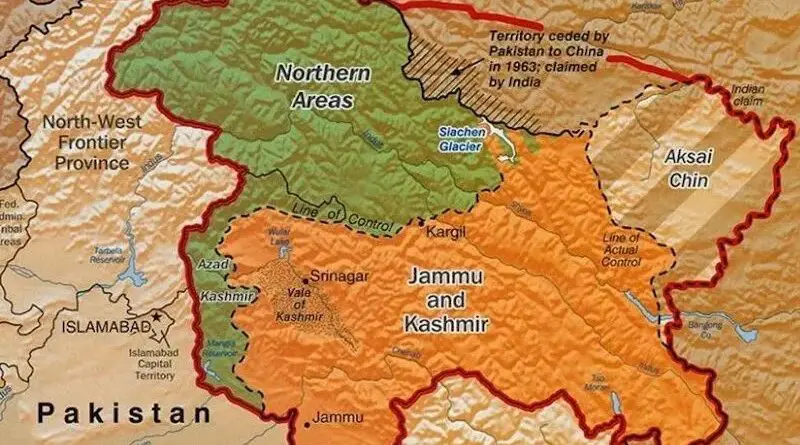
The Westminster Hall debate of 10 December 2025 on “Government support for self-determination in Kashmir” was not just another parliamentary formality. It felt like a rare moment when MPs from across the political spectrum confronted a truth successive governments have long avoided: Britain’s stance on Kashmir is no longer morally defensible, diplomatically credible or historically honest. For decades, the UK has clung to the line that Kashmir is a “bilateral issue” between India and Pakistan. But almost every MP who spoke in the debate—Labour, SNP, Liberal Democrat, Independent and even some Conservative voices—made clear that this position is not only outdated but fundamentally wrong.
Imran Hussain, who led the debate, rooted the discussion in the historical facts that Britain itself helped shape. He reminded the House that Kashmiris were promised a UN-mandated plebiscite more than 70 years ago, and that this promise, enshrined in UN Security Council resolutions drafted with British involvement, has never been fulfilled. Hussain’s assertion that Kashmir is an international dispute, not a bilateral matter, became the backbone of the entire debate. That Britain helped create these commitments makes its current passivity all the more indefensible.
Other MPs reinforced the same point. Richard Burgon emphasised that self-determination for Kashmiris is a matter of international law and that the UK, given its colonial role, has a “special duty” not to walk away now. Rebecca Long Bailey insisted that peace in the region is impossible without centring Kashmiri voices and honouring UN decisions. Abtisam Mohamed highlighted Britain’s failure to meet even its basic humanitarian obligations, pointing out that international law requires clear protections for civilians—protections that Kashmir has been denied.
Speaker after speaker turned to the dire human rights situation in the region, a reality that the UK government rarely confronts publicly. Tahir Ali was unequivocal in describing abuses: extrajudicial killings, torture, disappearances and other violations that persist because the promised right of self-determination remains denied. Andy McDonald echoed UN experts who have documented thousands of arrests under India’s repressive Public Safety Act and UAPA, alongside mass detentions and communication shutdowns following the revocation of Article 370 in 2019. Brendan O’Hara described an 80-year-long military occupation marked by enforced disappearances, sexual violence and arbitrary detention.
The conversation revealed something else: Britain’s selective moral outrage. Ayoub Khan challenged this directly, asking why the UK is willing to impose sanctions and take firm action on abuses in some regions of the world, yet treats Kashmir as an exception. If targeted measures are justified elsewhere, why not for Kashmir? His argument exposed the uncomfortable truth that trade and geopolitics often outweigh human rights in British foreign policy.
What made this debate especially significant was how widespread the critique of the government’s position had become. MPs representing areas with large Kashmiri communities—such as Gareth Snell, David Williams and Iqbal Mohamed—spoke movingly of constituents who still live with the pain of families subjected to endless restrictions. Others without such constituencies, like Brian Mathew, stressed that the Liberal Democrats support a peace process including a referendum. Even Conservative MP Andrew Snowden, while cautious, spoke of wanting a future where Kashmiris enjoy “stability and prosperity”—a far softer defence of government policy than Conservatives have offered in the past.
The only person clinging firmly to the old orthodoxy was the Minister, Hamish Falconer. He repeated the long-standing line that it is for India and Pakistan to resolve the issue bilaterally, though even he conceded that any solution must reflect the wishes of Kashmiris—an acknowledgement that undermines the bilateral framing he tried to defend. His reassurances that the UK “takes seriously” UN statements on abuses felt hollow in the face of the overwhelming evidence presented throughout the debate. Recognising abuses while refusing to act is not neutrality; it is abdication.
What this debate ultimately revealed is that Britain is reaching a crossroads on Kashmir. The old approach—quiet diplomacy, studied silence, and unquestioning deference to India—cannot coexist with the realities MPs described. A credible British policy would start by recognising what Parliament made clear: Kashmir’s status is governed by international law, not bilateral convenience. Britain, as a co-author of the original UN resolutions, has responsibilities it cannot indefinitely ignore.
A serious shift would mean publicly acknowledging Kashmir as an international dispute; pressing for an end to abuses on both sides of the Line of Control; supporting an internationally supervised referendum; considering targeted measures if repression continues; and hosting a peace process that includes Kashmiri representation. These steps are not radical—they are the logical fulfilment of commitments Britain made nearly eight decades ago.
Silence is no longer neutral. Each year that Britain refuses to speak up, the promise of self-determination slips further out of reach for millions. The MPs who spoke on 10 December delivered a clear, cross-party message: the UK must stop hiding behind diplomatic platitudes and finally take a principled, active stance. Britain helped write the promise of a plebiscite. It must now help deliver it.

Like what you read?
Please consider supporting Eurasia Review. Thank you for your consideration!
