
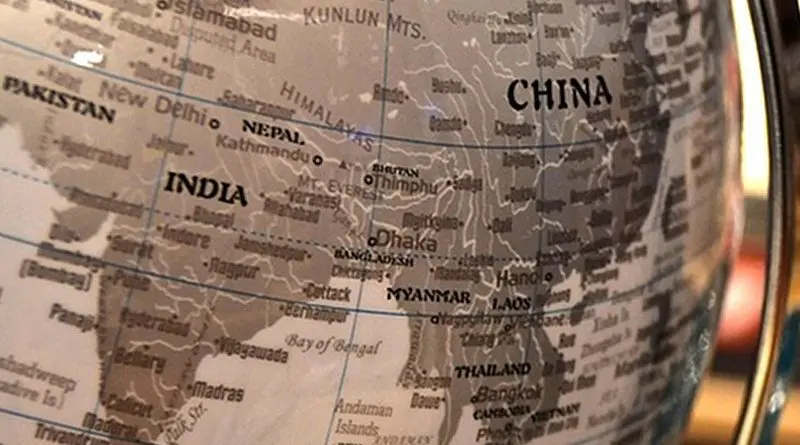
Pakistan–Bangladesh–China Strategic Geometry In South Asia – OpEd
A new regional equation is quietly but decisively taking shape—one that has the potential to rearrange South Asia’s geopolitical map. Pakistan, Bangladesh and China, three states historically linked yet constrained by political divergences and India-centric regional frameworks, have now revived a spirit of collaboration grounded in shared interests, strategic trust and a mutual desire for stability. The recent developments—from the Kunming trilateral dialogue to renewed bilateral engagements—signal not merely diplomatic outreach, but the emergence of a full-spectrum cooperative architecture poised to transform regional dynamics.
The spark for this new alignment was visible when Bangladesh’s Foreign Affairs Adviser, Md Touhid Hossain, frankly stated that forming a regional bloc with Pakistan is “possible—excluding India.” Rarely does Dhaka articulate strategic autonomy so clearly, especially given India’s deep political penetration into its institutions. But the July Revolution and Bangladesh’s evolving political landscape have opened new diplomatic bandwidths. It is evident that Dhaka now sees value in diversifying partnerships, especially with states that offer economic benefits without political coercion.
The June 2025 Vice Foreign Minister–Foreign Secretary meeting in Kunming was the first formal recognition of this emerging trilateral synergy. Pakistan, China and Bangladesh agreed on cooperation ranging from trade and investment to education, health, maritime affairs and technology. A follow-up working group was constituted—an important signal that these initiatives are not mere declarations but intended to translate into implementable projects. Pakistan’s Deputy Prime Minister and Foreign Minister Ishaq Dar went a step further in December 2025, suggesting that the trilateral initiative could become a broader regional grouping “expanded and duplicated.” In simpler terms, Pakistan is positioning this platform as an alternative to the stalled SAARC—a South Asian multilateral without India.
The resumption of the Pakistan–Bangladesh Joint Economic Commission (after 20 years) led to agreements in agriculture, education, healthcare, transport, aviation, maritime security and logistics. A maritime cooperation framework was proposed to connect national shipping corporations, enhance port collaboration and improve maritime safety across the Arabian Sea and the Bay of Bengal. Pakistan’s ports can become gateways for Bangladeshi exports to the Middle East, Africa and Central Asia, while Bangladesh’s manufacturing sector can feed supply lines into CPEC-linked special economic zones. Meanwhile, China’s Belt & Road infrastructure can provide the overarching spine for this triangle of industrial cooperation.
Beyond trade, the trilateral holds enormous maritime potential. Coordinated development of Gwadar, Karachi, Chattogram and Mongla can form a four-port network ensuring secure, efficient and environmentally responsible sea routes. Pakistan’s aspirational role as a net security provider for maritime supply chains aligns naturally with Bangladesh’s coastal connectivity and China’s port development expertise.
Climate resilience also emerges as a shared space. With South Asia extremely vulnerable to rising sea levels and extreme weather patterns, joint mechanisms for coastal protection, disaster response and green energy can become a flagship model of sustainable regional development. Even in the absence of defence treaties, the strategic synchronization generated by maritime coordination, logistics security and technological integration produces stability dividends for the broader region. A collaborative trilateral under the Chinese umbrella counterbalances India’s militarized Hindutva-driven posture.
What makes the Pakistan–Bangladesh–China convergence noteworthy is its philosophical foundation: cooperation without coercion. Pakistan advocates connectivity, shared development and equality for all regional partners. Bangladesh sees economic openings free from Indian leverage. China envisions stable corridors and trusted partners in South Asia.
However, challenges remain. Bangladesh’s political transition is still incomplete. Elections in 2026 may produce leadership changes—especially under the shadow of Indian covert attempts to influence outcomes. While the current leadership leans towards strategic autonomy, its continuity is not guaranteed until it secures democratic legitimacy. Smaller states like Nepal and Bhutan may hesitate to join such blocs due to Indian pressure, though they could engage economically. Sri Lanka and Maldives, less constrained by India, are more likely future partners. Western responses—particularly from the U.S.—may involve diplomatic pressure or reduced assistance, especially if the trilateral takes on deeper security dimensions.
Pakistan stands to gain significantly. By offering smaller states a platform free of Indian hegemony, Pakistan can reposition itself as a rising middle-power and diplomatic anchor in South Asia. With China’s support and Bangladesh’s manufacturing strength, Pakistan can centralize connectivity, shipping, energy and technology frameworks for the wider region. The moment is ripe. Pakistan must act decisively to institutionalize this trilateral platform and gradually expand it into a cooperative regional architecture. South Asia has long waited for an alternative to confrontation-driven politics. The Pakistan–Bangladesh–China triangle may finally be that alternative—with Pakistan at its center.

Like what you read?
Please consider supporting Eurasia Review. Thank you for your consideration!
