
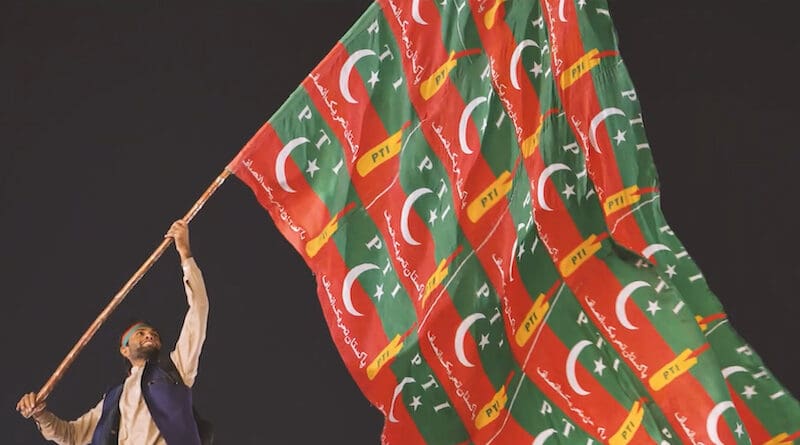
At A Time Of Crisis, Imran Khan’s PTI Is Deepening Pakistan’s Internal Divide – OpEd
As Pakistan confronts simultaneous threats on two fronts — an emboldened India to the east and a resurgent wave of Afghan Taliban-linked militancy to the west — one would expect its political class to rally around national unity. Instead, Imran Khan’s Pakistan Tehreek-e-Insaf (PTI) has chosen this moment of existential strain to widen internal fissures, framing domestic institutions as enemies rather than partners in survival.
In a moment when Pakistan’s national fabric demands cohesion, PTI’s rhetoric has grown increasingly reckless — bordering on self-sabotage. Rather than tempering political passions, the party’s leadership has amplified narratives of persecution, delegitimized state institutions, and painted Pakistan’s challenges as a conspiracy by “the establishment.” The result is a nation distracted from its defense, preoccupied with internal recriminations even as danger closes in on its borders.
This is not a question of silencing opposition. A healthy democracy thrives on dissent. But dissent morphs into damage when a party in exile leverages foreign platforms to defame its own state while soldiers die defending its frontiers. PTI’s international branches — particularly in the UK, Canada, and the U.S. — have repeatedly organized protests and lobbied foreign governments to isolate Pakistan diplomatically. Such acts, in the current geopolitical climate, risk turning political grievance into strategic vulnerability.
At a time when Pakistan faces cross-border terrorist infiltrations orchestrated from Afghanistan and intelligence operations suspected of being backed by India, PTI’s leadership has doubled down on confrontation. The party’s statements increasingly mirror the language of those seeking to destabilize the state — questioning the legitimacy of counterterror operations, undermining the morale of security forces, and amplifying social media disinformation that fractures national resolve.
This pattern is not new. From the fiery speeches following Khan’s ouster in 2022 to the violent protests of May 9, 2023, PTI has increasingly blurred the line between political opposition and institutional hostility. What once began as a populist movement for “haqeeqi azadi” — true freedom — has degenerated into a vendetta against the very organs that sustain Pakistan’s sovereignty. The rhetoric of “regime change” has replaced calls for reform. The obsession with retribution has crowded out dialogue.
Meanwhile, Pakistan’s eastern neighbor has intensified border provocations, and the Afghan Taliban — once seen as strategic depth — has turned increasingly belligerent, launching cross-border attacks on Pakistani soil. Yet, instead of rallying citizens around national defense, PTI leaders have chosen to politicize security issues, accusing the state of manufacturing threats to suppress dissent.
The timing could not be more dangerous. When the nation’s focus should be on protecting its sovereignty, PTI’s messaging has created an alternate reality — one where Pakistan’s crises are exaggerated conspiracies, and its enemies are internal rather than external. Such narratives serve no one but those who wish to see Pakistan divided, discredited, and demoralized.
Even more concerning is PTI’s embrace of foreign sympathy as a substitute for domestic legitimacy. Its appeals to Western politicians and human rights organizations — once a hallmark of diaspora activism — now risk being exploited by external actors eager to portray Pakistan as unstable or repressive. In the past, similar campaigns have invited unwanted foreign meddling, weakening Pakistan’s bargaining power on international platforms.
Pakistan today faces a perfect storm — economic fragility, external aggression, and internal polarization. History shows that when nations fracture within, adversaries outside advance. In 1971, disunity led to dismemberment. Today, the lessons of that tragedy seem lost on those who view political chaos as a path to power.
Imran Khan’s populism once captured the aspirations of a generation yearning for change. But populism without responsibility becomes perilous. Leadership, especially in times of crisis, demands restraint — the ability to prioritize the nation’s survival over political gain. By refusing to moderate its tone or participate constructively in the democratic process, PTI risks transforming itself from a reformist movement into a destabilizing force.
Pakistan does not need unanimity — it needs unity of purpose. It needs political maturity that can withstand differences without undermining state stability. As soldiers defend the borders and diplomats navigate hostile environments, political leaders must realize that internal disarray is the greatest weapon they hand to their enemies.
Imran Khan once promised to build a “Naya Pakistan.” But if the politics of perpetual confrontation continues, what may emerge instead is a weakened Pakistan — fractured, isolated, and distracted, precisely when unity is its greatest defense

Like what you read?
Please consider supporting Eurasia Review. Thank you for your consideration!
