
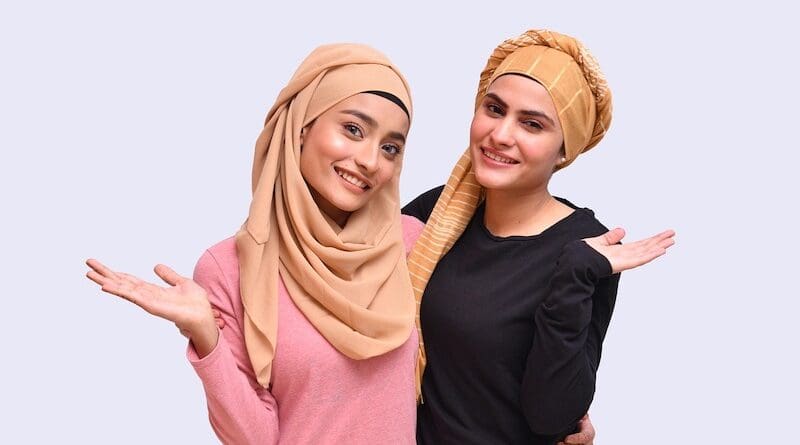
Islam, Women, And Modernity – OpEd
Conversations about women’s rights in Muslim societies often swing between two extremes. One side blames religion for holding women back, while the other hides behind cultural traditions and calls them “Islamic.”
Then there’s the outside pressure to fit Western ideas of feminism, which don’t always line up with local values or Islamic teachings. In the middle of all that noise, the real message of Islam about women’s dignity and equality often gets lost.
Islam’s original teachings gave women rights that were groundbreaking for their time. The Qur’an made it clear that men and women are equal before God. It gave women the right to inherit, own property, and seek education. The Prophet Muhammad ﷺ encouraged both men and women to learn and grow, spiritually and intellectually. Those weren’t symbolic gestures. They were statements of principle, setting a moral foundation that recognized women as full, capable human beings.
But history isn’t kind to ideals when culture gets in the way. Over generations, local customs and patriarchal attitudes started to shape how religion was practiced. Things that had nothing to do with Islam were suddenly being justified by it. In some communities, people still act as though sending girls to school is optional or that women’s opinions aren’t valid in public or religious spaces. Those aren’t Islamic values. They’re cultural habits that grew stronger because they were left unchallenged.
When you look back at the early Muslim community, women weren’t sitting on the sidelines. Khadijah bint Khuwaylid was a successful businesswoman long before she married the Prophet. Aisha bint Abu Bakr was one of the most important scholars in Islamic history, teaching men and women alike. Women fought in battles, ran businesses, and shaped the moral and intellectual landscape of their time. Their stories don’t need to be rewritten; they just need to be remembered.
Yet, today’s debate isn’t only about what went wrong internally. There’s also the constant outside pressure to “modernize” or “liberalize” according to Western models of feminism. And that’s where things get complicated. Many Muslims, both women and men, feel uncomfortable with the idea that empowerment must look the same everywhere. Western feminism grew out of specific historical and philosophical contexts, industrialization, colonialism, and secular thought, that don’t always translate well to societies where faith is central to daily life. That doesn’t mean Muslim women reject equality. It means they want to define it through a lens that makes sense in their own moral and cultural framework.
It’s also true that some Western activists or commentators, with good intentions, end up talking down to Muslim women, as if they’re all oppressed or unaware of their rights. That’s not only inaccurate, but it’s also unfair. Muslim women are already leading the fight for education, legal reform, and social justice in their own communities. What they often need isn’t someone to save them but space and support to interpret their faith on their own terms.
Real reform must come from within. It means going back to the Qur’an and Sunnah with fresh eyes, not to rewrite Islam but to strip away the cultural baggage that’s piled on top of it. The Qur’an emphasizes justice, kindness, and compassion, all of which naturally include women’s dignity and agency.
Islam’s framework for justice and compassion, if truly applied, already provides everything needed for that balance. The problem is, people often forget that religion is supposed to liberate, not control.
The path forward doesn’t mean rejecting modernity or blindly following the past. It’s about creating a middle ground that respects both. Muslim women shouldn’t have to choose between being faithful and being free. The two can, and should, coexist. There’s no contradiction in a woman wearing hijab and leading a company, or in a scholar using Islamic principles to argue for legal reform. The more we let those realities exist side by side, the healthier our societies become.

Like what you read?
Please consider supporting Eurasia Review. Thank you for your consideration!
