
America’s Political Paralysis And The Global Order: Lessons From The 43-Day Shutdown – OpEd
The longest U.S. government shutdown has finally ended and with it, a wave of relief has rolled through Washington. Many federal employees returned to their offices, some museums reopened their doors, and major airports resumed scheduled operations, although delays persisted in several hubs. Yet the relief remained curiously hollow.
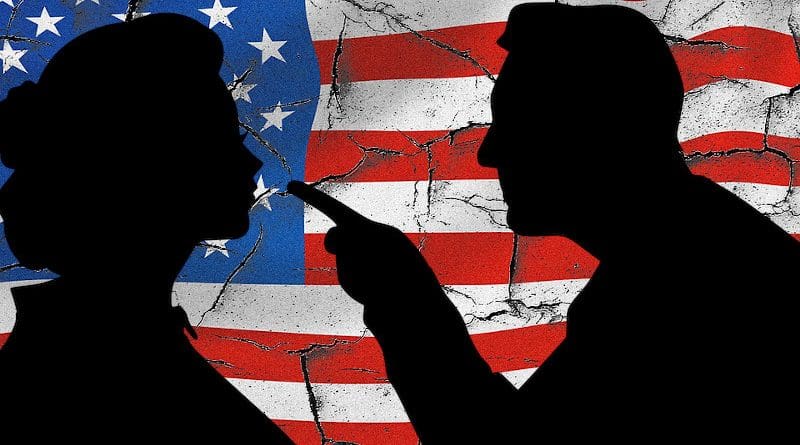
The episode exposed how deeply political dysfunction has taken hold. For a country that constantly describes itself as the anchor of the international system, a 43-day halt over domestic policy raises questions far deeper than the usual partisan confrontation. It highlights a structural fragility at a moment when the global distribution of power is shifting in ways among the most dramatic since the end of the Cold War.
Shutdowns aren’t new in the United States, but the way they keep appearing has started to unsettle people who pay attention to how the country is run. These episodes don’t show up because of wars or natural disasters. They happen when the system folds in on itself and politicians dig in instead of compromising. The government ends up stuck because lawmakers can’t agree on the very basics of keeping it funded. And in a world already tense with big-power competition, tight economic ties, and one global crisis after another, these moments expose weaknesses that both friends and rivals notice immediately. What makes this shutdown unusual is how small the spark seemed. Nothing dramatic was happening, no recession, no foreign attack, no national emergency. The whole operation froze over a dispute about healthcare subsidies affecting an estimated 20 million people, according to analysis from Harvard Kennedy School, something most countries handle through negotiations rather than letting their entire government grind to a halt. When a nation that calls itself the world’s leading democracy struggles just to keep its own doors open, people elsewhere naturally begin to wonder how steady and reliable it really is.
This paralysis arrived at a moment when Washington is trying to reinforce alliances, counter authoritarian influence, and manage multiple global conflicts. Diplomatic leverage is not built on military capacity alone. It also depends on the perception of political stability, the belief that a governing system remains coherent, predictable, and functional even during internal disagreements. Statements from the White House accusing opponents of “trying to extort billions for illegal aliens” turned a technical policy debate into a personalised political narrative. Such rhetoric might succeed domestically, but abroad it reinforces the sense that U.S. politics is being driven by confrontation rather than reasoned deliberation. This shift unsettles partners who rely on American steadiness in an increasingly turbulent world.
It became clear during the shutdown that something bigger is off inside the American system. The country keeps making big promises abroad, leading NATO, reassuring Asian partners, talking tough in the Middle East, but back home, the machinery needed to support all that can stop without warning. People who handle the day-to-day grind of U.S. foreign influence, whether they’re digging through intelligence briefings or managing cybersecurity threats, can’t do any of that if funding suddenly disappears. And the rest of the world doesn’t politely wait for Washington to fix itself. Other governments, especially those that don’t rely on the same complicated political setup, keep moving at their own pace. The longer Washington argues with itself, the more time its competitors have to set the tone. A shutdown in the U.S. isn’t just paperwork piling up, it feels like a brief pause in American power, and those pauses are noticed.
The politics behind all this didn’t appear overnight. There was a time when lawmakers swallowed their pride and made deals simply because they understood that shutting the government down was too damaging. That instinct seems weaker now. What used to be routine budget talks have turned into shouting matches, fueled by cable news, social media outrage, and party primaries that reward the loudest voices instead of the most reasonable ones. Nobody wants to look like they’re backing down. So the shutdown becomes another weapon in the fight, not a last resort. And when the world watches the most powerful country struggle to keep its own institutions open, it naturally wonders how dependable U.S. commitments really are. For a global system that depends heavily on American consistency, that uncertainty lands with real weight.
The consequences of a shutdown reach much further than how it looks on the surface. The U.S. dollar, Treasury bonds, and the steady flow of federal economic data are still what much of the global economy leans on, according to global financial analysts. When a shutdown drags on, those numbers come out late, regulators slow down, and investors start getting nervous because they can’t see what’s actually happening inside the American economy. Markets might not crash right away, but the uncertainty itself chips away at the idea of the United States as the world’s most reliable financial anchor.
All the while, other countries especially China, keep pushing the idea of a multipolar world where the U.S. isn’t sitting alone at the top. Moments of dysfunction in Washington make their case easier to sell. American agencies may be stuck waiting for Congress to agree on something, but Beijing is busy hosting delegations, building infrastructure abroad, and tightening its diplomatic networks without the fear that its own system will suddenly shut down. Every time Washington stalls, it creates space that others are more than ready to fill.
America’s allies are watching closely. European partners involved in conflict on their continent depend heavily on U.S. clarity and commitment. Asian states navigating maritime disputes measure their security calculations partly through American resolve. When Washington becomes consumed by internal paralysis, these states quietly reassess the reliability of their strategic arrangements. The U.S. may insist that shutdowns are purely domestic matters, but for countries whose national security depends on stable American leadership, such episodes carry serious implications.
Domestic division also complicates Washington’s ability to maintain a consistent foreign policy. As political hostility grows sharper, promises that are meant to last for years become surprisingly easy to disrupt. Whether the issue is trade, defense cooperation, or climate commitments, anything that needs long-term stability depends on both parties agreeing to protect it, and that kind of agreement is harder to secure now. When Washington gets stuck in a partisan freeze and the government can’t function properly, the message sent abroad is that American commitments might only hold until the next election reshuffles the political landscape. That kind of uncertainty gives rivals more freedom to test limits, while allies quietly prepare for the possibility that Washington may not stand where it stood yesterday.
The significance of the shutdown goes well beyond its immediate disruptions. It underscores the challenge of projecting global leadership when governance falters at home. America’s strength has long rested not only on its capabilities but also on the resilience of its institutions. A system designed around checks and balances is now producing standoffs that paralyse essential functions. The latest shutdown demonstrates how the world’s most powerful state can be held up by disputes over narrow domestic policies even as it tries to shape international outcomes.
The “Back to Work” message from the White House may project relief, but it avoids the root issue. Ending a shutdown is not an achievement; preventing one is. The real concern is that the shutdown lasted as long as it did and ended without resolving the underlying dispute. The cycle remains unbroken and will likely reappear at the next budget deadline. In a world defined by strategic competition, volatility, and rapid power shifts, such cycles create vulnerabilities that no rival will ignore.
The return to normal operations restores routine but not confidence. For observers abroad, this episode is a reminder that American governance is entering a period of heightened strain. Institutions continue to function, but they do so under mounting pressure from polarization and political theatrics. As power spreads across more countries and old rivalries sharpen, the way the United States manages its own system at home will carry enormous weight. It won’t just affect how stable the country is internally; it will influence the wider balance of power around the world. The shutdown may be over, but the doubts it exposed about Washington’s ability to lead haven’t gone anywhere, and they feel more pressing with each passing year.

Like what you read?
Please consider supporting Eurasia Review. Thank you for your consideration!
