
Shadows On The Frontier: How Abandoned U.S. Weapons In Afghanistan Threaten Pakistan’s Security – OpEd
The 2021 withdrawal of American forces from Afghanistan marked the end of a long war, but it also began a new phase of insecurity in the region.
When the final U.S. aircraft departed Kabul, the world saw a military retreat; Pakistan saw the beginning of a security nightmare. Two years later, American-made weapons are resurfacing across Pakistan’s western border, now in the hands of militants attacking its forces. The remnants of a superpower’s exit have become tools of insurgency, turning Afghanistan’s instability into Pakistan’s burden.
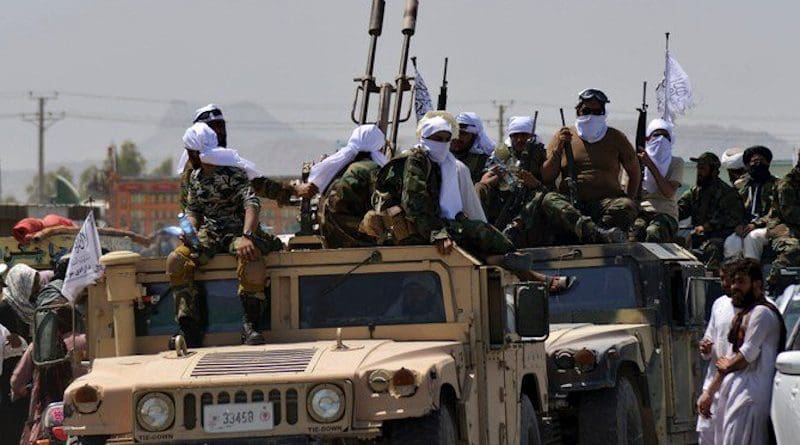
Billions of dollars’ worth of U.S.-supplied military equipment were left behind in Afghanistan after the withdrawal. This included rifles, armored vehicles, aircraft parts, and advanced optical systems that were neither retrieved nor secured. Many of these weapons, once intended for the Afghan National Defense and Security Forces, have now been traced to militant groups such as Tehrik-i-Taliban Pakistan (TTP). Pakistan’s security agencies have recovered firearms and equipment bearing identifiable serial numbers, confirming their American origin. Each recovery tells the same story: the chaos left in Afghanistan has spilled across the border.
The situation highlights a deeper policy failure. The United States lacked an effective plan to secure or recover its equipment after withdrawal. While Washington debated diplomatic optics, militants acquired a modern arsenal. For Pakistan, the consequences are severe, increased attacks, rising military casualties, and renewed instability in its border regions. The weapons that were meant to defend against terrorism now empower those very elements. This oversight has transformed Pakistan’s security environment, giving militants enhanced capability through advanced optics, encrypted communication tools, and precision firearms.
The shift in militant capacity has serious strategic implications. Insurgent groups once limited to crude weaponry and improvised explosives now engage with nearly professional-grade equipment. This has elevated the scale and precision of cross-border attacks, forcing Pakistan to adapt its counterterrorism operations. The frontier is no longer a battle of ideology alone but a confrontation shaped by advanced technology. Each confrontation now demands greater resources and coordination, stretching Pakistan’s defense apparatus thin.
Pakistan has long warned that TTP elements operate from safe havens inside Afghanistan. For years, these claims were dismissed as political rhetoric. However, the recent recoveries and field evidence have substantiated Islamabad’s position. Militants continue to exploit these sanctuaries to plan and launch attacks, undermining regional counterterrorism efforts. In this context, Pakistan’s limited cross-border actions are defensive, not aggressive. They represent a legal and strategic necessity to protect national security. Expecting Pakistan to remain passive in the face of direct threats from across the border disregards both international law and the realities of modern warfare.
The U.S. withdrawal has also led to the weaponization of neglect. What was once termed “assistance equipment” has effectively become contraband fueling conflict. The unintended transfer of these arms has shifted the balance of power in the region. Militants now wield weapons once issued to trained military personnel, eroding the technological advantage Pakistan’s forces once held. This bitter irony underlines a larger truth: decisions made in haste can outlive their architects, reshaping geopolitics long after troops have departed.
Pakistan’s call for accountability is not a diplomatic maneuver but a policy necessity. The international community, particularly the states responsible for the weapons’ distribution, cannot disengage from the consequences of their actions. Pakistan did not create the vacuum that allowed these arms to spread, yet it bears the heaviest cost. The frontier it defends is now flooded with tools of war introduced through failed oversight and unfulfilled responsibilities. Addressing this requires more than statements of concern; it demands coordinated international measures to track and neutralize the diverted weapons.
The scale of unaccounted matériel represents a global security threat. Each untraced rifle or night-vision device becomes a potential instrument of violence. Without a concerted effort to manage this crisis, the problem will only grow. Pakistan’s proposals, tighter border monitoring, intelligence sharing, and pressure on Kabul to dismantle militant networks, are practical and rooted in regional stability, yet they continue to receive limited international attention. The lack of decisive action risks entrenching a new black market for arms that will fuel conflict across South and Central Asia for years to come.
The solution lies in shared responsibility and coordinated policy. Washington and its allies must assist regional partners like Pakistan in tracing, recovering, and neutralizing these weapons. Collaborative intelligence efforts, forensic verification, and structured arms control programs can mitigate the threat. Pakistan, meanwhile, has shown restraint despite persistent provocations. Its counterterrorism actions are based on verified intelligence and carried out with respect for diplomatic boundaries. What Islamabad seeks is not sympathy but support, a recognition that the frontier it guards is also a line of defense for broader international security.
The ongoing violence along Pakistan’s western border represents more than a local insurgency. It is a symptom of global neglect and poor strategic foresight. The weapons that now endanger Pakistani soldiers once symbolized international cooperation in the fight against extremism. Their reappearance in terrorist hands illustrates the dangerous cycle of short-term politics overriding long-term responsibility.
Ignoring this crisis is not an option. Each act of inaction perpetuates instability and emboldens militants who thrive in the shadows of global disengagement. Pakistan’s fight against terrorism is not an isolated struggle but part of the world’s collective effort to prevent extremism from reclaiming space. The abandoned weapons of Afghanistan have already redrawn the contours of regional security; it is now up to the international community to prevent them from defining its future.
Until responsibility replaces rhetoric, the conflict along Pakistan’s frontier will persist, fought with weapons meant for peace, in a war that should have ended long ago.

Like what you read?
Please consider supporting Eurasia Review. Thank you for your consideration!
