
The Horn Of Africa States: The Opportunities Despite The Challenges – OpEd
In Somalia, cities like Mogadishu, Hargeisa, Borama, Garowe, and others enjoy thriving commercial sectors. Industrial zones such as Hawassa, Bole Lemi, and others, in Ethiopia continue to produce for export markets, while Addis Ababa continues to be a hub for aviation, logistics, and international diplomacy, being the Headquarters of the African Union. Eritrea, despite its apparent isolation, continues to attract development partners, private investors, and regional financiers, while Djibouti has developed itself into a largely stable space, functioning as the region’s anchor for trade, shipping, and port services. This is, indeed, a region of contradictions, a paradox which confounds outside observers.
How can one make investments in a volatile region marked by political instability, civil insurgencies, overshadowed by potential inter-state wars, which can spark off at any moment, such as the continuous claims by Ethiopia for an access to a sea, implicitly declaring that it can go to war if it is not given such ownership access?
But the region continues to attract development partners, private investors and multilateral financiers. Türkiye is heavily investing in Somalia while China is heavily invested in Ethiopia and Djibouti and Even Saudi Arabia is reported to be interested in the port of Assab, in Eritrea. The UAE which is accused of being involved in the unhumanitarian issues of Sudan, is present in the region with the DP World involved in major cities in Somalia such as Berbera, Bossaso, Kismayo and others. But it is also not absent, as reported in the international press, from Ethiopia where the UAE is involved through many channels – arms shipments, financing, agricultural projects and mineral extraction, specifically gold.
It is a clear indication that there are large pockets of space, which offer substantial business and trade opportunities in the region. This does not rule out the presence of other major powers in the region such as the United States and Russia, and indeed, the European Union and India. The region’s geostrategic location is difficult to ignore.
The region enjoys a large population of 170 million, which must be fed, sheltered and clothed and therefore, trade and business in this respect is large and attractive. The populations of the region must communicate with each other and must have contacts with its large diaspora outside the region and be able to move funds within and without. There is, where a highly developed telecommunications systems, money transfers and digital money and/or electronic money, are taking root, quite expansively.
It is how Somalia’s banking and telecommunications sectors have developed including private mobile money platforms, remittance companies, and telecom operators. In Ethiopia, telecoms, logistics, consumer goods, and construction continue to see strong demand, especially in rapidly urbanizing areas.
But as is usual, the region’s crisis and fragility has also attracted the traditional multilateral finance development institutions such as the World Bank, the IMF, the African Development Bank as well as other Non-Governmental institutions such as the United Nations, the African Union, and the European Union who believe they can ease the troubles of the region.
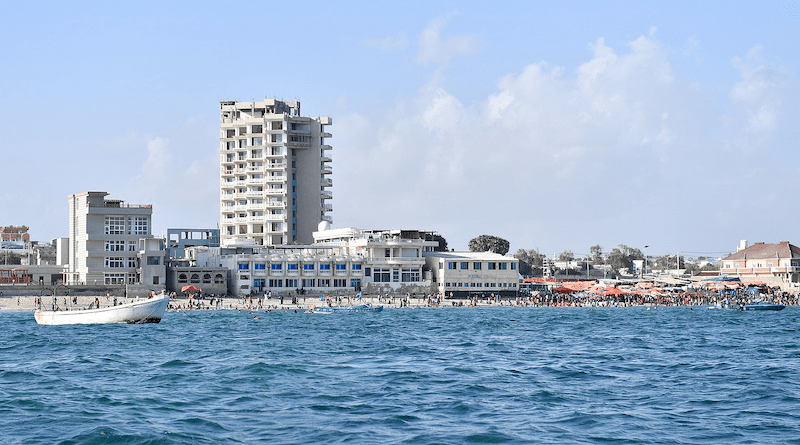
But one must not ignore those investors who believe in first mover advantage. These are investors who are generally attracted by unmet demand and are often young and specialize in frontier markets such as the Horn region presents, with its geostrategic location, its long and pristine coasts, its old histories, which are just being discovered. Somalia attracts investors in fintech, renewable energy and now beachgoers, many of them young Somali diaspora and hence tourism, where entrepreneurial dynamism and rapid adaptation outpaces risks. In Ethiopia, a slow but gradual liberalization of the economy is taking place and the opening of traditionally closed sectors like telecommunications, banking and finance, and even manufacturing is helping. Djibouti remains a traditional hub for logistics, attractive to world supply chains because of its strategic location on global shipping routes.
The governments of the region despite their unpopularity must still work to ease the economic woes of their populations. This is necessary for their political legitimacy, revenue generation, and international engagement. Reforms in banking in both Somalia and Ethiopia, Djibouti’s port diversifications, and even the gradual opening of Eritrea and especially in the mining sector, all point to the governments’ attempts to economic reform and hence opportunities for adept investors in frontier markets.
The world is not blind to the region. Its geostrategic location, its potentially large natural resources, its large and youthful population which is both a market and a source of labor with many years of working life ahead of them are recognized by many international and regional investors and indeed, development financiers. Despite the region’s challenges, the potential and compelling opportunities across many sectors including digital finance, trade corridors, industrialization and indeed, acting as supply routes for the rest of Africa through rail connections from its ports facing the manufacturing world of Asia, make the region an attractive place for both development finance and private capital.
In short, conflict complicates investment in the Horn of Africa, but it does not eliminate opportunity. Instead, it reshapes the landscape into a selective, adaptive, and risk-aware environment where essential services, strategic geography, and long-term development strategies continue to create space for meaningful economic engagement.

Like what you read?
Please consider supporting Eurasia Review. Thank you for your consideration!
