
The Horn Of Africa States: The Troubled EAC – OpEd
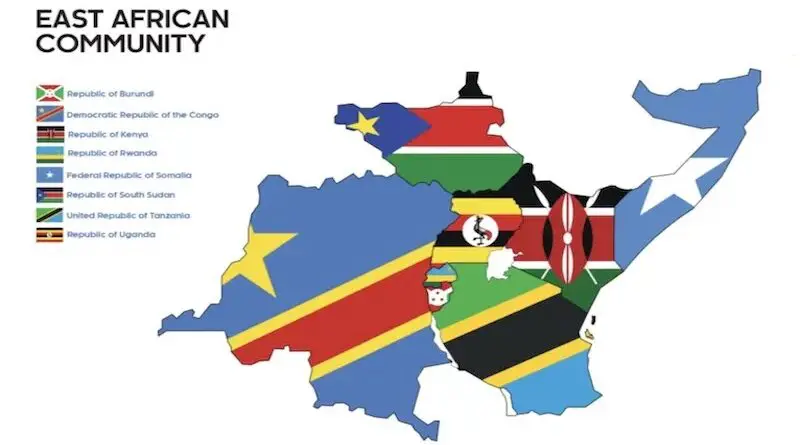
Like many regional organizations in Africa, the East African Community (EAC) faces significant challenges. While the original concept of fostering closer cooperation among Tanzania, Uganda, and Kenya was commendable, the subsequent expansion into additional countries may have been premature.
The original three did not first consolidate what they wanted to do. It was an experiment that is over a hundred years old, and which still remains an experiment, indicating that the countries have failed to make it functional and successful.
The fear of loss of “sovereignty” that is basically power has always been a major stumbling block of the organization. Diverse political ideologies, with every country prioritizing its own national interests, unequal development and trade barriers, and of course, inefficient administrative tools, mainly due to improper financing from sources beyond the member countries, in the main, and other challenges and difficulties led to the organization’s inability to move forward, beyond rhetoric.
The EAC while being unable to fix its own issues has kept expanding and bringing others with their own bags of other seemingly more complex matters. They brought in South Sudan, which is still embroiled in its own internal affairs, and which should not have joined any regional group other than the African Union. They also brought in Burundi and Rwanda, which are countries that have complex internal and external problems, mostly related to bloodletting among the citizens in both countries.
The EAC also brought in the DR Congo, a country which saw probably Africa’s only major war, involving many African countries, an endless conflict, which still today draws the attention of many nations, both African and beyond.
But the worst step was to also bring in Somalia into the fold, a country that is not even in control of its territory, where a corrupt class of clan-based politicians reign, a country which remains divided, and which is the homestead of some of the deadliest terrorist groups in the world.
The EAC is an institution that puts the cart before the horse, donkey or ox, or so it seems, despite the lofty goals it proclaims. The latest development of the organization is the shutting down of its legislative assembly for lack of funds due to the non-remittances of the contributions of its current eight member countries.
The DR Congo is almost at war with Rwanda and Somalia has been dried up by its corrupt political administration. South Sudan already owes the organization much of the contributions it should have remitted long ago, and all the others are unable to make their contributions because of their inefficiencies and lack of foresight and budgeting.
The curtailment of the United States aid funds will certainly affect the EAC more, which then puts into question as to why the organization was created in the first place if the constituent members are unable to contribute to its financing.
The weakness of most African regional organizations is that they are built on the hope that the colonial countries, whom they chased away some six decades earlier, and other countries, will still continue to finance them. Why should they?
The EAC member countries should put their houses in order, before they embark on new ventures such as the EAC, a club of presidents and prime ministers, ministers and other personnel and now even parliamentarians without a permanent and reliable source of the financing required. It is clear the citizens of the member countries are not aware of the intricacies of the organization for these have never been put to a referendum. They are not asked any way, as they are treated like sheep by their own leaders.
The EAC is marred by other challenges which the organization has failed to address. These include among others, poor physical infrastructures in terms of transportation – roads, rail and others or lack of them, instabilities in countries like the DR Congo, Somalia and South Sudan, and competition among the member countries as is the case among the original three of Kenya, Uganda and Tanzania.
The EAC member states are not genuinely serious about their memberships as they mostly belong to other regional organizations, which may have goals divergent to those of the EAC. This poses many challenges with respect to sincerity and trust among the members.
No tears will be shed by the populace of the EAC region should it be dismantled, and this is perhaps the best way to solve its current financial problems, i.e. to liquidate it as is customary for unsuccessful corporations or organizations.

Like what you read?
Please consider supporting Eurasia Review. Thank you for your consideration!
