
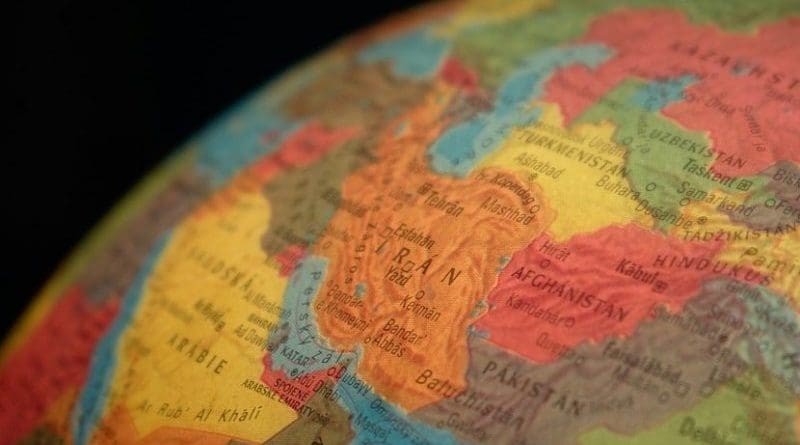
When Two Wars Collide – OpEd
The world is teetering on the edge of a crisis it neither expected nor is prepared to contain. The conflict between Israel and Iran, once confined to covert operations and diplomatic jabs, has now spilled out into open confrontation, with airstrikes, assassinations, and retaliatory escalations threatening to ignite a region already ablaze. But this is not just another Middle Eastern rivalry. It is a slow-burning fuse that, if left unchecked, could shatter the fragile architecture of world peace.
When Israeli missiles struck deep into Iranian territory earlier this month, targeting military sites and reportedly killing several senior officials and nuclear scientists, the world braced itself. Tehran vowed a “historic retaliation.” Washington urged restraint. Riyadh watched nervously. From Tel Aviv to Tehran, the message was clear: the rules of engagement had changed.
A War with No Front Lines
This is not a war over a border, or even ideology alone. It is a contest over regional supremacy, religious identity, nuclear capability, and national survival. And it is being fought in the shadows of global disorder—at a time when the world is more polarized, less anchored by international norms, and governed by leaders who often find it easier to stoke conflict than to resolve it.
Unlike previous Israeli-Arab conflicts, the Iran-Israel confrontation is uniquely combustible. Iran wields regional influence through proxies—in Lebanon, Syria, Iraq, and Yemen—while Israel is backed militarily and diplomatically by the United States and enjoys a growing web of defense ties with Sunni Arab states. The result is a region saturated with overlapping alliances and tripwires. One miscalculation, one drone strike too far, and this could spiral into a multinational war.
Already, Hezbollah’s mobilization in Lebanon, Houthi attacks in the Red Sea, and tit-for-tat skirmishes on the Syrian front have shown how wide the ripple effects could be. And yet, the international response has remained dangerously inadequate.
Why the World Cannot Look Away
The implications of an Iran-Israel war extend far beyond the Middle East. It threatens to redraw the security map of Asia, disrupt already fragile global energy markets, and derail diplomatic efforts from Vienna to Geneva. Iran’s oil exports, already under sanctions, could vanish overnight. Strait of Hormuz shipping lanes could be targeted. Gulf economies would buckle. European fuel prices—barely recovering from the war in Ukraine—would skyrocket again. Inflation would surge. Supply chains would stutter. And once again, global south countries would pay the highest price for a war they neither caused nor condoned.
Perhaps more alarmingly, a full-scale war could accelerate Iran’s nuclear ambitions, not deter them. History suggests that nations under existential threat don’t abandon their nuclear programs—they double down on them. Israel’s gamble, while tactically impressive, may prove strategically self-defeating.
Where Is Global Leadership?
What is striking in this moment is the absence of credible global leadership. The United States, increasingly inward-looking and election-bound, has offered mostly warnings and pleas for calm. The United Nations has issued condemnations, but lacks the leverage to halt hostilities. Russia and China, preoccupied with their own ambitions, have stayed on the sidelines or used the crisis to deflect attention from their own regional aggressions.
This vacuum of leadership is dangerous. It leaves room for escalation. It emboldens extremism. And it underscores how much the rules-based international order has frayed.
There was a time when even adversaries agreed on certain red lines: respect for sovereignty, non-proliferation, protection of civilians. Those lines are being blurred. And in the case of Iran and Israel, they may be erased entirely.
A Narrow Window for Peace
This conflict is not inevitable. Backchannel diplomacy still exists. Oman, Qatar, and even Turkey have played crucial roles in de-escalation before. The United States can still push both sides to pause, even if only temporarily. The European Union, fractured but still influential, must step up as a diplomatic actor, not just a commentator.
More broadly, there needs to be a renewed international effort to de-link the region’s conflicts from great-power politics. Iran and Israel do not need to love each other. But the world cannot afford for them to destroy each other—and everyone else along the way.
As history has shown, wars in the Middle East rarely stay in the Middle East. The 1973 oil embargo reshaped the global economy. The 2003 invasion of Iraq reshaped global security. The Iran-Israel conflict could reshape global peace—for the worse.
The choice is not between war and appeasement. It is between war and diplomacy. The window for that choice is narrowing. And the world must act before it slams shut.

Like what you read?
Please consider supporting Eurasia Review. Thank you for your consideration!
