
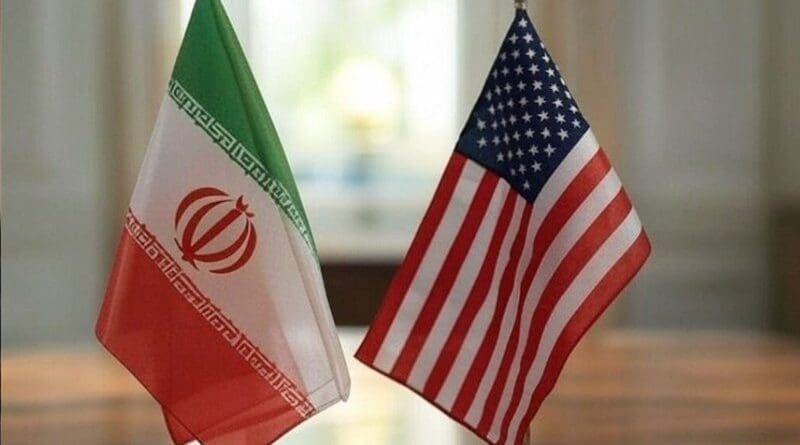
Three Stages Of War Between The United States And Iran – OpEd
The ceasefire’s chances of holding are looking very bleak now. Fruitless negotiations in Islamabad were followed by the US Navy moving into the Strait of Hormuz, scouting the area and searching for Iranian mines. Most shocking of all is Trump’s announced blockade of ships going in and out of the Persian Gulf, though this turned out to only apply to ships docking at Iranian ports. With these latest developments, it is increasingly looking like the ceasefire is merely the end of the first stage of the US-Israeli war with Iran.
What will the next stage look like? That is important to anticipate in advance, because of how the war’s economic fallout is affecting almost everyone in the world, and a geopolitical fallout is very likely to follow. Preparedness is therefore vital. Hence, I have been active in forecasting efforts. Fighting is still paused as of writing, but we are already seeing the war’s second stage take shape, so it is possible to get a sense of what lies ahead.
When Operation Epic Fury began, many people voiced concern that the US was stumbling into another quagmire just like Iraq. I countered that notion on LinkedIn by asserting that, though Iran may be the sequel to Iraq, the Trump administration is not following the same course the neocons did. They occupied Iraq and Afghanistan with the goal of nation-building, so they could not leave without everything falling apart. But Trump launched Epic Fury with the sole purpose of degrading the power of the Iranian regime, conducting the entire operation from bases where the US military was already well-established. That means he was able to stop the fighting whenever he wanted, which is exactly what he did. The US-Israeli bombing campaign largely targeted military assets, but that proved ineffective in crippling Iran. The solution was to switch to strategic bombing, which is where the Trump administration hit a major roadblock. Destroying Iran’s economy and infrastructure would risk Iran retaliating in kind to Gulf Arab nations that are vital to the global economy, prompting Trump to agree to a ceasefire instead. But the United States of America might want to enjoy it while it lasts, because what Trump cannot do is stay out of war with Iran. And this could very well be the last ceasefire America is able to implement, because the Trump administration’s entire strategy towards Iran is transforming in ways that will finally get the United States entangled in the region further.
America’s challenge right now is to find ways of overpowering Iran without provoking mutually assured destruction. The first target is Iran’s attempt to finance its recovery through a Hormuz shipping tollbooth. The Americans are right now testing the waters, seeing how deeply they can get involved without provoking war. One of their first tasks is clearing out naval mines from Oman’s territorial waters that Iran claims to have laid down there to force ships towards their own waters. But a safer strategy is simply to blockade ships doing business with Iran, because the US Navy can intercept them far away from Iranian military forces. The problem with this approach is that, if Iran is shut out of legitimate maritime trade, it will work harder to extract money from all ships passing through the Hormuz chokepoint. The US will eventually have to expand its operations and counter this either by confronting Iranian naval activity and risking military escalation or stopping all ships from passing the Strait of Hormuz, like Trump initially said, and exacerbating economic crisis.
Also, fixating on the Tehran Tollbooth would be awkward for America, since that problem began only after the war started, hence why CENTCOM’s current blockade is aimed at ships doing business with Iran instead of those Iran is extracting a toll from. The United States is targeting Iran’s entire economy in line with Trump’s original objectives. But don’t expect the US Navy to move into the Strait of Hormuz to protect shipping in a sequel to Prosperity Guardian. Protecting the economy of other nations is not a military objective for the United States in this war and it never will be. The Iranian military just threatened to block all shipping in the Persian Gulf, Gulf of Oman, and Red Sea in retaliation for its country being blockaded, apparently hoping that economic pressure against America will still work. This is curious, because the US is starting to look like it is willing to shut down all shipping itself, as Trump indicated in his initial announcement of the blockade. Several weeks ago, Trump lifted sanctions on Iranian oil tankers to ease the war’s economic shocks. Now, he is doing the exact opposite by blockading Iran. That shows the economy is becoming less of a priority for the US over time. So it won’t back down just because Iran is expanding its own blockade. But the US won’t do anything to directly safeguard commercial shipping from Iranian attacks either. There will be no escort and no convoy, only indirect protection due to US forces fighting to cut Iran off from the sea (though Iran will then just fire missiles at ships, at least until they realize they are wasting munitions on something the enemy doesn’t care about). America’s entire focus is on weakening Iran.
First, stopping all ships that provide Iran revenue, whether through trading or through the tollbooth, is a safe way to keep Iran from rebuilding itself. The US Navy may go far and wide, to places like the Strait of Malacca, to interdict ships and may start hunting down and arresting Iran’s own shipping fleet soon. When the US has built enough of a naval presence in the region, it will move into the Persian Gulf and exert naval power against Iran, so that the blockade can be tightened rather than widened. That inevitably means war resumes in its second stage.
Expect to see the US military finally attempt to seize Iran’s offshore islands while combatting the IRGC’s fleet of small watercraft, with the Tehran Tollbooth the campaign’s most likely starting point. The air campaign will resume in full force, this time acting in support of forces on the ground or sea. Iran will probably counter-attack by launching its own invasions around the Persian Gulf. Maybe they will take the Musandam Peninsula to solidify control over the Strait of Hormuz or invade Kuwait and the Iraqi coast to gain control of more oil. The US fighting with Iran, and likely the Houthis as well, over control of vital waterways will be a significant feature of the second stage of the war.
This is when it becomes harder for the US to extricate itself out of a prolonged war, because exiting the Persian Gulf means the entire effort to gain control of it goes to waste. But America will try to do something to prevent its war with Iran from dragging on. The war will be going into an escalatory spiral at this stage and the United States will be pounding Iran hard in order to make it concede. I have little idea how America executes its operations in the second stage of the war and how Iran responds, because protection of Gulf Arab countries has got to still take priority. The challenge for America is creating a different mode of escalation this time. Instead of infrastructure in Iran and the GCC countries being bombed if things intensify, which Trump stopped in time, the United States will be giving everything it has to surrounding Iran and isolating it from the rest of the world. Iran’s response will be to try to break out of this encirclement. But as the war heats up, the air campaign will likely continue intensifying. Iran is still not going to surrender. In the end, America may resort to mounting a naval and air assault on Iran so vast that Iran ends up severely weakened, its military capabilities in ruins. Then it is just about possible that the United States will be able to exit the region and enjoy one last ceasefire, which might last much longer than the current one.
That doesn’t mean that peace will return to the Middle East. I think a third stage of the US-Israeli war against Iran will slowly start to take shape in this period. I have little idea what it will look like, except that it will be the longest and most intense stage of the fighting, lasting years and spread across a wide region. And, in my mind, the war’s third stage is open-ended, as I have absolutely no idea how it concludes.
However, I believe one key ingredient will be required in order for the third stage of war to ever happen, which is the Islamic revolution becoming supreme in Iran. The secular government and regular military act as a buffer between the IRGC and other countries in the region. The United States will spend the second stage of the war testing the limits of their power and trying to make them give in to American demands. But when they finally break, the IRGC and their clerical leadership will just overthrow or sideline them and solidify Iran’s resistance to Western hegemony. Then they will start exporting the revolution, while quite likely turning their attention away from the Persian Gulf and towards the Levant where they will connect with their proxies. Iraq will be the first target of expansion, then Jordan, Syria, and Lebanon, which will clear a path towards Israel, the sworn enemy of the Islamic revolutionaries. And the United States will be meeting them there.
The first stage of the war was fought entirely in the air. The second stage will be fought both in the air and at sea. The third stage will be fought in the air, at sea, and on land. The second stage will be one massive petroleum war and the third stage will more heavily involve Iran’s nuclear technology. This is the overall picture of what is to come that we should expect if peacemaking efforts are not successful. The international community needs to prepare itself for the scenario of a long and very destructive war.

Like what you read?
Please consider supporting Eurasia Review. Thank you for your consideration!
