
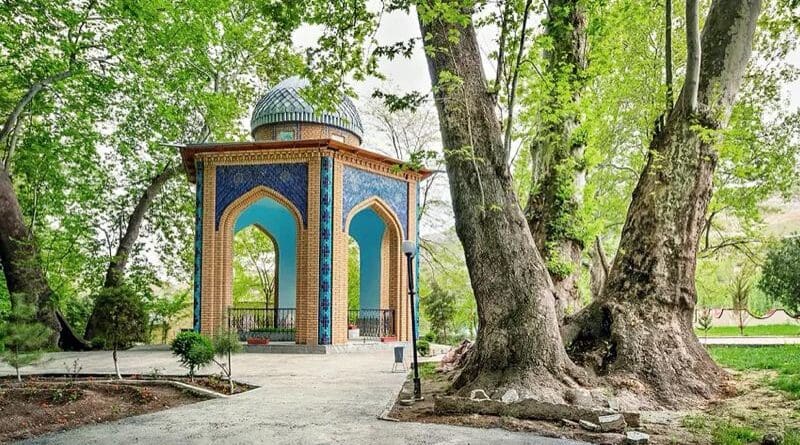
Chor Chinor: A Hidden Gem In Uzbekistan – OpEd
Uzbekistan is home to many unique hidden gems, and one of the most enchanting is Chor Chinor, located in the Urgut district of the Samarkand region. The name Chor Chinor means “Four Plane Trees,” but the site today is home to more than 120 plane trees, the oldest of which is believed to be around 1,290 years old, according to local residents.
This spiritual complex is closely linked to Khoja Abu Tolib Sarmast, a revered Islamic figure from the 8th–9th centuries. He was known to make wooden combs for a living and planted four plane trees to supply wood for his craft. Over time, more trees grew in the area, giving rise to the lush grove seen today. Many believe the oldest tree was planted by Sarmast himself.
According to local legend, Abu Tolib Sarmast entered the region alongside Kusam ibn Abbas (also known as Shakhi-Zinda) to spread Islam. It is said he preached at this site before being martyred by locals who opposed his message. His body was buried beneath one of the very plane trees he had planted.
Over the centuries, Chor Chinor has been visited by prominent historical figures such as Amir Timur (Tamerlane), Mirzo Ulugbek, Alisher Navoi, Khoja Ahror Vali, and Babur. Under Amir Timur’s command, a garden called Gulbog‘ was created about one kilometer uphill, featuring trees grafted with colorful flowers visible from afar.
Just a few steps above the ancient tree lies the marble tombstone of Abu Tolib Sarmast, crafted in Iran and placed there in 1812.
The site also houses the graves of other spiritual leaders, including Eshoni Valikhon, a prominent figure in the Sufi tradition, and his grandson, Poet-Scholar Qutbiddinkhon, both of whom carried forward the teachings of great thinkers like Bahauddin Naqshband and Khoja Ahror. Eshoni Valikhon’s son, Eshoni Muhiddin, became a renowned Islamic scholar and is buried in Medina, having passed away in 1931.
According to historian Ghaybiddin Fazliy’s “History of Khoja Chor Chinor”, a madrasa (Islamic school) was built at the site in 1792 by Urgut’s governor, Kattabek Devonbegi. It was later restored by his descendant, scholar Mir Haydar, whose tomb is also located there and was renovated in recent years.
Visitors entering Chor Chinor also come across a natural spring near the entrance. The water, emerging from a stone pool, is distributed to several neighborhoods in Urgut. Remarkably, it remains warm in winter and cold in summer, and is believed to have healing properties, especially for liver-related illnesses like hepatitis. Locals also claim it improves eyesight.
The spring is also known for visual phenomena. Some people say they have seen reflections resembling the Kaaba in its flowing waters. Additionally, rare red fish are often spotted swimming in the pool.
A visit to Chor Chinor is not just a journey through nature, but also a spiritual and historical experience—one of Uzbekistan’s many sacred and serene treasures.

Like what you read?
Please consider supporting Eurasia Review. Thank you for your consideration!
