
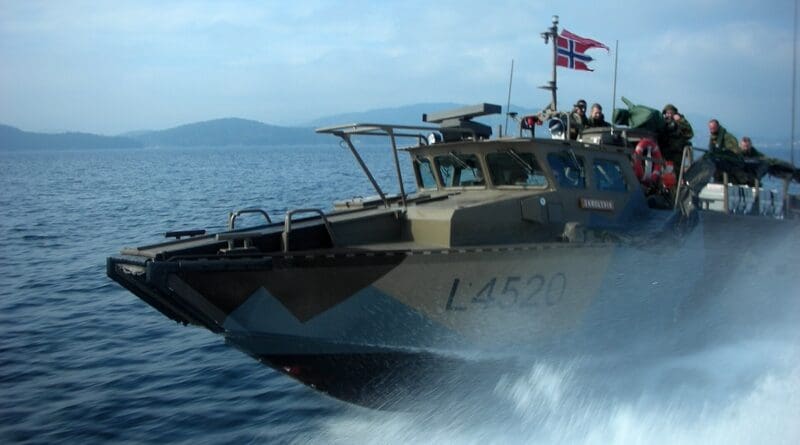
Norway Joins EU Baltic Security Effort
Key Takeaways
- Norway becomes the first non-EU member of the EU Strategy for the Baltic Sea Region (EUSBSR): The move strengthens regional cooperation on security, maritime issues, surveillance, and resilience amid heightened tensions following Russia’s invasion of Ukraine.
- Focus on Baltic Sea security: The region has seen multiple incidents of damage to undersea cables and pipelines, often linked to Russian shadow fleet vessels and Chinese carriers, raising concerns about hybrid threats.
- Enhanced collaboration: Norway gains access to high-level decision-making, steering groups, and joint initiatives, aligning its policies with EU efforts while maintaining its non-EU status.
Norway announced it has joined the European Union’s (EU) Strategy for the Baltic Sea Region (EUSBSR), the first non-EU nation to do so. The move reflects increased focus on the region’s security, particularly since Russia’s 2022 invasion of Ukraine. It also aligns with Norway’s growing participation in global security affairs.
“The Norwegian strategic perspective is that the Baltic Sea Region has become increasingly important for Norway in recent years not least due to the challenging security situation as a result of Russia’s aggression against Ukraine and its use of hybrid measures,” Espen Barth Eide, Norwegian Minister of Foreign Affairs, said in a news release. Eide first requested Norway’s participation in the strategy in October 2025. Joining EUSBSR gives Norway access to expanded collaboration on maritime coordination, surveillance and security.
Since 2023, at least 11 undersea cables and pipelines have been damaged in the Baltic Sea, according to the Center for European Policy Analysis. Investigations into several incidents have pointed to civilian commercial vessels — including ships associated with Russia’s “shadow fleet” and Chinese-operated carriers — suspected of dragging anchors across critical energy and telecommunications corridors that form the backbone of Europe’s digital connectivity. In December 2024, Finnish authorities seized a Russia-affiliated vessel they believed carved a 96.5-kilometer-long anchor drag mark on the sea floor in the Gulf of Finland, damaging an electricity cable. Authorities later charged the captain and two senior officers of the ship with aggravated criminal mischief and aggravated interference with communications related to the incident.
The European Council approved the formation of the EUSBSR in 2009 with three focus areas, according to its website: save the sea, connect the region and increase prosperity. As European nations assume more responsibility for the region’s security, the EU is playing a larger role, leveraging the union’s financial power and industrial policy to support NATO’s security efforts.
In addition to new member Norway, the EUSBSR comprises Denmark, Estonia, Finland, Germany, Latvia, Lithuania, Poland and Sweden. Iceland participates as a neighboring partner country.
Norway’s inclusion in the strategy reflects the EU’s continued commitment to reinforcing cooperation with non-EU partners within macro-regional frameworks, the European Commission said in a news release. “Norway’s full membership of the EU Strategy for the Baltic Sea Region will further enhance our collective capacity to address shared challenges — from security and resilience to innovation and territorial cohesion,” Raffaele Fitto, the commission’s executive vice president for cohesion and reforms said. “It also reinforces the Baltic dimension of EU cooperation and is fully in line with the Commission’s Communication on strengthening the EU’s eastern border regions, highlighting the strategic importance of resilience, connectivity and stability in these areas.”
Joining the group provides new opportunities to participate in areas such as maritime cooperation, surveillance and security, Eide said, according to Reuters. “Membership will strengthen Norway’s cooperation with the EU in a region that has become central to European and Norwegian security.” Norway will participate in high-level decision-making within the strategy and appoint members to its steering groups, ensuring that the planned activities cover the views and the needs of the region.
“I believe membership in the Strategy will strengthen cooperation on regional development and help build more resilient regions from north to south,” said Bjørnar Selnes Skjæran, Norwegian minister of local government and regional development.
- This article was published by Sentry

Like what you read?
Please consider supporting Eurasia Review. Thank you for your consideration!
