
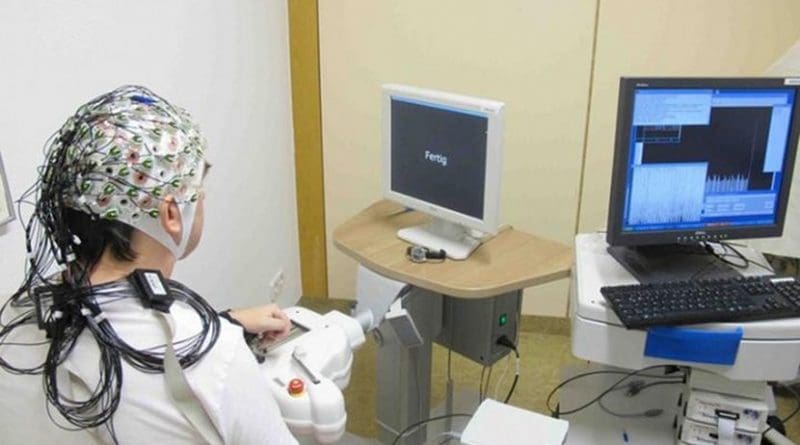
Potential Brain-Machine Interface For Hand Paralysis
A brain-machine interface that combines brain stimulation with a robotic device controlling hand movement increases the output of pathways connecting the brain and spinal cord, according to a study of healthy adults published in JNeurosci. This work could have implications for restoring function in stroke patients with hand paralysis.
Alireza Gharabaghi and colleagues asked participants to imagine opening their hand without actually making any movement while their hand was placed in a device that passively opened and closed their fingers as it received the necessary input from their brain activity.
The researchers demonstrate that stimulating the hand area of the motor cortex at the same time, but not after, the robotic device initiated hand movement increased the strength of the neural signal, most likely by harnessing the processing power of additional neurons in the corticospinal tract.
However, the signal decreased when participants were not required to imagine moving their hand. Delivering brain stimulation and robotic motor feedback simultaneously during rehabilitation may therefore be beneficial for patients who have lost voluntary muscle control.

Like what you read?
Please consider supporting Eurasia Review. Thank you for your consideration!
