
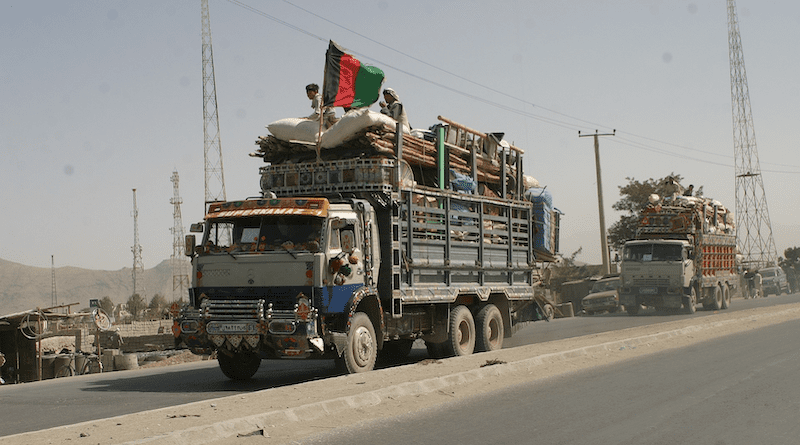
Afghanistan-Pakistan: Security Over Refugee Crisis Priorities – OpEd
The Deputy Prime Minister of Afghanistan Abdul Salam Hanafi demanded neighboring nations to end forced deportations of Afghan refugees since he maintained humanitarian issues along with the necessity of regional cooperation. The statement made by Hanafi does not consider Pakistan’s current worries about security despite the problematic circumstances throughout his country.
As a country which hosted millions of Afghan refugees since the 1980s Pakistan confronts a difficult situation between its traditional refugee host duties and urgent national security requirements. The Interim Afghan Government’s (IAG) rejection to control terrorist actions on its soil raises doubts about Afghanistan’s dedication to peace and security particularly because evidence reveals Afghan refugees participate in Pakistan’s terrorist attacks.
The situation of Afghan refugees needs extensive empathy because their country has endured years of chaos yet Pakistan requires acknowledgment for its national sovereignty rights. Extreme violent acts from Afghanistan target Pakistan as the country maintains heightened security status after the Naushki assault. The sacrifices Pakistan made to stop terrorism have not shielded it from terrorist groups which use Afghan territory as their base without fear of repercussions. The case develops more complex dimensions when citizens of Afghanistan relate to these terror activities through intentional or inadvertent means.
The Pakistani government has legitimate security issues which demand urgent attention. Numerous reliable sources confirm that Afghan nationals including illegal immigrants have engaged in terror attacks on Pakistani soil. The internal security condition deteriorates when terrorism strikes at Pakistan and endangers the safety of Pakistani citizens. The IAG maintains its opposition against Afghan national repatriation despite Pakistani security concerns which are not properly addressed. A key dilemma emerges because the IAG demonstrates insufficient ability or unwillingness to combat terrorist strongholds in Afghanistan so how can surrounding states be responsible for appearing threats? Pakistan faces no alternative because regional leaders block acknowledgment of security threats thus it must implement their own border enforcement which includes deporting illegal Afghan citizens.
The global community exhibits weak support toward Pakistan’s deportation practices even though they demonstrate equal compassion toward expulsion decisions of other countries. National measures to deport illegal immigrants such as those performed by the United States and Germany receive minimal international criticism. Pakistan faces strong international criticism for executing its border control regulations which protect national security although other nations conducting similar eviction policies receive minimal responses. The stark double standard in how Pakistan faces criticism for its border control policies raises alarm because it disregards the Pakistani security situation while viewing Afghan refugee matters as humanitarian instead of geopolitical.
Pakistan provided safe haven throughout decades to millions of Afghan refugees displaced by the ongoing war in their country. The unlimited support for undocumented migration should not exist because it puts national security at risk. The nearly 40-year duration of the Afghan refugee crisis requires Pakistan to pause its exceptional refugee aid because it cannot serve as a final resolution to this international matter.
The analysis requires close attention to the wider regional conditions affecting the situation. Under the rule of the IAG Afghanistan suffers from an unstable political environment which hinders its territorial control. Terrorist groups consisting of Taliban and ISIS-Khorasan (ISIS-K) and other affiliates work without restriction inside the Afghan-Pakistani border region.
The border control strategies implemented by Pakistan to protect its nation along with its repatriation of Afghan refugees having terrorist backgrounds should not be interpreted as violations of international human rights standards. The action reflects respectful nation-state authority as the foundation for protecting citizens from domestic threats.
The international community needs to avoid unjustly criticizing Pakistan because its government implements protective measures to defend its people. The strong presence of Afghan refugees in Pakistan since the 1980s approaches a boundary where Pakistan needs to prioritize its national security. When countries prevent the return of people connected to terrorism they weaken the stability programs implemented by neighboring countries. Other countries should stop bearing the endless burden of Afghanistan’s border terrorism prevention when the country fails to administrate this obligation.
The matter of Afghan refugees requires balanced attention to human needs while Pakistan and other border countries demand recognition of their territorial and security obligations. National security considerations determine how we should evaluate Pakistan’s policy towards Afghan refugees instead of solely relying on political or diplomatic dimensions. The right of Pakistan to guard its citizens from terrorism and illegal migration effects warrants recognition while the IAG must handle security problems that originate from inside Afghanistan. Pakistan’s actions will persist as a required and legitimate answer to the present crisis.

Like what you read?
Please consider supporting Eurasia Review. Thank you for your consideration!
