Moroccan Migration Governance: Balancing Sovereignty, Security, And Human Rights – Analysis
This essay examines Moroccan migration governance through the intersecting lenses of state sovereignty, security imperatives, and international human rights obligations. Drawing on policy analysis, legal frameworks, and empirical scholarship, the essay traces Morocco’s evolution from a country of emigration to a major transit and destination country for sub-Saharan African migrants and asylum seekers, situating this transformation within the broader dynamics of Euro-African geopolitics. The National Strategy for Immigration and Asylum (2013), coupled with successive regularization campaigns, is analyzed as Morocco’s flagship institutional response to the humanitarian dimensions of migration. Simultaneously, the essay interrogates the persistent tensions between border externalization arrangements with the European Union, notably the 2003 readmission agreement and post-2015 Trust Fund mechanisms, and the Kingdom’s self-projected image as a humanitarian actor committed to African solidarity. Intersectional issues—including racial discrimination against sub-Saharan migrants, gendered vulnerabilities, and violence at border zones such as Melilla and Nador—are critically assessed. The essay concludes that while Morocco has made notable progress in constructing a rights-sensitive migration framework, deep structural contradictions remain between its security-driven border management architecture and its humanitarian aspirations, contradictions that are partly constitutive of its strategic positioning between African and European partners.
1. Introduction
Migration occupies an increasingly central position in global political discourse, commanding the attention of states, international organizations, civil society actors, and scholarly communities alike. For Morocco, a country situated at the literal crossroads between the African continent and southern Europe, migration is not merely a policy question but a constitutive feature of national identity, political economy, and diplomatic strategy. The Strait of Gibraltar, barely fourteen kilometers at its narrowest point, represents one of the most consequential geographic thresholds in the contemporary world—a site of aspiration, risk, violence, and complex governance (Andersson, 2014). Morocco’s position astride this passage has made it simultaneously an exporter of labor, a transit corridor for sub-Saharan African migrants seeking European entry, and, increasingly, a destination country in its own right.
The scholarly literature on Moroccan migration governance has grown substantially over the past two decades, reflecting both the empirical significance of Morocco as a case study and the broader theoretical stakes of understanding how middle-income states in the Global South navigate the competing demands of sovereignty, security, and human rights (de Haas, 2007; Natter, 2014; Lahlou, 2018). This literature converges on a central paradox: Morocco has constructed an increasingly sophisticated legal and institutional framework oriented toward the protection of migrants and refugees, while simultaneously functioning as Europe’s southern border guard through externalization arrangements that have drawn sustained criticism from human rights organizations (Alioua, 2011; Collyer, 2016; Boubakri, 2013).
This essay contributes to this debate by providing a comprehensive analytical account of Moroccan migration governance in its multiple dimensions. It proceeds as follows. The first section historicizes Morocco’s migration trajectory, examining the transition from emigration country to transit and destination state. The second section analyzes the institutional and legal architecture of Moroccan migration policy, with particular attention to the 2013 National Strategy for Immigration and Asylum and the regularization campaigns of 2014 and 2017. The third section examines the sovereignty and security dimensions of Moroccan border governance, situating them within the context of Euro-Moroccan cooperation. The fourth section critically assesses the human rights record, focusing on documented abuses, racial discrimination, and gendered vulnerabilities. The fifth section explores the diplomatic and African solidarity dimensions of Morocco’s migration positioning. A concluding section synthesizes the analysis and reflects on the ongoing tensions between humanitarian and securitarian imperatives.
2. Morocco’s Migration Trajectory: From Emigration to Transit and Destination
To understand contemporary Moroccan migration governance, it is necessary to trace the historical evolution of the country’s relationship with human mobility. From the 1960s through the 1980s, Morocco was predominantly a country of emigration, supplying labor to Western European economies—principally France, Belgium, the Netherlands, and Germany—under bilateral recruitment agreements (Iskander, 2010). The Moroccan diaspora, numbering approximately five million individuals by the early twenty-first century, became a crucial economic actor, remitting substantial sums that consistently constituted between six and eight percent of GDP (World Bank, 2020). Emigration was thus not merely a demographic phenomenon but a structured pillar of Moroccan political economy, actively facilitated by the state through the Fondation Hassan II pour les Marocains Résidant à l’Étranger and later the Conseil de la Communauté Marocaine à l’Étranger (de Haas, 2007).
The transformation of Morocco into a transit country began in earnest in the 1990s and accelerated through the 2000s, driven by a confluence of factors: the hardening of European external borders through the Schengen regime, economic and political instability across sub-Saharan Africa, and the relative accessibility of Morocco as a staging point for attempted crossings into the Spanish enclaves of Ceuta and Melilla or by sea to the Canary Islands and the Iberian mainland (Barros et al., 2002; Collyer, 2007). Migrants from Senegal, Mali, Guinea, Cameroon, Côte d’Ivoire, and the Democratic Republic of Congo, among other countries, established increasingly organized migratory networks traversing the Sahara and entering Morocco through its southern borders with Algeria and Mauritania.
The turn of the millennium witnessed intensifying European pressure on Morocco to stem irregular migratory flows. The 2003 Rabat-Madrid readmission agreement, the 2004 launch of EU-Morocco negotiations on a Euro-Mediterranean Association Agreement, and the 2008 Advanced Status granted by the European Union to Morocco all inscribed migration control as a central element of bilateral relations (Ferrer-Gallardo, 2008). Morocco increasingly assumed the role of southern buffer—a function it performed through enhanced border policing, mass roundups of irregular migrants in northern border zones, and their forced displacement to the Algerian and Mauritanian frontiers. This period was marked by numerous documented incidents of violence, including the October 2005 events at the Ceuta and Melilla border fences in which security forces of both countries were implicated in the deaths of migrants (Amnesty International, 2006; Human Rights Watch, 2014).
Simultaneously, Morocco was witnessing the emergence of a settled migrant population that did not continue toward Europe but remained in the country, particularly in Rabat, Casablanca, Tangier, and Oujda. This population—composed of students, economic migrants, trafficked persons, and asylum seekers registered with the United Nations High Commissioner for Refugees—was largely invisible in policy terms until the paradigm shift of 2013 (Alioua, 2011; Natter, 2014). The King’s royal speech on August 20, 2013, followed by the mandate given to the National Human Rights Council to produce a report on migrant rights, marked the opening of a new chapter in Moroccan migration governance (Conseil National des Droits de l’Homme, 2013).
3. The Institutional Architecture of Moroccan Migration Policy
The National Strategy for Immigration and Asylum (NSIA), formally adopted in 2014 following the 2013 royal directive, represented a qualitative break with the predominantly security-oriented approach that had characterized Moroccan migration governance since the 1990s. The NSIA articulated a comprehensive framework built on four pillars: the regularization of the legal status of migrants in irregular situations, the facilitation of access to fundamental social services, the promotion of social integration, and the harmonization of the national asylum framework with international law (Ministère Délégué Chargé des Marocains Résidant à l’Étranger et des Affaires de la Migration, 2014). The strategy explicitly positioned Morocco as a humanitarian actor animated by the values of African solidarity, human dignity, and international commitments.
The first extraordinary regularization campaign, conducted between 2014 and 2016, processed approximately 23,000 applications and granted legal status to approximately 18,000 individuals—approximately 78% of applicants—including migrants from Senegal, Syria, Côte d’Ivoire, Guinea, and Cameroon (Natter, 2018). The criteria for regularization included documented spousal relationships with Moroccan nationals or legally resident foreigners, five-year continuous residence, employment contracts with officially registered employers, and serious illness requiring continued medical treatment. A second regularization campaign in 2017 processed an additional 28,400 applications, regularizing approximately 25,000 individuals (International Organization for Migration, 2018). These campaigns were widely praised by international observers and human rights organizations as meaningful steps toward the dignified treatment of migrant populations.
In the area of asylum, Morocco ratified the 1951 Refugee Convention and its 1967 Protocol, and the UNHCR maintains a registration and protection operation in Morocco with a caseload that exceeded 15,000 registered refugees and asylum seekers by 2019, predominantly from Syria, Iraq, and sub-Saharan Africa (United Nations High Commissioner for Refugees, 2020). The NSIA committed Morocco to establishing a national asylum system with its own adjudication capacity, reducing dependence on UNHCR for refugee status determination. However, progress in this area has been substantially slower than in regularization, with no comprehensive asylum law having been enacted as of the time of writing, leaving the national framework incomplete and asylum seekers in a position of continued legal precarity (Lahlou, 2018; Alioua, 2019).
Access to education was extended to the children of migrants irrespective of their legal status through a 2014 circular from the Ministry of National Education, a measure praised by child rights advocates. Access to public healthcare was similarly affirmed in principle, though implementation barriers—including linguistic obstacles, geographic concentration of services in urban centers, and limited awareness among both migrants and service providers—substantially constrained effective access (Médecins Sans Frontières, 2013; Chtatou, 2026, June 15)). Social integration programs, including vocational training and language instruction, were developed in partnership with civil society organizations, though funding constraints limited their scale and reach.
The institutional landscape of Moroccan migration governance involves a multiplicity of actors whose mandates sometimes overlap and occasionally conflict. The Ministère Délégué Chargé des Marocains Résidant à l’Étranger et des Affaires de la Migration bears primary responsibility for migration policy coordination. The Direction Générale de la Sûreté Nationale and the Forces Auxiliaires manage border security and enforcement. The Conseil National des Droits de l’Homme provides oversight and rights-monitoring functions. International organizations, including UNHCR, IOM, and UNICEF, operate important protection and assistance programs. Civil society organizations, including the Groupe Antiraciste de Défense et d’Accompagnement des Étrangers et des Migrants (GADEM) and the Association des Femmes Africaines de la Tête d’Or (AFATHO), provide frontline services and advocacy (Lahlou, 2018; Boubakri, 2013).
4. Sovereignty, Border Security, and Euro-Moroccan Cooperation
Notwithstanding the humanitarian orientation of the NSIA, the security dimensions of Moroccan migration governance have remained robust and, in important respects, have intensified in response to both European pressure and autonomous Moroccan security imperatives. Understanding this dimension requires locating Morocco within the broader architecture of EU migration externalization—a policy framework through which the European Union has systematically sought to prevent irregular migration by shifting responsibility for detection, interception, detention, and return to transit countries in the EU’s southern and eastern neighborhoods (Lavenex, 2006; Bialasiewicz, 2012; Gammeltoft-Hansen & Sørensen, 2013).
Euro-Moroccan cooperation on migration management has intensified across multiple channels since the early 2000s. The Europeanization of Moroccan border policy proceeded through bilateral agreements with Spain—including the 1992 readmission agreement, financial and technical support for border surveillance infrastructure, and the deployment of Spanish Guardia Civil officers to operate jointly with Moroccan authorities in border zones—and through EU-level frameworks including the European Neighborhood Policy, the Rabat Process, and the EU Emergency Trust Fund for Africa (Ferrer-Gallardo, 2008; Collyer, 2016). Substantial EU financial support has been channeled to Morocco for border management capacity building, including the construction of surveillance technology along the northern coastline and the Oujda-Nador corridor.
Morocco’s sovereign assertion of its right to border control is analytically inseparable from this geopolitical context. The Moroccan state simultaneously presents border management as a sovereign prerogative reflecting national security imperatives and as a service rendered to European partners in exchange for political recognition and financial transfers (Natter, 2014). This double logic—sovereignty plus partnership—enables Morocco to resist what it characterizes as European attempts to dictate the terms of migration management while simultaneously accommodating European preferences in operational practice (Lahlou, 2018). The friction between these registers became acutely visible in the May 2021 crisis in Ceuta, when Moroccan authorities briefly relaxed border controls in the context of a diplomatic dispute with Spain over the medical treatment of Polisario Front leader Brahim Ghali, triggering the arrival of approximately 10,000 people in the Spanish enclave within 48 hours and provoking a diplomatic crisis (Picheta, 2021).
The anti-trafficking dimension of Moroccan border security deserves particular attention. Human trafficking—encompassing both labor exploitation and sexual exploitation—has been recognized as a serious problem in the Moroccan migration context, with sub-Saharan women and children particularly vulnerable (International Organization for Migration, 2018; Groupe Antiraciste de Défense et d’Accompagnement des Étrangers et des Migrants, 2018). Morocco adopted Law No. 27-14 on Combating Human Trafficking in 2017, establishing a national legislative framework for prosecution and victim protection broadly aligned with the UN Palermo Protocol. The National Authority to Combat Trafficking in Persons, established under the law, coordinates inter-agency responses, though civil society organizations have noted persistent gaps in victim identification and protection mechanisms (Chtatou, 2026, June 15). Smuggling networks operating along routes from West and Central Africa through the Sahara to Moroccan border zones have been targeted by law enforcement operations coordinated with Interpol and bilateral partner agencies.
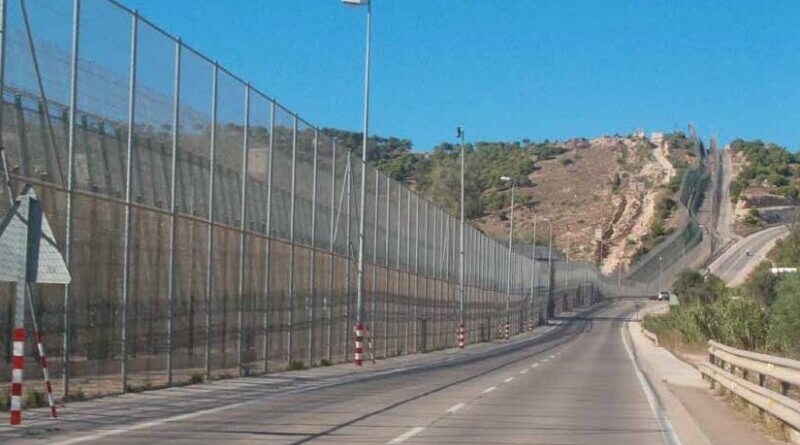
The management of the Melilla and Ceuta border fences—whose five-to-six-meter-high triple barriers equipped with razor wire have become potent symbols of European border policy—involves complex sovereign entanglements between Spain and Morocco. The periodic mass attempts by groups of migrants to scale these barriers, including highly publicized events in 2012, 2014, 2017, and 2021, have been met with coordinated security responses by both Spanish and Moroccan forces, with documented use of rubber bullets, tear gas, and physical force (Human Rights Watch, 2014; Groupe Antiraciste de Défense et d’Accompagnement des Étrangers et des Migrants, 2018). The legal and human rights status of migrants apprehended in these operations—including their access to asylum procedures and protection against refoulement—remains deeply contested (Amnesty International, 2015).
5. Human Rights Dimensions: Achievements, Failures, and Structural Tensions
The human rights record of Moroccan migration governance presents a genuinely complex picture that resists simple characterization as either progressive or abusive. Significant institutional advances—the NSIA, regularization campaigns, anti-trafficking legislation, access to education—coexist with documented patterns of violence, racial discrimination, and structural exclusion that undermine the state’s humanitarian self-presentation.
Among the most persistent concerns documented by human rights organizations is the pattern of collective expulsions and forced displacements of sub-Saharan migrants from northern Morocco to the Algerian and Mauritanian borders. These operations, which intensified particularly during periods of heightened European attention following large-scale border incidents, have been documented by GADEM, Amnesty International, Human Rights Watch, and Médecins Sans Frontières. Migrants intercepted in the Nador-Oujda-Tangier corridor have reported being transported in buses to the desert frontier without their belongings, in conditions that exposed them to serious risks of dehydration, violence by criminal networks at the border, and death (Amnesty International, 2015; Human Rights Watch, 2014; Médecins Sans Frontières, 2013). In documented cases, registered refugees and asylum seekers holding UNHCR cards were subjected to such expulsions, in apparent violation of the non-refoulement principle (Alioua, 2019).
Racial discrimination constitutes a structural dimension of the experience of sub-Saharan African migrants in Morocco that operates both through state action and through social attitudes among segments of the Moroccan population (Chtatou, 2016). Survey data and qualitative research have documented widespread experiences of racist verbal abuse, discrimination in housing markets, exclusion from employment opportunities, and differential treatment by law enforcement authorities based on phenotypical markers associated with sub-Saharan African origin (Groupe Antiraciste de Défense et d’Accompagnement des Étrangers et des Migrants, 2018; Boubakri, 2013). The intersection of anti-Black racism with Morocco’s own complex racial and ethnic history—including the historical presence of the Haratin population and the legacy of trans-Saharan slavery—creates a particular social context in which sub-Saharan migrants navigate stigmatization (Chtatou, 2026, June 15). The Moroccan state has acknowledged the problem of racism at the rhetorical level, and the NSIA identified combating discrimination as a strategic objective, but civil society organizations have noted the absence of effective enforcement mechanisms and the impunity that frequently attaches to racist acts.
Gendered vulnerabilities represent another critical dimension of the human rights situation. Women migrants from sub-Saharan Africa face intersecting risks of sexual violence, trafficking for sexual exploitation, and specific obstacles to accessing reproductive health services and legal protection. Research by Médecins Sans Frontières (2013) documented high rates of sexual violence among female migrants in transit in Morocco, with perpetrators including criminal networks, smugglers, and, in some cases, security forces. The social stigmatization of sexual violence victims, compounded by lack of familiarity with legal recourse mechanisms and fear of deportation, severely constrained access to justice and medical care (International Organization for Migration, 2018; Alioua, 2019).
The condition of unaccompanied migrant children represents a particularly acute protection concern. Children traveling without parents or guardians—many from West African countries, including significant numbers from Guinea—have been documented sleeping in parks, forests, and informal settlements in Ceuta, Melilla, and Tangier, without adequate access to child protection services, education, or legal representation (UNICEF, 2017). The formal institutional framework for child protection in Morocco does not systematically encompass non-national children in irregular situations, creating a protection gap with significant human rights implications.
Access to justice for migrants who experience violence, theft, or exploitation is significantly constrained by multiple structural factors: linguistic barriers, fear of deportation, lack of knowledge of legal rights, distrust of law enforcement authorities, and limited legal aid availability (Lahlou, 2018). Civil society organizations operating within Morocco’s relatively vibrant associational sector—GADEM, the Association Marocaine des Droits Humains, Caritas, and numerous smaller organizations—have partially filled this gap, providing legal counsel, documentation assistance, and psychosocial support. However, their capacity relative to the scale of need is limited, and they have at times faced administrative obstacles in their operations.
6. Morocco, African Solidarity, and the Diplomatic Dimension of Migration
Morocco’s migration governance cannot be fully understood without situating it within the Kingdom’s broader African diplomatic strategy. Since King Mohammed VI’s reinvigoration of Morocco’s African engagement following the country’s return to the African Union in 2017 after a thirty-three-year absence, Morocco has systematically cultivated an identity as a responsible and generous African partner—a narrative in which its treatment of sub-Saharan migrants plays an important symbolic role (Bourdieu, 2018; Chtatou, 2026, June 15).
The 2018 Global Compact for Safe, Orderly, and Regular Migration, intergovernmental negotiations for which were launched at a high-level conference hosted by Morocco in Marrakesh in December 2018, provided an important arena for the articulation of Morocco’s migration governance identity. Morocco played an active role in the negotiations and the Marrakesh Conference represented a diplomatic success for the Kingdom, reinforcing its positioning as a bridge between African and European perspectives on migration management (United Nations General Assembly, 2018). The symbolic significance of hosting the conference should not be underestimated: it allowed Morocco to present itself as a responsible multilateral actor committed to the humanization of migration governance while simultaneously continuing bilateral security cooperation with European partners.
Morocco’s membership in the Rabat Process—the Euro-African Dialogue on Migration and Development launched in 2006—and its active participation in the Khartoum Process and the African Union-European Union migration dialogue frameworks further inscribe it within a web of multilateral migration governance arrangements. Within these forums, Morocco has advocated for development-oriented approaches to irregular migration that address root causes of displacement rather than focusing exclusively on border enforcement—a position aligned with African Union perspectives and broadly endorsed by international organizations and civil society (Boubakri, 2013).
Morocco’s bilateral cooperation on migration with countries of origin of sub-Saharan migrants—including Senegal, Mali, Guinea, Niger, and the Democratic Republic of Congo—encompasses consular protection arrangements, readmission agreements, joint management of migratory flows, and development cooperation investments in migrant-sending communities. These bilateral frameworks reflect Morocco’s dual positioning: as a partner of West African states seeking to protect their citizens in transit and as a state with its own interest in managing the volume and composition of migration flows through its territory (International Organization for Migration, 2018; Lahlou, 2018).
The African solidarity narrative also has domestic political dimensions. Morocco’s Amazigh and Arab populations have historical connections to the Saharan and Sahelian worlds, and the presence of West and Central African students, traders, and migrants is not entirely novel to Moroccan urban environments (Chtatou, 2026, June 15). However, the scale and composition of recent migration flows represent genuinely new social realities that require managed negotiation between narratives of solidarity and anxieties about social change, labor market competition, and public order (Alioua, 2019). The Moroccan state’s communication on migration has oscillated between emphasizing humanitarian commitments and legitimizing security measures, reflecting genuine tensions within the governance framework rather than a settled policy consensus.
7. Structural Contradictions and Future Trajectories
Having examined the multiple dimensions of Moroccan migration governance—institutional, security-oriented, human rights-oriented, and diplomatic—it is possible to identify the structural contradictions that animate ongoing tensions within the framework. These contradictions are not merely technical policy problems but reflect deeper tensions between competing logics of governance that are unlikely to be resolved in the short term.
The first structural contradiction concerns the simultaneity of humanitarian aspiration and security operation. Morocco has constructed a genuine institutional infrastructure for migrant protection while continuing to conduct operations—forced displacement toward desert frontiers, collective roundups, cooperation with EU border surveillance systems—that fundamentally compromise the rights of the populations the protection framework ostensibly serves. This simultaneity is not hypocritical in a simple sense but reflects the genuinely dual character of Morocco’s position: it must satisfy European partners whose financial and political support is crucial for Moroccan development goals, while also maintaining domestic legitimacy and an international humanitarian identity (Natter, 2014; Collyer, 2016).
The second structural contradiction concerns the asymmetry between rights on paper and rights in practice. The legal and institutional framework of Moroccan migration governance—constitutional provisions, international treaty commitments, the NSIA, anti-trafficking legislation, education and health access circulars—is considerably more protective than the lived experience of many migrants would suggest. Implementation gaps, resource constraints, bureaucratic dysfunctions, and the discretionary exercise of enforcement powers by frontline officials create systematic divergences between formal entitlements and substantive access (Lahlou, 2018; Groupe Antiraciste de Défense et d’Accompagnement des Étrangers et des Migrants, 2018).
The third structural contradiction concerns the relationship between migration control and development. European border externalization arrangements have transferred significant costs to Morocco—including the social and infrastructural costs of hosting large populations of migrants in irregular situations and the reputational costs of association with border violence—while the development benefits of Euro-Moroccan cooperation, though real, have not been commensurate with these costs (de Haas, 2007; Ferrer-Gallardo, 2008). The fundamental imbalance of this relationship reflects broader asymmetries of power and interest between the European Union and its southern neighbors, asymmetries that the language of partnership and cooperation tends to obscure.
The fourth structural contradiction concerns the relationship between Morocco’s African vocation and its European orientation. Morocco aspires to be both a trusted African partner committed to south-south solidarity and a reliable European security partner controlling migration at the continent’s southern frontier. These roles are not inherently incompatible—Morocco has demonstrated considerable diplomatic sophistication in managing them simultaneously—but they do generate real tensions, particularly when the interests of sub-Saharan migrants and the migration control preferences of European states point in opposite directions.
Future trajectories of Moroccan migration governance will be shaped by several intersecting dynamics. Demographic and economic pressures in sub-Saharan Africa—including population growth, climate change-driven displacement, and the impacts of global economic shocks—are likely to sustain high levels of migration aspiration and mobility. European migration politics, characterized by continued restrictionism and border hardening, will maintain pressure on Morocco as a buffer state. The evolution of Morocco’s domestic political economy—including progress on social protection systems, labor market formalization, and anti-discrimination enforcement—will shape the conditions of migrant inclusion or exclusion. And Morocco’s strategic choices regarding its African and European partnerships will continue to inflect the balance between humanitarian and securitarian orientations within its migration governance framework.
8. Conclusion
Moroccan migration governance represents one of the most instructive contemporary cases of a middle-income, strategically positioned Global South state attempting to navigate the competing demands of state sovereignty, security imperatives, and human rights obligations in a domain of acute geopolitical salience. Morocco’s experience illustrates the possibilities and limitations of humanitarian reform within a structural context shaped by asymmetric power relations between sending, transit, and receiving regions.
The National Strategy for Immigration and Asylum of 2013–2014 and the successive regularization campaigns it produced represent genuine achievements—evidence that policy reform oriented toward migrant dignity and inclusion is possible even within a context of persistent European externalization pressure. The extension of educational access to migrant children, the development of anti-trafficking legislation, the engagement in multilateral migration diplomacy at forums such as the Marrakesh Global Compact Conference—these are meaningful institutional accomplishments that represent real improvements in the lives of migrants in Morocco.
Yet the persistent documentation of forced expulsions to desert frontiers, violence at the Melilla and Nador border zones, racial discrimination in housing and employment, and the vulnerabilities of women and unaccompanied children in transit—all amply evidenced in the scholarship and human rights reporting reviewed in this essay—testifies to the deep structural contradictions between humanitarian aspiration and securitarian practice. These contradictions are not incidental malfunctions within an otherwise coherent governance framework; they are constitutive features of Morocco’s strategic positioning between Africa and Europe.
The path toward more coherent and genuinely rights-protective migration governance in Morocco will require addressing these structural contradictions rather than papering over them with rhetorical commitments. It will require a rebalancing of the terms of Euro-Moroccan migration cooperation such that Morocco’s obligations as a human rights state are not systematically subordinated to European border security preferences. It will require sustained investment in the implementation infrastructure—legal aid, anti-discrimination enforcement, child protection services—necessary to give practical effect to formal entitlements. And it will require a national conversation about race, identity, and belonging that honestly confronts the anti-Black racism that shapes the experience of sub-Saharan migrants in Moroccan society.
Morocco’s experience offers the broader field of migration governance studies a rich case study in the complexity and contestation that attends the governance of human mobility in an interconnected and profoundly unequal world. It resists both the triumphalist narrative of humanitarian reform and the dystopian narrative of border violence, requiring instead a nuanced analytical engagement with the multiple, competing logics that simultaneously animate state action. As the global politics of migration continues to evolve, Morocco’s ongoing navigation of sovereignty, security, and human rights will remain a subject of urgent scholarly and policy attention.
References
- Alioua, M. (2011). La migration transnationale des Africains subsahariens au Maghreb: L’exemple de l’étape marocaine. Maghreb-Machrek, 4(185), 53–68. https://doi.org/10.3917/machr.185.0053
- Alioua, M. (2019). Les « transmigrants » africains au Maroc: Entre visibilité et exclusion. Revue Européenne des Migrations Internationales, 35(1–2), 99–120. https://doi.org/10.4000/remi.12345
- Amnesty International. (2006). Spain and Morocco: Failure to protect the rights of migrants (Report EUR 41/009/2006). Amnesty International.
- Amnesty International. (2015). Morocco: Forced to leave: Migrants expelled to the Algerian border (MDE 29/2364/2015). Amnesty International.
- Andersson, R. (2014). Illegality, Inc.: Clandestine migration and the business of bordering Europe. University of California Press.
- Barros, L., Lahlou, M., Escoffier, C., Pumares, P., & Ruspini, P. (2002). L’immigration irrégulière subsaharienne à travers et vers le Maroc (Cahiers de Migrations Internationales No. 54). International Labour Office.
- Bialasiewicz, L. (2012). Off-shoring and out-sourcing the borders of EUrope: Libya and EU border work in the Mediterranean. Geopolitics, 17(4), 843–866. https://doi.org/10.1080/14650045.2012.660579
- Boubakri, H. (2013). Revolution and international migration in Tunisia (Migration Policy Centre Research Report No. 2013/04). European University Institute.
- Bourdieu, P. (2018). The forms of capital: General sociology, Vol. 3. Polity Press.
- Chtatou, M. (2026, June 15). Morocco: A forced stepping stone to illegal African immigration to the European “Eldorado” – Analysis. Eurasia Review. https://www.eurasiareview.com/15062026-morocco-a-forced-stepping-stone-to-illegal-african-immigration-to-the-european-eldorado-analysis/
- Chtatou, M. (2026, June 15). Skin color, race and social hierarchy in Moroccan cultural history: Intersections of slavery, identity and the politics of difference – Analysis. Eurasia Review. https://www.eurasiareview.com/15062026-skin-color-race-and-social-hierarchy-in-moroccan-cultural-history-intersections-of-slavery-identity-and-the-politics-of-difference-analysis/
- Collyer, M. (2007). In-between places: Trans-Saharan transit migrants in Morocco and the fragmented journey to Europe. Antipode, 39(4), 668–690. https://doi.org/10.1111/j.1467-8330.2007.00546.x
- Collyer, M. (2016). Geopolitics as a migration governance strategy: European Union bilateral relations with Southern Mediterranean countries. Journal of Ethnic and Migration Studies, 42(4), 606–624. https://doi.org/10.1080/1369183X.2015.1106111
- Conseil National des Droits de l’Homme. (2013). Conclusions et recommandations du rapport thématique « Étrangers et droits de l’Homme au Maroc : pour une politique d’asile et d’immigration radicalement nouvelle ». CNDH.
- de Haas, H. (2007). The myth of invasion: The inconvenient realities of African migration to Europe. Third World Quarterly, 29(7), 1305–1322. https://doi.org/10.1080/01436590802386435
- Ferrer-Gallardo, X. (2008). The Spanish-Moroccan border complex: Processes of geopolitical, functional and symbolic rebordering. Political Geography, 27(3), 301–321. https://doi.org/10.1016/j.polgeo.2007.12.004
- Gammeltoft-Hansen, T., & Sørensen, N. N. (Eds.). (2013). The migration industry and the commercialization of international migration. Routledge.
- Groupe Antiraciste de Défense et d’Accompagnement des Étrangers et des Migrants. (2018). La politique migratoire du Maroc à l’épreuve des droits des étrangers. GADEM.
- Human Rights Watch. (2014). Abused and expelled: Ill-treatment of sub-Saharan African migrants in Morocco. Human Rights Watch.
- International Organization for Migration. (2018). Flow monitoring surveys: The human costs of migration along the Central Mediterranean route. IOM.
- Iskander, N. (2010). Creative state: Forty years of migration and development policy in Morocco and Mexico. ILR Press.
- Lahlou, M. (2018). Migration management challenges in Morocco and the Sahel: Policy options and international cooperation (Policy Brief No. PB-18/24). Policy Center for the New South.
- Lavenex, S. (2006). Shifting up and out: The foreign policy of European immigration control. West European Politics, 29(2), 329–350. https://doi.org/10.1080/01402380500512684
- Médecins Sans Frontières. (2013). Violence, vulnerability and migration: Trapped at the gates of Europe. MSF.
- Ministère Délégué Chargé des Marocains Résidant à l’Étranger et des Affaires de la Migration. (2014). Stratégie nationale d’immigration et d’asile : Rapport de synthèse. Royaume du Maroc.
- Natter, K. (2014). The formation of Morocco’s policy towards irregular migration (2000–2007): Political rationale and policy processes. International Migration, 52(5), 15–28. https://doi.org/10.1111/imig.12114
- Natter, K. (2018). Rethinking immigration policy theory beyond ‘Western liberal democracies.’ Comparative Migration Studies, 6(1), Article 4. https://doi.org/10.1186/s40878-018-0071-9
- Picheta, R. (2021, May 18). Ceuta migrant crisis: Morocco accused of using migrants as political pawns. The Guardian. https://www.theguardian.com/world/2021/may/18/ceuta-migrant-crisis
- UNICEF. (2017). A deadly journey for children: The Central Mediterranean migration route. United Nations Children’s Fund.
- United Nations General Assembly. (2018). Global compact for safe, orderly and regular migration (Resolution A/RES/73/195). United Nations. https://undocs.org/A/RES/73/195
- United Nations High Commissioner for Refugees. (2020). Global trends: Forced displacement in 2019. UNHCR.
- World Bank. (2020). Migration and remittances factbook 2020. World Bank Group. https://doi.org/10.1596/978-1-4648-1141-4