
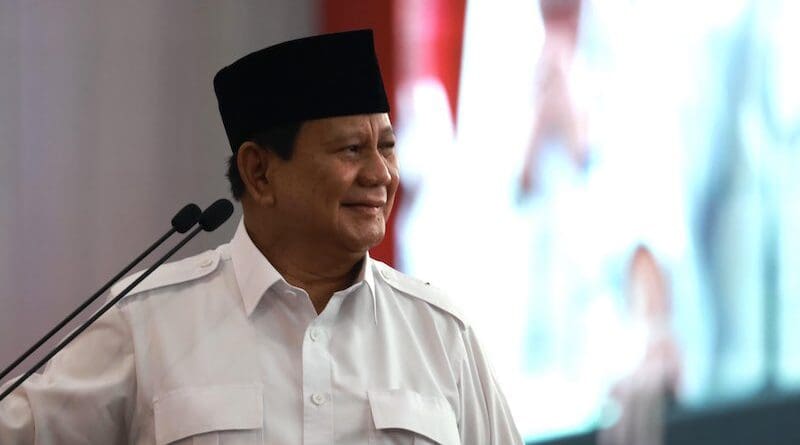
Prabowo’s Domestic Imperative And ASEAN–Russia Absence – OpEd
The absence of Indonesian President Prabowo Subianto from the ASEAN–Russia Summit in Kazan in June 2026 revealed that the country’s new administration’s way of conducting statecraft is pragmatic and prioritises domestic affairs above all else. His decision stemmed from a host of domestic issues that required his attention to manage and also from the limited added value of his attendance at the summit. The non-aligned foreign policy of Indonesia meant that attending a Russia-focused summit could have had a number of negative implications for the country’s relations with other major powers, such as the US and China. In the end, the absence signalled that Prabowo’s administration was a work in progress, struggling to reconcile the demands of a newly minted international role with the need for firm and effective governance at home.
Domestically, a state of concern and rising political sensitivity within Indonesia. Public anger over increases in non-subsidised fuel prices sparked mass demonstrations in cities across the country, creating growing concern over the rising cost of living and the related implications for the government’s early performance. Free school meals, a flagship program of the new government introduced with great fanfare in late 2024, have also come under scrutiny in terms of sustainability, management and cost. As a result, President Prabowo was required to remain in Jakarta to handle what are perceived to be key issues, which are being tackled by the president and his team in a bid to win the confidence of the Indonesian public. Other pressing governance issues, meanwhile, continue to test the president and his administration. These include dealing with the aftermath of the Haj season and the ongoing and increasingly complex process of forming his cabinet. The President’s team is still struggling to get to grips with the full range of institutional coordination required to ensure that all aspects of governance are functioning effectively. Departures for foreign travel would have been perceived as a dereliction of duty at a time when the President is required to demonstrate his ability to manage the many challenges facing the country.
The value of the President’s attendance at the ASEAN–Russia Summit in Kazan was minimal. The President and the leaders of ASEAN Member States had just concluded the ASEAN Summit in Cebu. He had also recently held a substantive bilateral meeting with President Putin in Moscow in April 2026. During the meeting, they had discussed energy security, LPG supply, agricultural trade and defence cooperation. The follow-up work on these issues was already being carried out by relevant ministers and other officials. In such circumstances, it was sufficient for the Foreign Minister to attend the Summit and ensure continuity of engagement with Russia instead of the President’s duplicate attendance.
The President’s decision is part of Indonesia’s efforts to maintain a non-aligned foreign policy and at the same time balance relations between the major powers, including the United States, China and Russia. By not attending the Russia-focused Summit in Kazan, the President was able to prevent any possible interpretation that could be seen as Indonesia taking a side in the current global polarisation. Several ASEAN members have lately been cautious in their approach towards Russia, and the President likely wanted to avoid any controversy that could have arisen from his attendance at the Summit.
This pattern of behaviour also highlights the set of structural challenges facing Indonesia continues to face in seeking to synchronise its domestic governance with its growing international role. The structure of Indonesia’s political cycles continues to pose significant challenges for the President in terms of balancing his role as national leader with his role as international leader. The President and his administration will need a range of institutional reforms that better enable the President to delegate responsibility to others in order to ensure that there is not a set of unintended consequences that flow from his decisions. A clear set of rules regarding the delegation of representation to the Vice President and Foreign Minister would be a good place to start. In addition, the President could utilise greater amounts of virtual diplomacy in order to remain engaged in key international forums, such as the upcoming ASEAN Summit, without being physically present. In the end, the President will also need to ensure that he is able to maintain a consistent and coherent set of policies and corresponding strategic communication in order to sustain the international role of Indonesia. This will require granting the Foreign Ministry greater authority to negotiate on behalf of Indonesia.
The President’s decision not to attend the ASEAN–Russia Summit in Kazan in June 2026 has revealed more about Indonesia’s pragmatic approach to foreign policy than any failing on the part of President Prabowo and his team. It is not a retreat from Indonesia’s growing international role, but rather a continuing struggle to reconcile the demands of the new administration for greater focus on national governance with the increasingly complex role that Indonesia is playing internationally. To reconcile these competing demands requires more than a change in approach by the President and his team; it requires a series of institutional reforms that will enable Indonesia to be a truly global player, while at the same time maintaining its focus on the needs of its own people. Until these reforms are implemented, the President and his team will likely continue to find it difficult to reconcile the demands of the foreign policy agenda with the requirements of governance at home. The absence from the ASEAN–Russia Summit in Kazan in June 2026 will be remembered as a continuing struggle to find the right balance between two competing demands on the time and resources of the President and his team. In the end, it is the domestic that must take precedence over the international.
The opinions expressed in this article are the author’s own.
References
- Gomez, J. (2026, May 29). Leaders of ASEAN member states to meet with Putin at June summit in Russia. Associated Press. https://apnews.com/article/c540115ccef8366c3b86766b16e84f80
- Associated Press. (2026, June 17). Putin hosts leaders of Southeast Asian nations, seeking to boost their business ties. Associated Press.
https://apnews.com/article/10599e42de372d53ec740c17f5327def

Like what you read?
Please consider supporting Eurasia Review. Thank you for your consideration!
