
From Migrants To Militants: Deconstructing Zabihullah Mujahid’s Narrative On Pakistan’s Security Challenges – OpEd
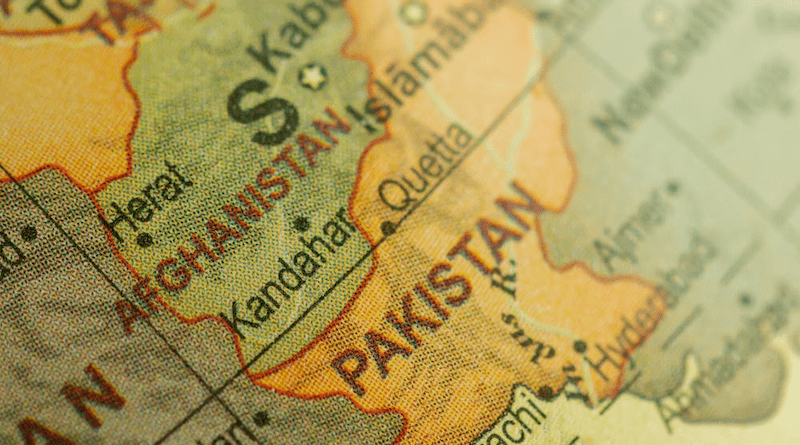
The claim by Zabihullah Mujahid that terrorism in Pakistan has reemerged because the Taliban leadership provided land and settlement rights to “families” migrating from Pakistan to Afghanistan demands closer scrutiny. Contrary to this narrative, no ordinary families crossed the border; rather, militant groups such as the TehreekeTaliban Pakistan (TTP) and the Baloch Liberation Army (BLA) exploited Afghan sanctuaries.
Reports confirm that Taliban authorities facilitated relocation for these groups, granting them space to reorganize and expand their networks. This policy, framed as humanitarian support, in reality entrenched militancy. The result is clear: Pakistan faces renewed violence not due to displaced civilians, but because terrorists were given refuge under the guise of rights protection.
Pakistan’s counterterrorism campaign, particularly Operation Zarb-e-Azb launched in 2014, successfully dismantled militant strongholds in the tribal areas and compelled groups like the TTP to seek refuge across the Afghan border. However, the situation dramatically changed after August 2021, when the withdrawal of U.S. and allied forces created a vacuum that the Afghan Taliban quickly filled.
This takeover intensified the threat, as the TTP and Taliban shared expansionist ideological doctrines and mutually reinforced each other’s networks. Adding to the danger, militants gained access to abandoned U.S. military weaponry worth nearly $7 billion, amplifying their capacity for violence. The Islamic Emirate Afghanistan (IEA) spokesperson is deliberately hoodwinking the world by portraying terrorists as “migrants,” masking the reality of cross-border militancy.
The Doha Agreement of February 2020 outlined clear obligations for the Taliban to ensure that Afghan territory would not be used as a base for activities against other states. Despite this, Afghanistan has increasingly become a safe haven for militant organizations that exploit the absence of international oversight.
The resurgence of groups operating across borders demonstrates a failure to uphold the commitments made in Doha. Instead of curbing extremist networks, the environment has allowed them to regroup and expand. Zabihullah Mujahid’s framing of terrorists as “migrants” is therefore a deliberate distortion, aimed at obscuring Afghanistan’s role in enabling nonstate actors.
Pakistan witnessed a devastating surge in terrorism in 2024 and 2025, paying a heavy price in lives and resources. According to the Pak Institute for Peace Studies, 2024 saw 521 terrorist attacks that claimed 852 lives, marking a 23 percent rise from the previous year. In 2025, the situation worsened, with Pakistan ranked second in the Global Terrorism Index, recording a 45 percent increase in fatalities and over 1,081 deaths. February 2025 alone saw 121 killed and 103 injured in 54 attacks, most concentrated in Balochistan. These figures underscore the immense human and economic toll of militancy. Pakistan’s demand is simple, clear, and legitimate: apprehend these terrorists and their leaders before further instability spreads.
Afghanistan occupies a pivotal geographic position, serving as the natural bridge between South Asia and Central Asia. Without stability in Afghanistan, regional connectivity projects such as energy corridors, trade routes, and infrastructure initiatives remain incomplete. The prosperity of the wider region depends on peace in Kabul, as instability blocks Pakistan’s access to Central Asian markets and undermines collective development. Instead of spinning false stories, the Taliban should act responsibly and hand over the terrorists to Pakistan.
Regional integration initiatives like CASA-1000 and the TAPI pipeline highlight Afghanistan’s indispensable role in linking economies and fostering cooperation. Yet, terrorism and insecurity emanating from Afghan soil continue to obstruct progress. For South Asia to connect seamlessly with Central Asia, Afghanistan must ensure stability and prevent militant safe havens. Instead of spinning false stories, the Taliban should act responsibly and hand over the terrorists to Pakistan.

Like what you read?
Please consider supporting Eurasia Review. Thank you for your consideration!
