
Fiji, Philippines, And Sri Lanka Turn To Drones To Boost Maritime Security
By Sarah Chan
Indo-Pacific nations increasingly are incorporating low-cost drones, autonomous vessels and artificial intelligence (AI)-enabled surveillance systems to expand maritime awareness. Fiji, the Philippines and Sri Lanka are among those using uncrewed technologies to monitor their vast exclusive economic zones, combat illegal fishing and strengthen border security.
“These systems multiply the areas that they can monitor without having to multiply their budget,” Peter Singer, a senior fellow at the New America Foundation, a United States-based think tank, told FORUM.
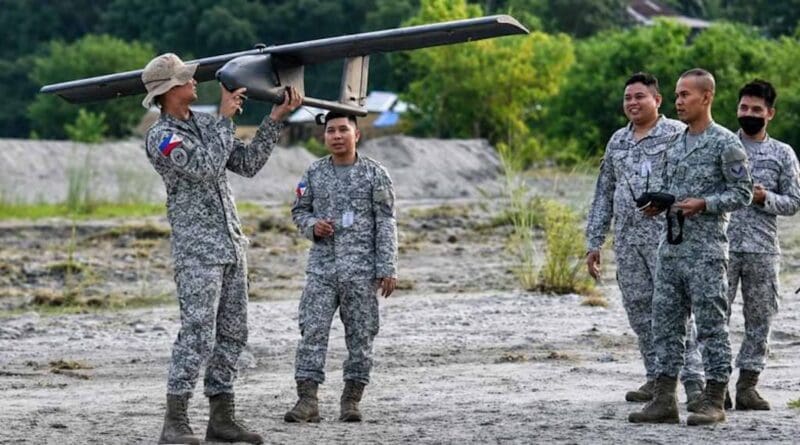
The Philippine Army began developing small uncrewed aerial vehicles (UAV) more than a decade ago with the Raptor and Knight Falcon drones. The systems have been used for surveillance as well as search and rescue, with their effectiveness underscored in counterinsurgency operations.
The Philippine Air Force Research and Development Center has unveiled two cost-effective drones — the fixed-wing Air Military Ordnance Carrier and the rotary-wing Military Air Ordnance Yielder — that can shift between reconnaissance and strike missions. Manila also is investing in 3D-printed drone components and using domestically produced drones to strengthen surveillance around the Batanes islands, the country’s northernmost province and its closest territory to Taiwan. Additionally, the locally developed Sidlak Kanaway uncrewed surface vessel project aims to enhance surveillance and early warning capabilities across contested maritime zones.
There is similar progress in Fiji, where UAVs are deployed to strengthen maritime surveillance, allowing naval vessels to focus more on interdiction missions. Over the past decade, local authorities also have expanded drone use for policing and emergency response.
France supplied Fiji with surveillance drones and monitoring equipment under a defense cooperation agreement in 2025. The systems improve real-time intelligence gathering and support efforts to combat illegal fishing and other transnational security challenges across the archipelagic nation’s maritime domain. Those initiatives were boosted in March 2026 when the U.S. announced the provision of $500,000 in communications technology to improve interoperability and strengthen the Republic of Fiji Navy’s ability to counter illegal fishing, drug trafficking and other illicit activity.
Sri Lanka is likewise expanding its use of uncrewed systems, investing in affordable drone technologies to strengthen military surveillance, maritime monitoring and disaster response. The Sri Lanka Army’s 15th Drone Regiment conducted a five-day course in early 2026 to improve operators’ technical skills and operational readiness while preparing for deployment of uncrewed systems across the armed forces.
The regiment also expanded its capabilities with the acquisition of 14 commercial and industrial-grade drones, reflecting Sri Lanka’s growing investment in such technologies for surveillance, reconnaissance and security missions.
In September 2025, Tokyo agreed to provide Japanese-made drones valued at more than $3 million to the Sri Lanka Navy for “monitoring, surveillance and disaster relief” as part of Japan’s Official Security Assistance program, which provides equipment, supplies and infrastructure development support to strengthen partner nations’ security and deterrence capabilities.
AI is central in making such systems effective by fusing and analyzing collected data, Singer said.
He noted that regional networks such as the Singapore-based Information Fusion Centre and the Information Fusion Centre – Indian Ocean Region hosted by India significantly increase the value of low-cost surveillance systems. “It has a multiplier effect, where sensors and data from one nation can be brought together with another,” he said.
- About the author: Sarah Chan is a FORUM contributor reporting from Singapore.
- Source: This article was published by Indo-Pacific Defense FORUM

Like what you read?
Please consider supporting Eurasia Review. Thank you for your consideration!
