
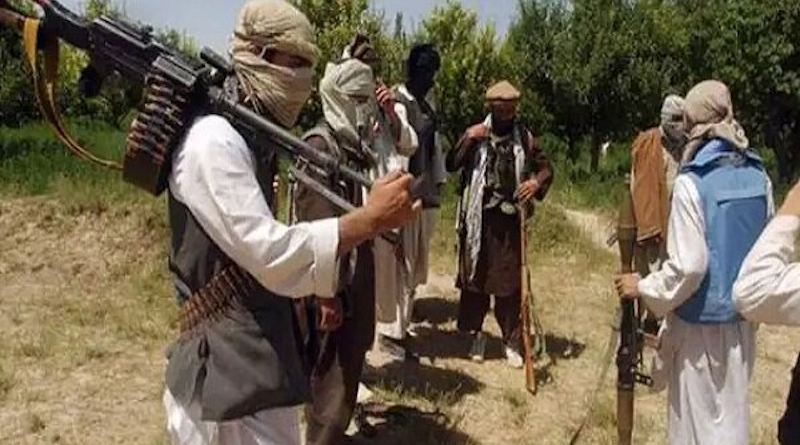
Pakistan: Resurgence Of Khawariji Terrorism – OpEd
In 2025, Pakistan finds itself grappling with a dangerous resurgence of terrorism under the guise of religion. The militant groups operating across the country, particularly in the tribal areas and the northwest, have claimed to be upholding the principles of jihad.
However, this is nothing more than a brazen and cynical exploitation of faith for personal gain. These militants, particularly those affiliated with groups like the FAK (Fringe Armed Khawariji), have transformed into ruthless criminals who exploit the people and infrastructure of Pakistan for their own financial profit. The terror they inflict is not an ideological battle against enemies of Islam, but a violent plunder of the nation’s resources, weakening its fabric and threatening its stability.
Pakistan has long been a target of extremist violence, but what is occurring now is something far more insidious. From South Waziristan to Bannu, and from Mir Ali to Dera Ismail Khan, the violence perpetrated by these terrorists is no longer about defending Islam or even fighting for some grand political cause. It is driven by greed and a desire for control over the country’s resources. Their targets are not soldiers or foreign invaders, but the lifelines of the nation: roads, bridges, homes, peace committees, and economic convoys. They have seized upon the weaknesses of local infrastructure, extorting money from those who seek to rebuild or repair it. In short, these so-called jihadists are more concerned with lining their pockets than with any moral or religious obligation.
One of the most revealing examples of this is the attack on a police checkpost in Lakki Marwat on July 4, 2025. The terrorists didn’t blow up the checkpost to advance some religious cause or strike at the heart of the state’s authority. No, their motive was purely financial: to extort money from the contractors who would be hired to rebuild the structure. The destruction of government property was not an act of jihad, but a calculated move to create a business opportunity for themselves. The terror they create is a means to an end – a way of securing income from fear, chaos, and destruction.
Similarly, in Toi Khullah, terrorists stormed the homes of government employees on July 4, 2025, with the sole aim of intimidating the local community into silence. The message was clear: if you do not submit to their demands, you will face violence. These actions are not about religion or defending a cause, but about ensuring submission through fear. The terrorists know that by maintaining control over the local population through intimidation, they can extort money from those who wish to live in peace.
In Mir Ali, a suicide bomber killed 13 soldiers on June 28, 2025, but the terrorist’s aim was not to defend Islam or wage a holy war. Instead, the attack was a strategic move to destabilize the region and create an environment in which the local population would be forced to pay “protection fees” to the militants. This attack, like so many others, had nothing to do with faith and everything to do with making money through violence and intimidation.
The hijacking of the Jaffar Express on March 11, 2025, further exemplifies this shift from jihad to extortion. While the media might have initially called it a form of resistance, the true motive was ransom. The terrorists took 450 hostages and killed 8 civilians, not to fight against oppression, but to extort money from the government or the contractors involved in the reconstruction of the railway tracks they had destroyed. This is not an act of rebellion; it is an act of criminality masked under the banner of religion.
In Wana, a peace committee office was bombed on April 28, 2025, killing seven people. The reason behind this attack was not some ideological conflict but rather the threat that local peace efforts posed to the terrorists’ business model. These peace committees, which sought to bring stability and resolution to the region, undermined the militants’ ability to extort local contractors and wage their campaign of fear. As a result, these so-called jihadists destroyed an initiative that could have brought peace to the area, not for religious reasons, but because it would have interfered with their profits.
Gas drilling teams in Dera Ismail Khan have faced similar attacks since November 2023, and the perpetrators of these attacks are not concerned with stopping foreign exploitation of Pakistan’s resources. Their goal is simple: to extort money from the contractors involved in the gas drilling operations. By attacking oil and gas convoys, they ensure that the reconstruction costs pass through their hands, turning the economy of the region into yet another tool for their financial gain.
One of the most tragic instances of this violence was the attack on a military base in Bannu on March 4, 2025. The assault killed 18 people, but the terrorists’ motive was not to weaken the military or to fight for an ideological cause. Instead, it was another example of how these militants capitalize on chaos. By destabilizing the region, they create the conditions in which they can extort money from the terrified populace and businesses that fear for their safety. This attack had nothing to do with a religious war; it was about seizing control and maximizing profit.
These terrorists are not only destroying infrastructure; they are destroying the very fabric of Pakistani society. They target roads, bridges, schools, and even mosques, proving that their agenda is not religious but economic. They destroy essential public infrastructure not to stop the government but to ensure that the rebuilding contracts pass through their hands. How can anyone claim to be fighting for Islam when they target schools, mosques, and markets? What kind of ‘jihad’ demands ransom from poor workers and bombs public infrastructure to profit from reconstruction contracts?
It is time to recognize the true face of these so-called jihadists. The violence they perpetrate is not about faith or ideology; it is a criminal enterprise. They exploit religion as a cover for their greed and self-interest. Pakistan’s response must be swift and resolute. It is crucial that the government and military do not treat these militants as religious martyrs but as what they truly are: criminals who use violence and fear to enrich themselves at the expense of the Pakistani people.
The fight against these terrorists is not just a military struggle but a moral one. It is about protecting the values of faith, culture, and community that these criminals seek to destroy. Pakistan must reject the false narrative of jihad peddled by these militants and rebuild its society on the foundations of peace, justice, and prosperity for all its citizens. Only then will the true spirit of Islam — one of peace, mercy, and justice — be restored.

Like what you read?
Please consider supporting Eurasia Review. Thank you for your consideration!
