
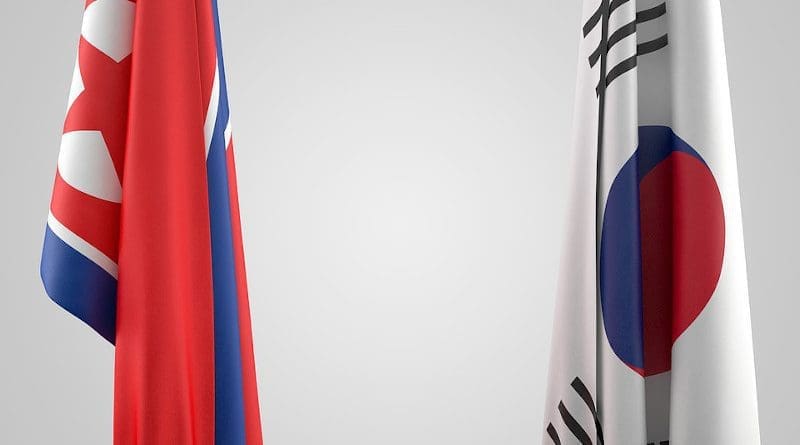
The North Korean Imbroglio – Analysis
At a time when there is a thaw in Japan-South Korea relations that was initiated by the former Japanese Prime Minister Fumio Kishida and South Korean President Yoon Suk Yeol and now being continued by Kishida’s successor Shigeru Ishiba, the North Korean leader Kim Jong-un is testing the mettle of these leaders on their likely policy towards the region. The US is also going to have a new President in the coming months. Both Japan and South Korea being treaty allies Kim is already on an offensive mood in sending a message to these countries not to mess with its affairs. A snap poll in Japan on 27 October is likely to give Ishiba a longer political longevity and predictable foreign policy continuity.
The latest in the series of provocations is focussed over accusations and counter-accusations by both the South and North on the drone war. North Korea has accused the South of intrusion into airspace of its capital by sending uncrewed aerial vehicles three times in October. The veracity of this claim is disputed and the South Korean government has maintained a noncommittal stance, neither confirming nor denying the allegations. Pyongyang too has not presented any definite evidence.
The worrying part is that Kim Yo-jong, the influential sister of North Korean leader Kim Jong-un, warned that South Korea will face a “horrible disaster” if South Korean drones are flown again over the North’s capital. This belligerent warning came after the reclusive regime floated trash balloons towards South Korea in retaliation of the alleged claim of South Korea doing the same over Pyongyang three times in past two weeks. Despite that the accusations remain unverified, Kim Yo-jong warned of taking strong corresponding retaliatory action in disregard of ingredient in case drones carrying anti-DPRK political motivation rubbish from South Korea across the border infiltrate into the territorial sky of the North.
South Korea’s Defense Minister Kim Yong-hyun denied its military sent any drones across the border. The point of suspicion arose when the Joint Chiefs of Staff could not confirm if North’s claims were true, which the North interprets the South’s military response essentially admits that it is accountable. Kim’s sister therefore warned that South Korea should be prepared to pay the price for its “repeated provocations”, warning the “attack time” for destroying South Korea can happen at any time. She roared: “That time is not set by us. …..The moment that a drone of the ROK is discovered in the sky over our capital city once again will certainly lead to a horrible disaster.” In a country where absolute loyalty from people is demanded, the public sentiment was further inflamed by a report in state-controlled Rodong Sinmum, which said that millions of people were “boiling with unstoppable rage” and “roaring” with the desire for “merciless revenge”. Residents as reported calling the South “puppet trash”, “scum” and “rats” were not uncommon in media coverage in North Korea. Even statements to turn the “enemy’s stronghold into a sea of fire” is routine form of warning.
It is possible that the reclusive regime is using the alleged drone flights as a propaganda manoeuvre to fuel animosity towards the South as a way to justify Kim’s drive to drop the unification policy and define the two Koreas as states that are hostile to each other. South Korea’s ministry in charge of inter-Korean affairs says that North Korea’s accusation on the drone charge is an attempt to escalate cross-border tensions due to problems within the regime. The Unification Ministry spokesperson Koo Byoung-sam says the North has created and exaggerated crises and tensions to rally support for the regime and to reinforce control over its people. In response to Kim Yo-jong’s threat, South’s defence ministry warned North Korea that it would see “the end of its regime” if it caused any harm to its people.
The drone issue has serious impact on the violation of national sovereignty and violation of international law as alleged by the North. Pyongyang has therefore called upon the South to immediately end its “dangerous provocation” that could lead to “an armed conflict that could even escalate into war”. However, South’s National Security Adviser Shin Won-sik feels that Pyongyang’s public accusations might be a ploy to exaggerate threats to consolidate internal control, implying signs of instability within the regime.
The public opinion inside South Korea on the drone issue is divided and somewhat ambiguous. The possible involvement of the South Korean military is unlikely as it would not risk a potential violation of armistice agreement and can have risk to further escalating the conflict. The question then arises is, who could have been behind this drone war?
Thus far, no South Korean activist organisations have claimed responsibility so far. It is possible that Fighter for a Free North Korea led by North Korean defector Park Sang-hak who has been sending anti-North Korean propaganda leaflets across the border. But this time Park has denied any involvement in this particular drone case.
Despite the bellicose posture that Kim has adopted for South Korea, he still has failed to muster public support for his bid to redefine the two Koreas as separate, hostile states, a sharp break from his predecessor’s vision of a unified peninsula under a single nation and state. Notwithstanding Kim’s anti-unification policy, he failed to mention the “two Koreas” clauses in its newly approved constitutional amendments, despite confirming that amendments to the socialist constitution had been addressed.
The Yoon Suk Yeol administration expected the October session to follow through on Kim’s January directive, which sought to formalize the two Koreas as “hostile” separate states in a “belligerent state,” define territorial boundaries and erase a legacy of unification through constitutional revisions. That did not happen. This means that the absence of any mention of such constitutional amendment reflects the significant burden that the idea of abandoning unification still poses for the North Korean regime. Such a stance would also mean self-denial of the “Paektusan Bloodline”, and would mean abandoning the unification goal championed by his grandfather and father. It would be a severe test for Kim if he tries to change this narrative.

Like what you read?
Please consider supporting Eurasia Review. Thank you for your consideration!
