
Afghanistan’s Entrenched Crisis: A State Captured By Extremism – OpEd
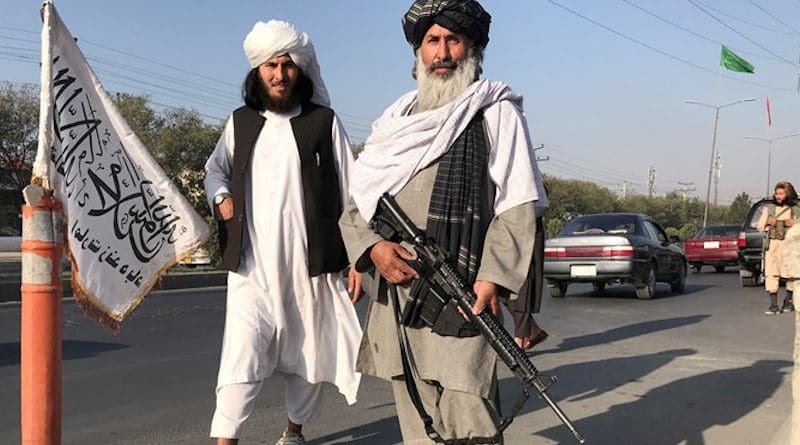
Four years after the Taliban’s return to power, Afghanistan stands less as a functioning state and more as a controlled ecosystem of extremism. The international community’s cautious engagement and episodic diplomacy have not moderated the regime. Instead, evidence increasingly suggests that Afghanistan has consolidated into a sanctuary where militant networks, ideological repression, and systemic human rights abuses reinforce one another.
The United States’ decision to designate Afghanistan as a Level 4 “Do Not Travel” destination is not a bureaucratic formality; it is a stark indicator of the country’s security vacuum. Such a designation reflects extreme threats to life and the near absence of reliable state protection. For ordinary Afghans, this reality is not an advisory notice but a daily condition of existence.
United Nations monitoring reports paint an equally troubling picture. Successive assessments confirm that terrorist infrastructure inside Afghanistan remains deeply entrenched. An estimated 13,000 foreign terrorist fighters are believed to be active within the country, sustaining cross-border militancy and feeding transnational extremist networks. More than twenty terrorist organizations continue to operate with varying degrees of freedom, including Al-Qaida, ISIL-K, Al-Qaida in the Indian Subcontinent, Tehrik-e-Taliban Pakistan, and other affiliated entities.
These groups are not operating with rudimentary capabilities. Access to advanced weaponry—sniper systems, night-vision devices, thermal optics, and drone platforms—has significantly increased their lethality. The implications extend far beyond Afghanistan’s borders. A militarized extremist sanctuary in the heart of Asia inevitably exports instability, threatening neighboring states and undermining regional security architectures.
Security concerns intersect with a governance model built on coercion rather than consent. The Taliban’s legal and political framework is anchored in a rigid and exclusionary interpretation of religious law. Public punishments, denial of due process, and institutional repression have replaced the basic principles of accountable governance. A newly enforced penal code reportedly recognizes only a narrow religious interpretation, marginalizing Muslims who follow other schools of thought and institutionalizing religious hierarchy.
This environment leaves little room for pluralism. Non-Sunni minorities, including other Muslim sects as well as Hindu, Sikh, and Christian communities, face systemic exclusion and pressure to conform. Ethnic minorities encounter surveillance and discrimination enforced through ideological policing. Public floggings, stoning, and ritualized humiliation function not only as punishments but as spectacles designed to embed fear into the social fabric. Perhaps the most visible and devastating dimension of Taliban rule is the systematic exclusion of women and girls from education, employment, and public life. This is not incidental discrimination; it amounts to state-imposed gender apartheid. By erasing half the population from meaningful participation in society, the regime has engineered a humanitarian and developmental catastrophe that will reverberate for generations.
Education itself has become a contested space. The rapid expansion of thousands of madrassas across the country reflects a deliberate state project to shape ideology. When educational institutions function primarily as vehicles for doctrinal indoctrination rather than critical inquiry, they risk perpetuating cycles of extremism. A generation raised within narrowly defined ideological boundaries may find itself isolated from the global intellectual and economic mainstream. Religious freedom advocates have taken note. International watchdog bodies have recommended that Afghanistan be recognized as a country of particular concern due to systematic violations of religious liberty. Such assessments underscore that repression is not episodic but structural, embedded within the governing philosophy of the state.
Taken together, these dynamics create a feedback loop. Extremist governance enables militant safe havens; militant activity justifies further repression; repression deepens social fragmentation and economic collapse. Afghanistan becomes simultaneously a source and a victim of instability. The consequences are regional and global. Terror networks do not respect borders, and ideological radicalization travels through digital and human channels alike. Allowing Afghanistan to function as an unchecked hub of militancy risks repeating historical cycles in which localized crises metastasize into international threats.
Yet the response cannot rely solely on isolation. Humanitarian engagement remains essential to prevent further suffering among civilians who bear the brunt of political failure. At the same time, diplomatic engagement must be anchored in clear benchmarks: counter-terrorism cooperation, protection of fundamental rights, and inclusive governance. Without measurable progress, normalization risks legitimizing repression.
Afghanistan today represents a test of international resolve and strategic patience. The country’s trajectory demonstrates how quickly a fragile state can evolve into an entrenched epicenter of extremism when governance collapses into ideology. Recognizing this reality is the first step toward crafting policies that balance security, accountability, and humanitarian responsibility. For Afghans and for the wider region, the stakes are existential. A state captured by extremism cannot deliver stability, prosperity, or dignity. Reversing that capture will require sustained international focus and a principled commitment to the values that extremism seeks to erase.

Like what you read?
Please consider supporting Eurasia Review. Thank you for your consideration!
