
Terrorism Requires Actions, Not Blames – OpEd
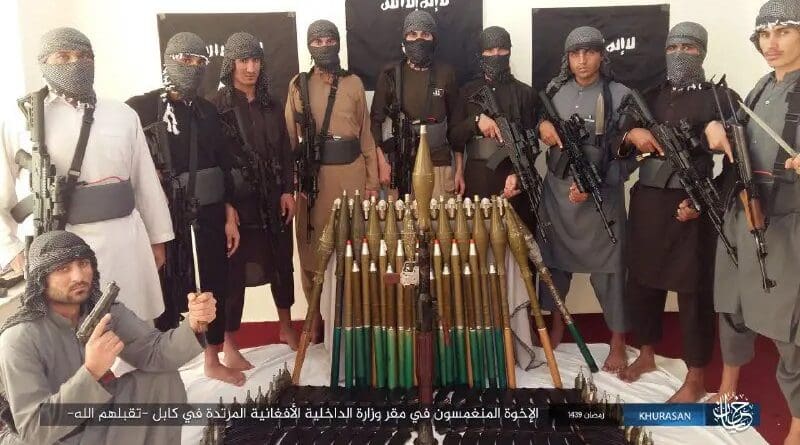
This month, the United Nations (UN) released the 37th report of the Analytical Support and Sanctions Monitoring Team. The report provides a holistic understanding of the prevailing security environment of Afghanistan. The report avoids sensationalism and highlights the facts that require immediate action by the de facto authorities of Afghanistan. According to the report, Afghanistan provides a “permissive safe environment” to multiple terrorist organizations like the affiliates of Al-Qaeda (AQ), Tehreek-Taliban Pakistan (TTP), and Islamic State Khorasan Province (the ISKP). The findings of the report are not political accusations rather based on authentic intelligence information shared by the intelligence agencies of the member states.
This is not the first time that the UN has highlighted terrorist presence in Afghanistan; rather, previous reports by the same UN forum warned that spillover of terrorism from Afghanistan poses critical security threats to the region. Contrary to findings of the UN and repeated calls for cooperation on terrorism by the neighboring states, the Afghan authorities have apparently failed to meet their pledges about restricting terrorists’ space in the country. The increasing cross-border terrorism inside Pakistan, the arrest of ISKP terrorists planning an attack on the embassy in Azerbaijan, and the Imam Bargah attack in Islamabad all point toward the presence of terrorists’ safe havens.
Besides the spillover of terrorism to the entire region, the matter of concern remains the “blame game ploy”. In diplomacy, things somehow work by bringing the blame game ploy, but countries take threats to their security and survivability seriously. The same remains the case with Pakistan, which has denied the blame game ploy being pursued by the de facto authorities of Afghanistan. Numerous times, Pakistan’s officials, including the Defense Minister, have conveyed Pakistan’s reservations to Afghanistan. Through media statements, official press releases, and during meetings, Pakistan has highlighted the use of Afghan territory by TTP for attacks inside Pakistan. The latest 37th report of the UN now confirms that regional terrorist groups exploit the governance vacuum, a fact highlighted numerous times by Pakistani authorities.
In the context of South Asia, the blame game ploy is not new. Apparently, this ploy is a replica of digital and social media campaigns often orchestrated by anti-Pakistan social media activists. This time, however, a dedicated digital media “Al-Mirsaad” had been tasked to further the heinous blame game ploy against Pakistan. Interesting to analyze is the fact that the content published by Al-Mirsaad is furthered by certain individuals enjoying considerable following on platforms like X. As a nexus, these accounts on social media are tasked to proliferate a baseless agenda against Pakistan, resulting in the heinous crimes committed against the people and security forces of Pakistan.
This approach demonstrates the use of information warfare, the primary purpose of which is to mask reality and proliferate propaganda. In the context of Pakistan-Afghanistan dynamics, such propaganda and information tactics appear useless. Owing to the prevailing terrorism crisis, the bordering region remains under critical scrutiny, thus making intelligence assessment easier and viable. Alongside the UN monitoring reports, the European Union and multiple neutral platforms have confirmed that Afghanistan serves as a base for cross-border terrorism in the region. Information warfare remains a viable tool; however, it loses relevance if countered through facts and genuine reporting. In the case of Al-Mirsaad, this information warfare stands exposed.
This blend of political messaging, digital proliferation, and the delicate security reality has produced a layered nexus, but if the evidence is documented, such a nexus loses purpose. The perpetrators of this heinous campaign must know that strategically, there are serious repercussions for such campaigns. First, counterterrorism works on the basis of measurable enforcement, but if platforms like the UN continue to flag the presence of terrorist safe havens, denial cannot work. Second, in today’s world, the information ecosystem has become important. Digital platforms can make narratives, but at the same time, they complicate diplomatic engagement, thus blocking serious efforts for bilateral engagements.
Third, stability at a regional level requires cooperative engagement. Rhetoric does not work to contain cross-border threats; rather, terrorism containment requires broader cooperation, intelligence sharing, and measurable actions. The 37th report has illustrated the emerging trends and calls for concrete actions. Pakistan, on its part, has demonstrated seriousness in the form of credible border management and by apprehending terrorists that otherwise would have posed a critical danger to the security of the world.
Pakistan, on its part, had been working on eradicating terrorism threats in all forms. Pakistan acknowledges that a cooperative approach against terrorism would prove futile, but for this purpose, serious efforts on the part of Afghanistan are required. The findings of the UN serve as an alarm bell and call for constructive engagement among regional states at every level of diplomacy. The only rational path for Pakistan’s western neighbor is to adopt constructive engagement with other neighboring states in order to disentangle itself from the monitoring mechanism of the UN.

Like what you read?
Please consider supporting Eurasia Review. Thank you for your consideration!
