
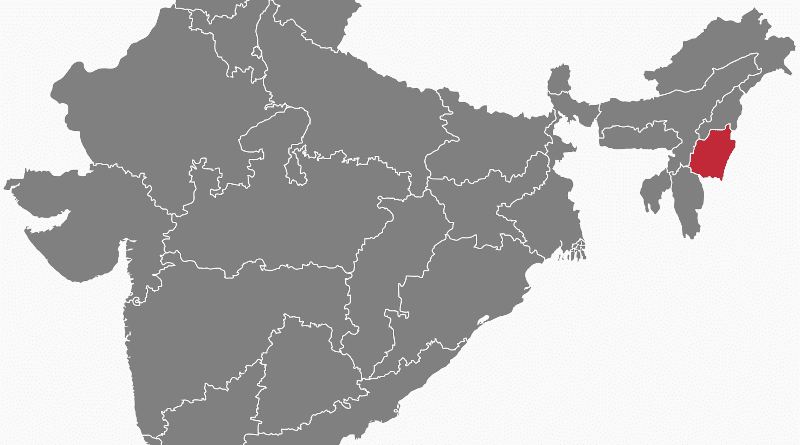
Manipur’s Ethnic Conflict: Can Dialogue Save The State? – OpEd
The northeastern state of Manipur has been engulfed in a cycle of ethnic violence and political instability for over a year now, with no clear end in sight. What began as a protest by tribal communities against the Meitei community’s demand for Scheduled Tribe (ST) status has spiraled into a full-blown conflict that has claimed more than 230 lives and displaced tens of thousands of people. The violence has torn apart communities, destroyed homes, and left Manipur’s economy in ruins.
Amidst this turmoil, the state’s political leadership is also facing a crisis of legitimacy. Chief Minister N Biren Singh, who has been at the helm during this period of unrest, is now facing growing calls for his resignation. Recently, 19 Bharatiya Janata Party (BJP) MLAs submitted a letter to the Prime Minister’s Office, calling for a change in leadership. The MLAs argue that Biren Singh’s removal is necessary to restore peace and stability in the state, which has been rocked by ethnic violence since May last year. The conflict in Manipur has its roots in deep-seated ethnic and political grievances. The Meitei community, which constitutes the majority in the state’s valley regions, has long sought recognition as a Scheduled Tribe, a status that would afford them certain constitutional protections and access to resources. However, this demand has been met with fierce opposition from the Kuki and Naga tribal communities, who fear that granting ST status to the Meiteis would dilute their own rights and privileges.
The tensions between these communities reached a breaking point in May 2023, when a ‘Tribal Solidarity March’ organized by the Kuki-Zo community in the hill districts led to violent clashes with the Meitei community. The violence quickly spread across the state, with homes being torched, businesses destroyed, and thousands of people forced to flee their homes. Despite the deployment of security forces, the violence has continued, and the state government has struggled to bring the situation under control. The conflict has not only caused immense human suffering but has also taken a heavy toll on Manipur’s economy. With businesses closing and essential commodities in short supply, the state’s economy has been severely impacted. Inflation has skyrocketed, and state revenue and tax collection have plummeted. The situation is dire, and without decisive action, the conflict threatens to plunge Manipur into even deeper chaos.
In this context, the 19 BJP MLAs who signed the letter calling for Biren Singh’s removal argue that new leadership is essential to bringing about peace in Manipur. The letter highlights the growing frustration among legislators and the public at the state government’s failure to end the violence. According to the MLAs, the current approach of relying on security forces to maintain order is not sufficient to resolve the underlying issues driving the conflict. At the heart of the MLAs’ argument is the belief that dialogue is the only viable solution to the crisis. They argue that military force alone cannot bring about peace and that meaningful engagement with all communities involved in the conflict is necessary. Without dialogue, they warn, the conflict will continue to escalate, causing further damage to the state and tarnishing India’s image on the global stage.
Chief Minister Biren Singh has managed to survive previous challenges to his leadership, but the current situation appears to be far more serious. The ethnic violence, combined with internal dissent within the BJP, has left him in a precarious position. While he has dismissed previous calls for his resignation, it is unclear whether he will be able to maintain his grip on power this time.
For now, the central government has not indicated that it will take action to replace Biren Singh. However, with the violence continuing and the pressure mounting, it may only be a matter of time before a change in leadership is seen as the only option. If Biren Singh is removed, the central government will need to appoint a new leader who is capable of navigating the complex political landscape of Manipur and restoring peace to the state.
Manipur’s future depends on the ability of its leaders to rise above political infighting and focus on the needs of the people. The conflict between the Meitei, Kuki, and Naga communities is not insurmountable, but it requires a solution that is grounded in dialogue and mutual understanding. The people of Manipur deserve peace, and it is the responsibility of both the state and central governments to ensure that this peace is achieved. Whether through a change in leadership or a renewed commitment to dialogue, the time for action is now.

Like what you read?
Please consider supporting Eurasia Review. Thank you for your consideration!
