
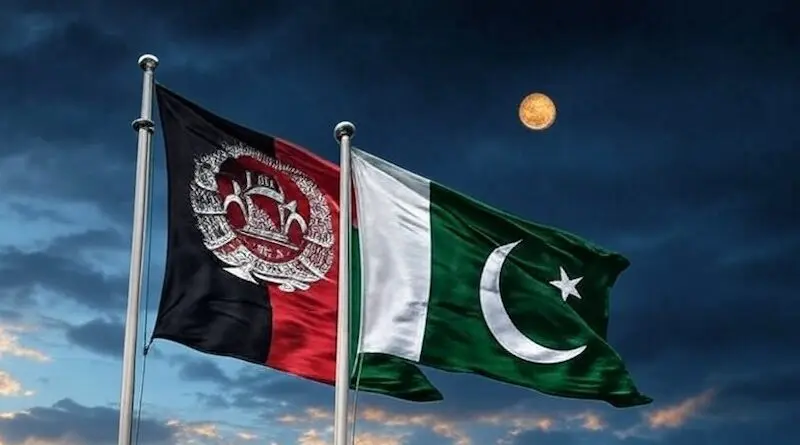
Pakistan’s View On Afghanistan: A Critical Moment – OpEd
Pakistan’s relationship with Afghanistan has hit a rough patch again, driven by a steady wave of cross-border attacks from the Tehrik-e-Taliban Pakistan (TTP). Most of these militants are operating freely from Afghan soil. While Kabul continues to deny responsibility, Islamabad’s frustration is not sudden. It has been building up for years as terror incidents rise despite repeated diplomatic outreach.
A History of Goodwill That Went Unreciprocated
When the Taliban took control of Kabul in August 2021, Pakistan was one of the few countries which did not walk away. It kept its embassy open while others shut theirs, helped evacuate thousands of people, and even pushed at the UN for Afghanistan’s frozen $9 billion in assets to be released for humanitarian reasons. Besides, Pakistan also backed economic cooperation through forums like the ECO, and promoted trade programs meant to stabilize Afghanistan’s economy.
The underlying belief was simple. It was that a peaceful Afghanistan benefits everyone. Yet what Pakistan got in return was a resurgence of attacks by the TTP, a group that clearly enjoys shelter and freedom of movement inside Afghanistan. Islamabad could have retaliated early on, but instead it choses dialogue, and also sending clerics, tribal elders, and officials to negotiate peace.
Repeated Efforts to Find Common Ground
Moreover, Pakistan did not only talk about engagement, but it acted on it. In the middle of the year 2022, senior religious figures led by Mufti Taqi Usmani went to Kabul to appeal for restraint. Later, a jirga of tribal elders consisted of 17 members carried the same message. High level visits followed then. These included visits by Defence Minister Mr. Khawaja Asif, ISI’s then-director general, and Interior Minister Mr. Mohsin Naqvi, all pushing for coordination on border security and counterterrorism.
Similarly, there were also economic gestures. Pakistan’s special envoy, Muhammad Sadiq, rolled out tariff cuts on Afghan agricultural exports under the Early Harvest Program. Thus, moves like these showed Islamabad was still betting on trade and goodwill instead of confrontation.
However, despite repeated intelligence sharing, the Taliban government has not cracked down on dozens of known TTP and BLA camps, operating in provinces like Kunar, Paktika, and Nangarhar. Resultantly, those camps have grown.
Escalating Violence, Mounting Evidence
Furthermore, security reports over the past few months painted a troubling picture. There is a 36% spike in cross-border infiltration since June 2025, with nearly 4,000 militants slipping into Khyber Pakhtunkhwa, and over 1,200 more crossing into Balochistan.
The UN’s latest Sanctions Monitoring Team’s report (July 2025) backs up Pakistan’s claims. It confirms that Al-Qaida and TTP fighters are training together in multiple Afghan provinces, and that the Taliban government is looking the other way. The report estimates the TTP’s manpower at around 6,000. The report also makes it clear they are being supported logistically and financially by actors within the Afghan regime.
The Taliban’s Role and Pakistan’s Red Lines
Additionally, Pakistan has handed to Kabul the exact coordinates of terrorist hideouts, yet no action has been taken. Meanwhile, TTP’s leader, Noor Wali Mehsud, is living comfortably in Kabul. So, this is a sign that the Afghan government’s complicity is not only passive, but they may also be active in this situation.
Also, the recent attacks in Bannu and Dera Ismail Khan involved Afghan nationals, and Pakistani forces have killed over 200 Afghans engaged in militant activities inside Pakistan. This is not just coincidence, but it is a pattern.
Besides, what has made things worse is the flood of modern weaponry left behind by the United States and NATO. Hence, those arms, worth billions, have found their way into the hands of TTP and BLA fighters, giving them serious firepower.
Pakistan’s Long Record of Support
Despite everything, Pakistan’s record towards Afghanistan is hard to dismiss. For decades, it has hosted millions of Afghan refugees, opened its schools and hospitals to them, and has also given Afghan businesses access to ports under the Afghanistan–Pakistan Transit Trade Agreement. Similarly, the country has also funded development projects, trained students, and lobbied for international aid, when others turned their backs.
Thus, the current hostility feels like a betrayal to many Pakistanis who have spent years helping their neighbor through war, famine, and political collapse.
Where Things Go From Here
In a nutshell, Pakistan still wants peace. It believes in cooperation, and not confrontation. This is because cooperation is the only way forward. But that patience has limits. So, if Kabul continues to let its territory be used against Pakistan, Islamabad will respond firmly, but proportionately.
The Taliban leadership now faces a choice. Now it depends on them, if they keep backing or tolerating groups like the TTP, or take credible action against them, and rebuild trust with Pakistan. The door to cooperation is not closed yet, but it is narrowing fast. Lastly, peace between the two countries would serve both nations, not just for security, but for the millions of ordinary Afghans and Pakistanis who have already paid too high a price for decades of conflict.

Like what you read?
Please consider supporting Eurasia Review. Thank you for your consideration!
