
Idols And idealism: ‘Here I Am Ending Up With The Death Of Democracy,” Jayaprakash Narayan Wrote In Prison – Essay
Loknayak Jayaprakash was jailed by Congress PM Indira Gandhi during Emergency in 1975
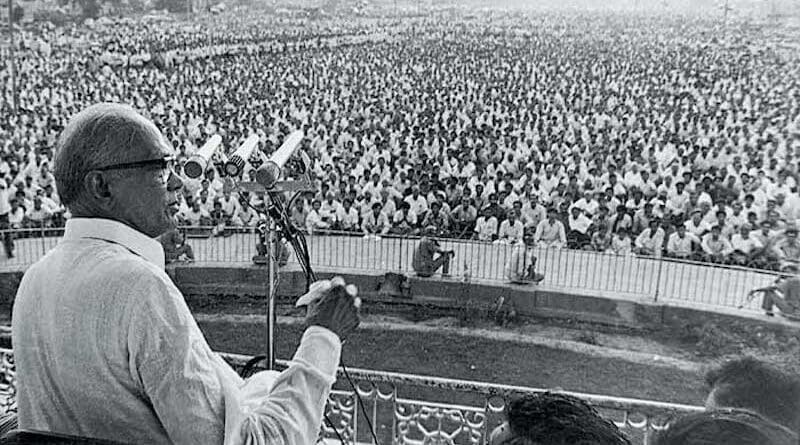
Among the oft-quoted and memorable, emotionally-moving lines in modern Indian history is “My world lies in a shambles all around me”, the first line from Jayaprakash Narayan’s prison diary which he began on 21 July 1975. JP (as the imprisoned leader was endearingly addressed) had been jailed under draconian laws following the proclamation of Emergency on 25 June 1975 by Congress Prime Minister Indira Gandhi. Most of the opposition leaders had, by this date, been imprisoned, JP’s perceptions in jail were a brooding dark reality. Mrs Gandhi had ordered the imprisonment of leaders which included Rajmata Vijayaraje Scindia, Morarji Desai, Charan Singh, JB Kripalani, George Fernandes, Atal Bihari Vajpayee, LK Advani, Mulayam Singh Yadav, Raj Narain, Arun Jaitley, Jai Kishan Gupta, SN Sinha and Rajmata Gayatri Devi of Jaipur. Rashtriya Swayamsevak Sangh (RSS) and Jamaat-e-Islami, along with some political parties, were banned.
The 21 July 1975 letter goes on to add: “I am afraid I shall not see it put together again in my life-time. Maybe my nephews and nieces will see that. May be. Here I was trying to widen the horizons of our democracy. Trying to do mainly by involving the people more intimately and continuously in the processes of democracy. This in two ways. One, by creating some kind of machinery through there could be a measure of consultation with the people in the setting up of candidates. Two, by providing a machinery – the same machinery as in the above would have done – through which the people could keep a watch on their representatives and demand good and honest performance from them. These were the two drops of essence that I wanted to distil out from all the clang and clamour of the Bihar movement. And here I am ending up with the death of democracy. Where have my calculations gone wrong? (I almost said ‘our’ calculations, but that would be wrong. I must bear the full, the whole, responsibility.) I went wrong in assuming that a Prime Minister in a democracy would use all the normal and abnormal laws to defeat a peaceful democratic movement but would not destroy democracy itself and substitute for it a totalitarian system. I could not believe that even if the Prime Minister wanted to do it, her senior colleagues and her party, which has had such high democratic traditions, would permit it.”
The 21 July letter is a testament of grief, frustration, guilt, helplessness; almost a sorrow-filled poem written by a passionate lover who is experiencing a spectrum of emotions which are taking him by utter surprise. It is a roller-coaster ride of disbelief, disappointment, dismay which Loknayak Jayaprakash Narayan has expressed for posterity. Though there’s remarkable mental clarity as he explained what he was trying to, the ‘kind of machinery’ he was wanting to create in the processes of democracy.
What are the people to do?
The next part of the letter is where JP counter the unbelievable. “One could have understood such a result if there had been a violent outbreak and there was fear of a violent take-over. But such a peaceful movement resulting in such a denouement? What can the people do, the youth do to fight against corruption, unemployment, poverty? Wait quietly for the next general elections! But what if in the meantime the situation becomes intolerable? Then what are the people to do? Sit quietly and fold up their arms and silently bear their miseries? That would be Mrs Gandhi’s image of democracy: silence of the grave. And what if the elections themselves are neither free nor fair? For that they must awaken and organize. I do not think in any democratic society the people have relied wholly and solely on elections to change their plight. Everywhere there have been strikes, protests, marches, sit-ins, sit-outs etc.” Fifty years ago JP was raising these issues, seeking solutions in the ambit of the Constitution and outside of it. The Republic of India was just 25 years old and here was JP writing about the PM strangling democracy to death, clamping down her dictatorial regime.
The pain and anger in his words touch a deep chord, as he wrote: “Here was this same Prime Minister who used to accuse us time and again of wanting to destroy democracy and establish fascism. And here we see the same Prime Minister destroying democracy and establishing fascism herself in the name of the same democracy. She is saving democracy by murdering it with her own hands and burying the corpse deep down in the grave. Has she not declared that India cannot afford to go back to the pre-emergency state of licence? Licence! She has the cheek to talk of licence. Has she forgotten the Congress youth rally convened by her in Delhi (on 9 August 1974)? What vandalism and vulgarity were abroad! And does she remember the all-India people’s march and rally of 6 March 1975? The Inspector General of People, Delhi, himself had said that there was no incident on that day. And what about that shameful affair in Calcutta (on 2 April 1975) in front of the University Institute Hall where I was to address a meeting? And in complete contrast, does she remember that massive Calcutta march of 5 June the same year? It was universally acclaimed as the most peaceful event of its kind in that sorely disturbed city. I do not know if public meetings, processions, bandhs – all peaceful and orderly – were or can ever be evidence of licence.”
Almost as if JP is lifting his head, looking around while writing, “I wonder what all those ladies and gentlemen are saying now who used to tell me that I was the only ‘hope’ for the country. Are they invoking curses on my head for bringing this terrible doom? I should not be surprised. They may even be saying that hemmed in from all sides as Mrs Gandhi was, she could not but act in the manner she has. But I hope there are some people atleast, particularly among the young who may still be loyal to me and to the cause I represented. They are the hope of the future. India will arise from the grave, no matter how long it might take.”
Long ties with Gandhi-Nehru family
Readers may not be aware that the Loknayak of 1975, now almost a 73-year-old freedom-fighter himself, had a long personal and political association with the Nehru-Gandhi family – the family which had given the nation eminent personalities like Pt Motilal Nehru, Pt Jawaharlal Nehru, Mrs Indira Gandhi and Mr Rajiv Gandhi, the last three of whom were Prime Ministers. JP had, since the late 1920s, worked as a Congress worker in tandem with Pt Jawaharlal Nehru whom he addressed as ‘Bhai’ (meaning ‘Brother’ in Hindi), and his daughter was always ‘Indu’ for him (short for Indira).
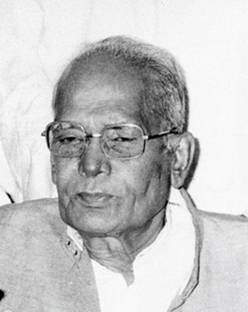
Who was JP? How had he, in five decades, become the leader among conscience-keepers of the young nation? He was a political activist who refused any public office or contesting elections to the state assembly or parliament; he remained a studious, prolific writer-philosopher questioning Marxism, socialism, western liberalism and Gandhiji’s thought at every stage. At the same time, he was an exemplary leader-mentor, building grassroot organisations, and a die-hard revolutionary who in fact defied all these categories!
In ‘Revolutionary Lives in South Asia’, edited by Kama Maclean and J. Daniel Elam, the term revolutionary is debated. The editors raise obvious questions: “Who qualifies as a revolutionary? And who decides? For anyone familiar with historical and contemporary usages of the word in India, it is clear there are several revolutionary registers simultaneously in use.” Like Jayaprakash Narayan’s academic life, and later his political career, there are series of twists and travails of the revolutionary that often confuse the historian of contemporary India.
There were many who likened him to Mahatma Gandhi, for the austerity of his lifestyle and original inspiring ideologies which were rooted in Indian soil. JP acknowledged his intellectual debts to the Mahatma – the understanding of rural India which the Mahatma shared with the Congressmen at Sabarmati Ashram or throughout his travels. There were huge differences of opinion too which JP had with Gandhiji; and it was only after Gandhiji’s assassination in 1948, JP moved towards the Bhoodan movement of Vinoba Bhave, Gramdan and Sarvodaya which were grassroot-level movements where surplus land was being voluntarily donated by land-owners for the landless villagers.
Through the 1960s, till 1977 when the Janata Party overthrew a discredited Congress regime, Jayaprakash was one who could understand political issues with the same insight as economic and social problems plaguing the population. His stature as Loknayak or ‘Public Hero’ was acknowledged and respected across the country; his popularity remained undiminished and unblemished. It was JP who could join the dots if agriculture was stagnant, with droughts affecting several states, if unemployment was rising, he could highlight the suffering of people due to macro-economic policies and micro-level administrative bungling. The 1967 general elections witnessed the Congress seat tally down to 283 in parliament; in several state elections Congress party was ousted from power, including Uttar Pradesh, Bihar, Kerala, Punjab, Orissa, West Bengal, Rajasthan and Tamil Nadu. The rise of a multi-party Opposition was unnerving and unsettling for Mrs Gandhi; for a public-spirited Gandhian-socialist-democratic leader like JP, it threw open platforms for nation-building like never before.
The Congress under Indira from 1967 to 1971 undertook “a radical, socialist, left-of-centre programme of reforms that included plans to discontinue princely privileges by abolishing privy purses; guarantee of minimum wages for rural and industrial labour; nationalisation of the insurance sector; social control of banking institutions; state trading in foodgrains and removal of monopolies. These plans found ideological resonance with the socialist group with the party led by Young Turks like Mohan Dharia and Chandra Shekhar,” wrote Sujata Prasad in ‘The Dream of Revolution’, the biography of JP she co-authored with her illustrious father Dr Bimal Prasad, a long-time confidante and friend of JP.
“Congress a hollow shell”
In a scathing attack on the Congress, and on Indira’s style of leadership, JP said, “Paradoxical though it may sound, the Congress despite its massive electoral victories of 1971 and 1972, is today a little more than a hollow shell. It has no inner strength and substance, and is presently going on huge doses of funds and the charisma of its leader. There is little or no internal democracy left in it and its state leaders and chief ministers are mostly hand- picked men…the present state of affairs might suit Indira Gandhi’s style of leadership but spells ruin for the Congress as a democratic organization, and ipso facto for Indian democracy itself.” The JP papers titled ‘Prospects of Democracy in India: A Hopeless Situation’ (August 1972) are quoted in Sujata Prasad’s biography, revealing the leader’s anguish on the state of national affairs.
While JP’s world lay in a shambles, Mrs Gandhi announced on 1 July 1975 the contours of her make-believe world – the 20-Point Programme. She had selected 20 points (originally 21) out of the 150 suggestions she had received from her ministries. There was no deep thinking behind the choice of the “points” – she picked up what she thought would be easy for people to understand, good conversation pieces at best. But many points were indeed laudable and nobody could take exception to them even in today’s time and age when political manifestos are echoing similar programmes.
The twenty points were: 1) Scaling down prices of essential commodities and streamlining their production and distribution. 2) Economizing government expenditure. 3) Implementing agricultural land ceilings and speeding up distribution of surplus land and compilation of land records. 4) Stepping up house-site availability to the landless and weaker sections. 5) Declaring bonded labour illegal. 6) Planning for liquidation of rural indebtedness and a moratorium on recovery of debts from the landless, labourers, small farmers and artisans. 7) Reviewing laws on minimum agricultural wages. 8) Bringing five million more hectares under irrigation and preparing a national programme for use of underground water. 9) Increasing power production. 10) Developing the handloom sector and improving the quality and supply of people’s cloth. 11) Effecting socialization of urban and urbanizable land and having a ceiling on ownership and possession of vacant land. 12) Having special squads for valuation of conspicuous consumption and prevention of tax evasion and summary trials and deterrent punishment of economic offenders. 13) Special legislation for confiscation of smugglers’ properties. 14) Liberalizing investment procedures and taking action against misuse of import licences. 15) New schemes for workers’ associations in industry. 16) National permit schemes for road transport. 17) Income tax relief to middle class – exceptional limit placed at Rs 8,000. 18) Essential commodities at controlled prices to students in hostels. 19) Books and stationery at controlled prices. 20) New apprenticeship scheme to enlarge employment and training, especially of the weaker sections.
Mrs Gandhi had always given an economic cover to her political manoeuvres, explained veteran editor-writer Kuldip Nayar in ‘The Judgement’, adding, she had done it in 1969 at the time of the Congress split and in 1971 at the time of the mid-term poll, and she had got away with it. The people had always thought that her fight was for the country’s economic good and not for her own survival. This time also she believed that the twenty-point programme would hide the move to sustain herself in power. And she looked like succeeding for the time being. The twenty-point programme came to dominate the media and every official and non-official discussion. Hoardings and posters came up everywhere, listing the points and carrying large portraits of her. There was nothing new in the “new” programme. One state said, “Give us the money and everything will be done; what is the use of mere talking.” Tamil Nadu’s comment was typical: the state had already implemented nineteen out of the twenty points.
With the ominous Emergency in force, Jayaprakash Narayan wrote on 21 July 1975 to a Prime Minister gone astray, “You have talked of social democracy. What a beautiful image those words call to the mind. But you have seen in eastern and central Europe how ugly the reality is. Naked dictatorship and, in the ultimate analysis, Russian overlordship. Please, please do not push India toward that terrible fate.”

Like what you read?
Please consider supporting Eurasia Review. Thank you for your consideration!
