
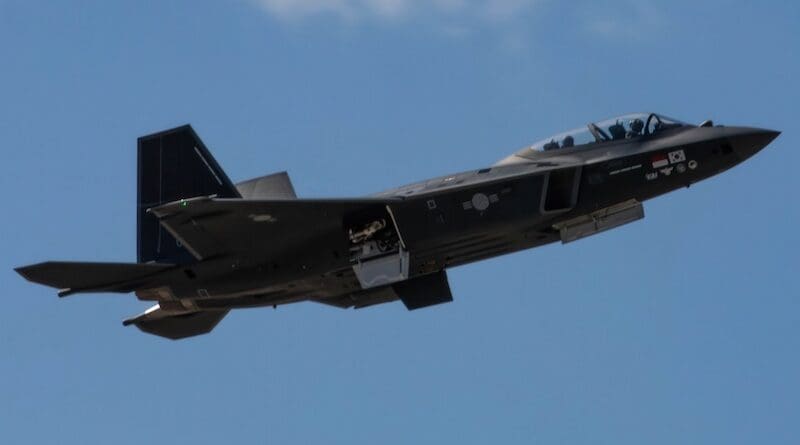
KF-21 Trust And Indonesia’s Strategic Dilemma – OpEd
Indonesia’s decision to renew diplomatic ties with North Korea has raised concerns in Seoul, particularly due to Jakarta’s involvement in the KF-21 fighter jet program.
The KF-21 stands as South Korea’s most significant defence initiative because it incorporates state-of-the-art avionics and stealth capabilities, and radar systems, which could potentially alter the regional air power dynamics in Northeast Asia. The program needs financial backing from Indonesia for its operations, yet its partnership with North Korea threatens to cut off essential technological resources. The research indicates Indonesia maintains its independent foreign policy stance through North Korean relations, yet this policy threatens to damage its defence partnerships and regional confidence in the region. The two cities need to create systems which protect their technological systems while maintaining their strategic alliance.
South Korea has solid reasons to continue its security concerns. North Korea has historically pursued advanced military technology to update its ageing military equipment and counter the effects of international sanctions. The belief that Indonesia could access KF-21 data would damage South Korea’s defence innovation status and create doubts among its alliance partners. The KF-21 serves as a military asset for South Korea, which demonstrates its ability to manage intricate international alliances. The project encounters financial and political challenges because doubts about Indonesia’s dependability may trigger requests to restrict Jakarta’s participation.
The Indonesian government demonstrates its diplomatic outreach by using a particular method. The Non-Aligned Movement’s founding member, Jakarta, maintains an independent foreign policy through diplomatic relations with every nation, including those excluded from international relations. The restoration of North Korean relations enables Indonesia to maintain its diplomatic role as a neutral mediator between parties rather than adopting a biased position. The Indonesian government views its North Korean relations as diplomatic rather than military in nature and does not indicate any plans to violate defence pacts with South Korea. However, intentions alone are insufficient; in defence cooperation, perception is as critical as reality. South Korean defence experts and policymakers will lose trust in the KF-21 partnership when they observe Indonesia’s diplomatic actions, which generate security risks despite Jakarta’s reassurances.
The current situation shows a critical issue which emerges from Indonesia’s drive for strategic autonomy against the necessary conditions for defence partnership development. The city of Jakarta maintains its right to establish diplomatic relations with every country, but it needs to follow security rules and gain trust from its defence partners. The KF-21 program represents more than a business deal because it requires absolute trust to succeed as a strategic initiative. The relationship between the two parties becomes unstable when their mutual trust faces doubt. The country needs to demonstrate that its diplomatic efforts will not undermine its position as a dependable defence ally. South Korea needs to handle its real security issues, but should do so without harming its relationship with this crucial partner.
The regional environment generates extra obstacles for these processes to operate. Southeast Asia has always maintained a neutral position during major power conflicts, but the Korean Peninsula creates special challenges for the region. International sanctions would be violated through any exchange of cultural or humanitarian activities with Pyongyang. ASEAN faces a risk of losing credibility with South Korea and the United States, and Japan because of these perceptions. The withdrawal of Indonesian outreach under foreign pressure would damage its strategic autonomy, which serves as the core principle of its foreign policy. The situation presents Jakarta with a challenging dilemma because deep engagement leads to mistrust, yet insufficient engagement threatens its diplomatic position.
The future obstacles will create substantial difficulties. The nation should preserve its ability to set foreign policy independently, but it must demonstrate dedication to safeguarding defence technology information from unapproved exposure. South Korea needs to strike an appropriate balance between safeguarding its interests and avoiding excessive measures that could damage the partnership. Third, ASEAN must ensure that the actions of one member do not undermine the group’s collective credibility. The situation becomes more difficult because of the current global strategic situation, which creates an environment of intense competition between major powers and unstable regions.
Better protection systems need to be established for the future. The government of Indonesia needs to confirm its dedication to international non-proliferation standards while maintaining distinct diplomatic relations with North Korea, including military defence operations. A bilateral technology assurance dialogue with South Korea would create a structured mechanism to review and reinforce protocols for protecting KF-21 data. Joint audits or oversight mechanisms, potentially involving third-party verification, would further enhance confidence. Through ASEAN, Indonesia promotes its outreach activities to partners while showing that its diplomatic initiatives work for peace instead of forming military alliances. Public diplomacy will play a crucial role because Indonesian officials need to showcase their Pyongyang engagement as part of an extensive peacebuilding strategy while emphasising Jakarta’s proven track record as a dependable defence ally. For South Korea, the challenge is to maintain vigilance while recognising Indonesia’s strategic value and advocating for safeguards to protect sensitive technologies.
The new relationship between Indonesia and North Korea brings both potential dangers and possible advantages. The KF-21 program faces two main risks, which stem from damage to trust between program partners and public concerns that Indonesian diplomatic actions could compromise regional defence standards. The nation can use its position to unite different nations while staying true to its past practice of promoting dialogue and non-alignment. The essential requirement is to prevent these two dimensions from opposing each other. The implementation of open security measures alongside formal talks with South Korea and ASEAN platform-based confidence-building activities will show that Indonesia maintains full diplomatic independence while fulfilling its defence commitments. Seoul needs to defend its technological position while keeping its essential partnership with the United States. The KF-21 project’s sustainability will emerge from technological advancements and South Korea and Indonesia’s capacity to build trust and handle public opinion, and stay aligned in their strategic goals within the evolving regional landscape.
The opinions expressed in this article are the author’s own.
References
- Hutagalung, S. (2025). Indonesia’s Diplomatic Engagement With North Korea: Major Power Responses and Implications For Regional Security. Eurasia Review.
- Jeong, J. (2025). Indonesia Secures 48 KF-21 Jets in Revised Deal with Seoul. TurDef.
- Lee, H. (2025). Indonesia’s Renewed Ties with Pyongyang Stir Worries Over KF-21 Technology Leaks. The Korea Times.

Like what you read?
Please consider supporting Eurasia Review. Thank you for your consideration!
