
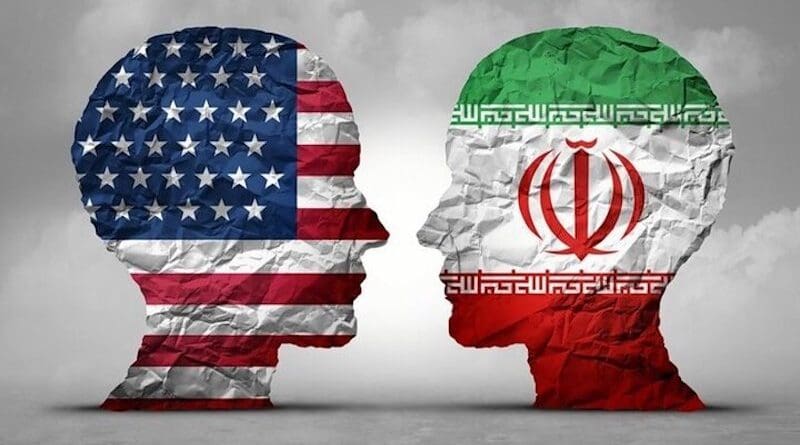
Trump Trapped In Confrontation With Iran: The Path To De-Escalation Is Not Yet Closed – OpEd
The U.S. military’s bombing of Iran’s nuclear facilities marked a decisive turning point in the already tense trajectory of Tehran-Washington relations. What American officials initially described as a “limited and targeted response” quickly escalated into a new phase of overt confrontation, one that not only shattered previous deterrence norms but also dramatically increased the likelihood of the two countries entering a cycle of retaliation and counter-retaliation.
Now, weeks after the operation and amid a fragile ceasefire, there is still no clear sign of a real policy reversal from the White House. The Trump administration continues to double down on its strategy of “maximum pressure” and power projection, as if containing Iran can only be achieved through threats and destruction. These developments cast doubt on recent decision-making in Washington and suggest that the U.S. has entered a volatile phase in which the line between deterrence and escalation is more fragile than ever. In this context, the critical question is: Does the United States still seek a political solution, or has it truly crossed red lines once considered untouchable?
Donald Trump, the former president of the United States, ultimately authorized a direct strike on Iranian soil, a decision that not only culminated years of tension but also initiated one of the most perilous chapters in the history of U.S.-Iran relations. In the early days of the operation, many hawkish figures in Washington, including Lindsey Graham and Marco Rubio, openly called for the U.S. to finish its “unfinished business” with Iran. This phrase, with all its euphemistic undertones, implied nothing short of assassinating senior officials, dismantling Iran’s governing structure, and pursuing regime change. Yet these calls reflected not realism but a dangerous naivety, one detached from the complex realities of Iran and the region.
After more than four decades of enduring sanctions, threats, and external pressure, Iran has built a system specifically designed to withstand asymmetric warfare and long-term attrition. The notion of the Islamic Republic’s rapid collapse is more a neoconservative fantasy than a strategic assessment. In practice, the strike did not lead to regime change, it triggered a new phase of internal mobilization and defensive reconstruction in Iran, while unleashing a fresh wave of instability across the region.
Among Washington’s stated objectives, the “destruction of Iran’s nuclear capacity” held particular significance. Yet, as the war demonstrated, military action in this domain proved not only ineffective but counterproductive. Iran’s nuclear program has been largely indigenized, and its infrastructure is designed to be resilient, capable of recovery within months even after substantial damage. Moreover, past experiences, such as Israel’s 1981 strike on Iraq’s Osirak reactor or the 2007 operation against Syria, have shown that attacks on nuclear facilities rarely end a program; they often inaugurate a more covert and determined phase of development.
Today, in the aftermath of the war, evidence suggests that Iran is now closer than ever to reaching the threshold of nuclear weapons capability. Both psychological and strategic incentives for pursuing full deterrence have grown stronger. The very strategy meant to deter has, in effect, intensified the competition. What has emerged from the war is not an “imposed peace,” but a more dangerous and opaque era, one in which nuclear confrontation is no longer a hypothetical scenario, but a real and growing element in the calculations of regional powers.
The current ceasefire between Iran and the United States is not the end of a crisis, but a chance to reassess failed policies. The immense human, economic, and strategic costs of this confrontation, from civilian casualties and regional destabilization to the weakening of the global economy and the isolation of the U.S. in the face of rising rivals like China, highlight the dangers of continuing down this path. The lessons of Afghanistan and Iraq are clear: wars may begin easily, but their endings are costly, and sometimes impossible.
Donald Trump, having returned to power under the banner of “America First,” now has an opportunity: to choose diplomacy over escalation and avoid repeating the mistakes of the past. Middle Eastern history is filled with decisions made in the name of deterrence that ended in disaster. Can Washington this time choose a different course, and write its name in history not as the instigator of another catastrophe, but as the architect of peace? The answer lies in the next steps taken by the White House.

Like what you read?
Please consider supporting Eurasia Review. Thank you for your consideration!
