
Global Powers And The Israeli-Lebanese Conflict: A Call For Coordinated Action – OpEd
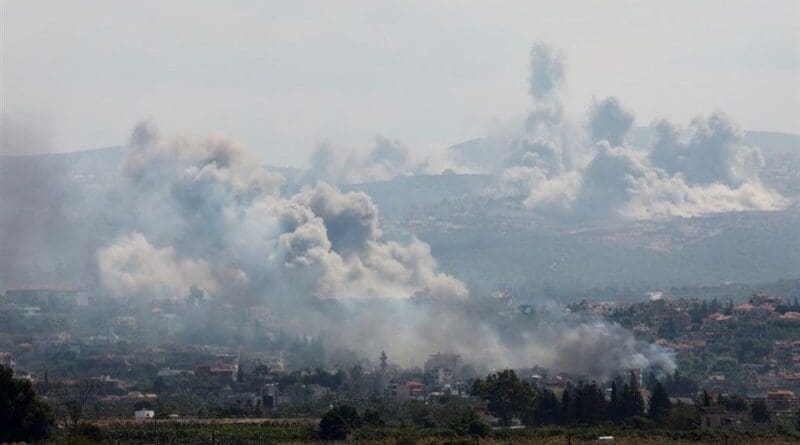
The Israeli-Lebanese conflict, particularly the escalating hostilities between Israel and Hezbollah, has reached a critical juncture in recent months. The violence, exacerbated by Israel’s extensive aerial bombardments of Hezbollah positions in Lebanon and attacks on United Nations peacekeepers, poses a substantial threat not only to the fragile political stability of Lebanon but also to the broader geopolitical landscape of the Middle East.
This situation necessitates urgent and more assertive intervention from the international community. Major global powers, including the United States, Russia, and China, must adopt a resolute approach to enforce international law, exert diplomatic pressure, and mitigate further escalation. This essay analyzes how these powers may influence the trajectory of the conflict and emphasizes the necessity of coordinated involvement to achieve enduring peace in the region.
Israel’s recent military operations, specifically the intensified airstrikes targeting Hezbollah forces in Lebanon, have resulted in considerable civilian casualties and extensive damage to Lebanese infrastructure. The violence has led to the displacement of communities, disruption of livelihoods, and exacerbation of the humanitarian crisis in a nation already experiencing economic collapse. Israel’s military actions have raised serious concerns regarding violations of international legal standards, particularly following an attack that injured several UN peacekeepers stationed in Lebanon to promote regional security and prevent hostilities. This escalation has provoked international condemnation; regrettably, global initiatives to address the crisis have been, at best, tepid.
The United States, a long-standing ally of Israel, has exhibited notable ambivalence in its response to the ongoing hostilities. While the United States continues to provide political and military support to Israel, it has been reticent to unequivocally denounce actions that contravene international law, including assaults on UN peacekeepers. This inconsistency undermines the United States’ credibility as a mediator and peace facilitator in the Middle East. The U.S. must adopt a more transparent and assertive position. By exerting diplomatic and economic pressure on Israel to adhere to international law—particularly regarding the protection of peacekeeping personnel—the United States could assume a pivotal role in de-escalating the conflict. Should Israel persist in its disregard for international standards, the U.S. should advocate for sanctions or even contemplate initiating Israel’s suspension from certain United Nations entities, thereby signalling that noncompliance will have serious repercussions.
In contrast to the United States, Russia and China exert significant influence over Hezbollah’s primary supporter, Iran, and possess the capacity to shape the dynamics of the conflict from an alternative perspective. Both Moscow and Beijing maintain strategic relationships with Tehran, which has robust connections to Hezbollah, thereby providing financial and military assistance. Russia and China have vested interests in promoting regional stability to safeguard their geopolitical and economic priorities in the Middle East. Consequently, they are positioned to apply pressure on Iran to moderate Hezbollah’s actions and pursue diplomatic resolutions rather than military confrontations. By leveraging their influence, Russia and China could facilitate a ceasefire agreement between Hezbollah and Israel, which is a critical step toward broader peace negotiations.
A collaborative effort involving the United States, Russia, and China is essential for establishing a balanced approach to the conflict. Each of these global powers possesses the capacity to bring their respective allies—Israel and Hezbollah—to the negotiating table. Although their interests may diverge, a common emphasis on reducing regional instability could encourage cooperation. Furthermore, such collaboration could help ensure that neither side dominates the peace process, which is vital for achieving a sustainable resolution. This balanced approach would not only mitigate the immediate crisis but also lay the groundwork for long-term stability in Lebanon and the broader Middle East.
International law must be central to efforts aimed at resolving the conflict. Israel’s attacks on UN peacekeepers contravene international agreements, including protocols governing the protection of peacekeeping forces. The United Nations must undertake decisive action by investigating these violations and holding all parties accountable, including Hezbollah for its provocations. If Israel persists in breaching international norms, stronger enforcement mechanisms, such as sanctions or suspension from key international bodies, should be considered. These measures would underscore the importance of compliance with international law and delineate the consequences of defiance.
The path to peace in Lebanon is fraught with challenges; however, coordinated international pressure, particularly from the United States, Russia, and China, could prove pivotal. The United States must move beyond its ambivalence and spearhead initiatives to hold Israel accountable for aligning its actions with international law. Concurrently, Russia and China should diplomatically engage with Iran and Hezbollah, offering incentives for the cessation of hostilities and participation in peacebuilding efforts.
In conclusion, the Israeli-Lebanese conflict constitutes a significant flashpoint within the Middle East, necessitating immediate international attention. The failure of the United States, Russia, and China to synchronize their diplomatic efforts has exacerbated the situation as hostilities continue to escalate. Moving forward requires a comprehensive and coordinated response from the international community, which should hold violators of international law accountable and promote diplomatic resolutions. A balanced approach that underscores the importance of peace and regional stability is essential to mitigating the risk of a broader conflict. Global powers must seize this moment to avert further bloodshed and work collaboratively toward a sustainable resolution in Lebanon.
Simon Hutagalung is a retired diplomat and the opinions expressed in this article are his own.
References
- Byman, Daniel. A High Price: The Triumphs and Failures of Israeli Counterterrorism. Oxford University Press, 2011.
- Makdisi, Karim. “UNIFIL and the Perils of Peacekeeping in the Middle East. Middle East Report, vol. 47, no. 282, 2017.
- Norton, Augustus Richard. Hezbollah: A Short History. Princeton University Press, 2018.
- Parsi, Trita. Losing an Enemy: Obama, Iran, and the Triumph of Diplomacy. Yale University Press, 2017.
- Wehrey, Frederic. The Burning Shores: Inside the Battle for the New Libya. Farrar, Straus and Giroux, 2018.

Like what you read?
Please consider supporting Eurasia Review. Thank you for your consideration!
