
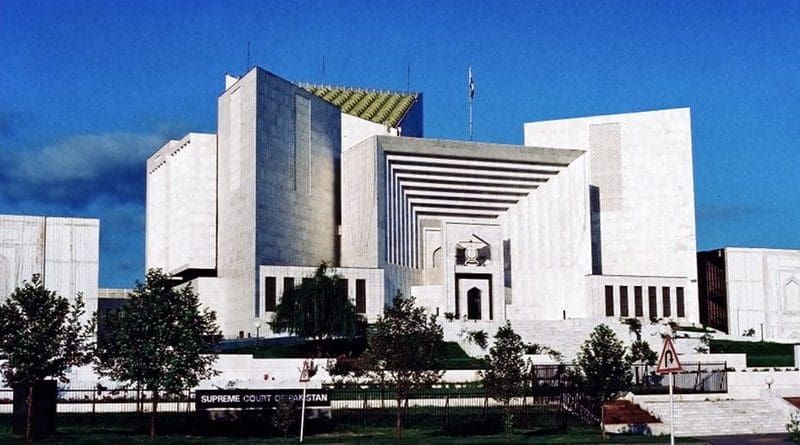
Strengthening Democracy And Justice: The Role Of Constitutional Courts In Pakistan – OpEd
The establishment of constitutional courts represents a significant advancement in the legal and political landscape of any nation. These specialized judicial bodies are tasked with interpreting and upholding the Constitution, thereby ensuring that the rule of law prevails, citizens’ rights are protected, and democracy is nurtured. In countries like Germany, Russia, Italy, France, and the United States, constitutional courts play a pivotal role in maintaining the balance of power among branches of government and safeguarding individual freedoms.
Pakistan’s journey since its independence in 1947 has been marked by political upheaval and inconsistent democratic governance. The judiciary, while a critical player in maintaining the rule of law, has often faced challenges related to independence and effectiveness. The demand for constitutional courts stems from the need for a dedicated mechanism to address constitutional issues and protect the rights of citizens.
Pakistan’s Constitution, adopted in 1973, enshrines fundamental rights and delineates the structure of government. However, the lack of a specialized body to interpret and enforce these provisions has led to instances of executive overreach and legislative impropriety. The establishment of constitutional courts could provide a solution by offering a forum dedicated solely to constitutional matters.
The establishment of constitutional courts specifically designed to handle constitutional issues could address these challenges effectively. These courts would focus on interpreting and enforcing the Constitution, ensuring that the rule of law prevails, and protecting citizens’ rights. By dedicating resources and expertise to constitutional law, Pakistan can enhance its judicial performance and create a more reliable legal framework.
Constitutional courts can serve as guardians of democracy by ensuring that all laws and governmental actions comply with the Constitution. By providing a venue for the adjudication of constitutional issues, these courts can check legislative and executive overreach, thereby reinforcing the balance of power among institutions.
In recent years, political polarization has severely undermined democratic processes in Pakistan. Constitutional courts can act as impartial arbiters in political disputes, helping to resolve contentious issues such as electoral disputes and the legality of government actions. This could restore faith in democratic institutions and processes, enabling citizens to participate in governance with confidence.
A robust constitutional court system would ensure that the rule of law is upheld in Pakistan. By interpreting constitutional provisions consistently, these courts can provide clear guidelines for the application of laws, reducing ambiguity and arbitrariness. This consistency is crucial for ensuring that all citizens, regardless of their status or position, are held accountable under the law.
Moreover, by establishing precedents in constitutional interpretation, these courts can create a framework that helps lower courts and legal practitioners navigate complex constitutional issues. This not only enhances the quality of judicial decisions but also fosters a culture of legal predictability, essential for promoting business, investment, and overall societal stability.
One of the most critical roles of constitutional courts would be to protect citizens’ fundamental rights. Pakistan’s Constitution enshrines various rights, including freedom of speech, assembly, and religion. However, the enforcement of these rights has often been inconsistent, leading to widespread violations and public disillusionment.
Constitutional courts can provide a dedicated platform for individuals to challenge violations of their rights. By adjudicating cases involving human rights abuses, these courts would not only offer remedies to victims but also deter future violations by holding perpetrators accountable. This could significantly improve the overall human rights landscape in Pakistan, promoting a more just and equitable society.
In addition to protecting civil liberties, constitutional courts can address broader socioeconomic rights, such as the right to education, health, and social security. By interpreting these rights within the constitutional framework, these courts can compel the state to fulfill its obligations toward marginalized and disadvantaged groups.
This focus on socioeconomic rights could also lead to more equitable policies and resource allocation, ensuring that the most vulnerable populations receive the support they need. As a result, constitutional courts could play a transformative role in fostering social justice and reducing disparities in Pakistan.
Pakistan’s political landscape has often been marred by conflicts between various institutions, such as the executive, legislature, and judiciary. These disputes not only hinder effective governance but also erode public confidence in institutions. Constitutional courts can serve as mediators in these conflicts, providing authoritative interpretations of constitutional provisions that delineate the powers and responsibilities of different branches of government.
By clarifying jurisdictional boundaries, constitutional courts can prevent encroachment by one institution into the domain of another. This would enhance cooperation among institutions and promote a culture of mutual respect, essential for a functional democracy.
In addition to resolving disputes, constitutional courts can promote accountability among institutions by adjudicating cases related to abuses of power. By holding institutions accountable for their actions, these courts can deter corruption and malfeasance, reinforcing the public’s trust in governance.
Moreover, the establishment of constitutional courts can encourage institutions to adopt more transparent practices, as they will be aware that their actions can be scrutinized by an independent judiciary. This could foster a culture of accountability and integrity within Pakistan’s political and administrative systems.
One of the most significant advantages of constitutional courts is their potential to establish consistent legal precedents. By providing authoritative interpretations of constitutional provisions, these courts can create a body of jurisprudence that guides lower courts and legal practitioners in future cases. This consistency is crucial for ensuring that similar cases are treated similarly, fostering fairness and justice in the legal system.
Drawing inspiration from the experiences of constitutional courts in countries like Germany, the United States, Italy, France, and Russia, Pakistan can create a framework that not only safeguards fundamental rights but also promotes accountability and civic engagement. However, realizing this vision will require overcoming significant challenges, including ensuring judicial independence, raising public awareness, and building the capacity of the judiciary.
As Pakistan continues its journey toward a more democratic and just society, the establishment of constitutional courts can serve as a beacon of hope, ensuring that the rights of citizens are protected, and the rule of law prevails. In a nation where political turmoil has often overshadowed the aspirations of its people, constitutional courts can provide the necessary foundation for a brighter future built on justice, equality, and democratic governance.
Furthermore, constitutional courts can play a vital role in protecting fundamental rights, addressing socioeconomic disparities, and promoting accountability among institutions. By fostering a culture of legal predictability and clarity, they can enhance public trust in the judiciary and democratic institutions.
As Pakistan navigates its complex political landscape, the introduction of constitutional courts could mark a significant turning point. By prioritizing constitutionalism and the rule of law, Pakistan can move towards a more just, equitable, and democratic society, where the rights and freedoms of every citizen are upheld and protected.

Like what you read?
Please consider supporting Eurasia Review. Thank you for your consideration!
