
Strategic Investments And Rejuvenated Faith In US-Pakistan Relations – OpEd
America’s interaction with Pakistan was always security partnership and development aid-focused. The tested and true relationship has now, however, moved away from being a dependency-friendly relationship and transformed into a higher-strategy alliance with more emphasis on the sectors of technology, energy, and minerals on economic fronts. The two countries are eager to rejuvenate their strategies along with transforming global trends along with respective country-specific national interests.
This new course of action was reaffirmed last month too when former U.S. President Donald Trump made historic remarks in public stating growing cooperation with Pakistan in the realm of rare earth to be a “strategic priority” of both nations. This was a sharp policy shift from previous policies and was accompanied by real changes in trade and tariff policy. Pakistan enjoys a preferential 19% import tariff from abroad—lowest in the entire region of South Asia—on regional rival India, which imposes 50% tariff. The preference is a reflection of America’s keenness to expand economic ties with Islamabad and be in a position to take leverage of the potential on offer in Pakistan as a grand regional power.
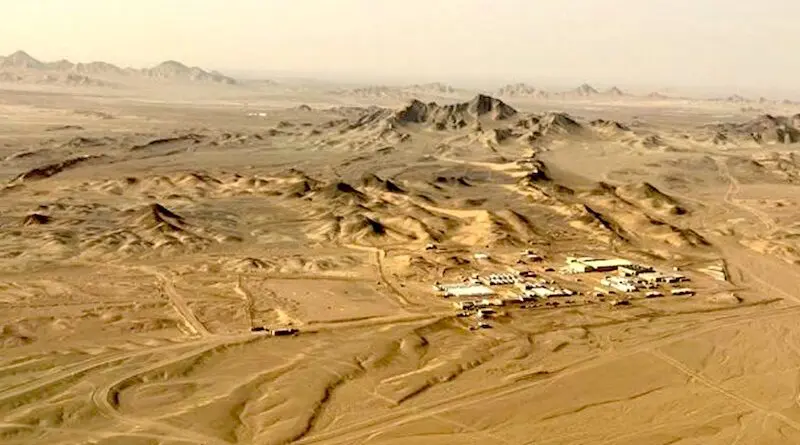
Pakistan might not be lacking natural resources but its mining sector has always been underdeveloped. The nation has enormous copper, gold, salt, and coal deposits but contributes only 3.2% to the nation’s GDP and 0.1% of international exports due to its mining industry. It is precisely such an evaluation of resources that now the Pakistani government is being given due attention to the mining industry in an expectation to diversify the economy as well as bring in foreign investment. Development of the sector can not only help decrease Pakistan’s dependence on traditional industry but also provide much-needed capital, technology, and human resources. Among the options, one of the finest prospects is the Reko Diq deposit in the south-western Pakistan province of Balochistan, one of the largest porphyry copper-gold deposits globally.
Reko Diq mineral reserves are approximately 5.9 billion tons of ore. Partly owned by Barrick Gold, it is the world’s largest unexploited copper-gold reserves. Its use will be an enormous contribution to the Pakistani economy in terms of revenue, employment, and industrialization of the country. Besides that, the possibility of having such rare earth minerals as valued at around $4 to $5 trillion, mainly found in Khyber Pakhtunkhwa and Balochistan, has imparted a new meaning to the mineral wealth of Pakistan. These strategic rare earths are used in high-technology industries and energy sectors around the globe, positioning Pakistan on the global strategic map. Taking advantage of this fact, the US and Pakistan took another step forward in September when they signed a memorandum of understanding (MoU) on strategic minerals.
The deal, signed on behalf of US Strategic Metals (USSM) by Zach Harkenrider, acting Deputy Chief, US Embassy Islamabad, and the Frontier Works Organisation, Pakistan, was seen as a breakthrough in bilateral relations. US officials placed special focus on the agreement as a testament to the waylaid alliance, the Trump administration considering acquisition of strategic mineral resources one of its highest national security and economic development priorities. USSM has Missouri as its base of operations and has manufacturing and recycling plants for minerals critical to manufacturing and energy, a persistent American interest in Pakistan’s mining sector. Specifically, Washington in August announced a $500 million US Strategic Metals investment, and Islamabad went the extra mile in attracting American oil and gas investment following President Trump’s comment that Pakistan has “massive oil reserves.” The economic development comes following months of heightened diplomacy and military cooperation between the nations following years of animosity.
The recent popular admiration of Pakistani Prime Minister Shehbaz Sharif and Field Marshal General Asim Munir by President Trump was viewed as a reassuring U-turn, showing good will on both sides. Other than that, Trump’s intervention to prevent an immediate war between Pakistan and India in May 2025 was received thoroughly in Islamabad with a Nobel Peace Prize nomination as one of the accolades, further strengthening the United States’ image as a good and trustworthy ally. As a step to cash in on this momentum, Pakistan Finance Minister Muhammad Aurangzeb announced that he would be hosting an investment conference in late October as a gesture of attracting American investors.
The government has never shied away from announcing the sectors where it would like to give highest priority, sectors where there indeed is a genuine need for growth and investment. This policy is a significant departure from the era of boom-and-bust economic fluctuations that have pursued Pakistan for decades and, instead, try to indulge in sustainable and stable growth. Pakistan’s recent fiscal fiascos, having come within an inch of defaulting in 2023 when a $7 billion IMF bailout package saved it, have fostered the quest for economic stability. The new policy of the government is to turn this fragile stability into stable growth with export promotion, investment in the mineral sector, and foreign direct investment.
To America, Pakistan is a geographically located ally at the intersection of South and Central Asia with the ability to diversify China-oriented supply chains at this moment. To Pakistan, the alliance represents access to high-technology in the form of investment, technological awareness, and highly sought-after investment to modernize its mining and energy infrastructure. It is not just an easy bartering economic partnership. This is a wider strategic alignment where economic interests converge with geopolitical interests.
This relationship is transforming away from its historically security-oriented axis towards an ever more mineral and energy-based axis. With prudent management, this relationship can drive the Pakistani economy and place Pakistan at the vanguard of world competition for strategic resources. This new relationship can pen the next chapter in US-Pak relations by unleashing a more balanced, bountiful, and visionary relationship.

Like what you read?
Please consider supporting Eurasia Review. Thank you for your consideration!
