
Analyzing Pakistan’s Mineral Strength – OpEd
Pakistan sits atop mineral wealth that could fundamentally reshape its economic destiny. The country is estimated to hold trillions of dollars’ worth of untapped minerals — including copper, lithium-bearing pegmatites, rare earth elements, and cobalt.
As global competition intensifies over minerals like lithium, copper, rare earth elements (REEs), and cobalt, Pakistan’s geological wealth positions it as a potentially significant player in the emerging mineral economy. yet the mining sector contributes less than 3% to GDP. This paradox of abundance amid underperformance reflects structural weaknesses, policy inconsistencies, governance challenges, and missed opportunities that have long plagued Pakistan’s resource management. Addressing these constraints could unlock transformative economic and strategic gains.
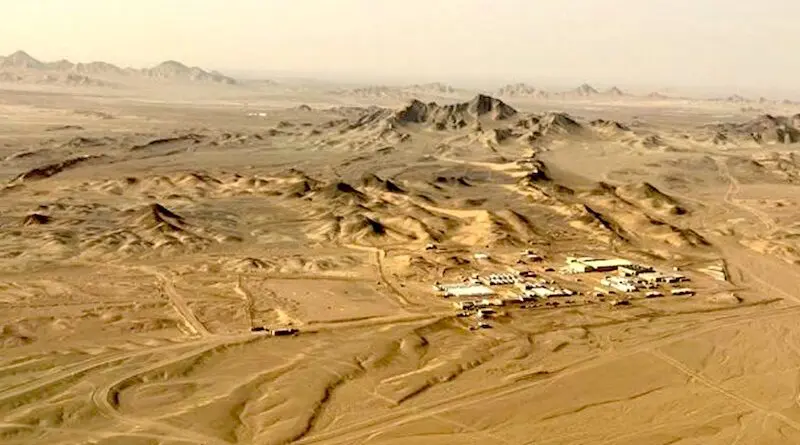
Among these vast resources, Reko Diq stands out as a flagship project poised to transform the industry: from 2028 onwards, it is expected to produce 200,000 tonnes of copper annually from one of the world’s largest undeveloped copper and gold deposits in Balochistan. Moreover, it will also generate $53 billion in wealth. But Reko Diq is only the beginning of Pakistan’s ambitions. Its soil harbors an array of high-demand minerals that underpin modern technology and industry: gold, crucial for aerospace and electronics; copper, essential for electricity, renewable energy systems, and construction; chromium, a key ingredient in wind turbines and solar panels; manganese, increasingly important in electric vehicle batteries and fertilizers; and zinc, vital for resilient infrastructure and automotive production.
Among these, antimony emerges as particularly strategic, currently under export restrictions in China yet indispensable for heat-resistant technology, superconductors, semiconductors, ammunition, and batteries. The sheer diversity and strategic value of these resources have drawn global attention. Analysts such as Leah Boyer Saifullah, senior policy advisor at the Critical Minerals Forum, emphasize that Pakistan’s mineral endowment positions it at the center of a rapidly intensifying global race for critical minerals, particularly between the United States and China. Unlocking this potential, however, hinges on modernizing a mining industry that remains technologically underdeveloped and on attracting international investment through platforms such as the Pakistan Minerals Investment Forum.
Yet translating mineral wealth into tangible economic growth presents formidable challenges. Security concerns, coupled with a historically fragmented regulatory landscape — once governed by six separate frameworks, eight legislative regimes, and 36 investment rules — have historically deterred investors. The Mines and Minerals Act 2025 seeks to simplify regulations and incentivize investment through tax relief and legal protections, though its success will depend on consistent implementation. Social and environmental issues add complexity: local communities near mining projects frequently report water shortages, pollution, and limited access to economic benefits, as much of the raw material is processed abroad. Nonetheless, progress is underway.
The Saindak copper mine in Balochistan is producing significant exports, mining contributed 13.6% to GDP in 2023–2024 with a growth rate of 4.85%, and lithium exploration in the Eastern Hindu Kush is responding to surging global demand. High-profile investments such as Manara Minerals and the China-backed Saindak expansion reflect rising international interest. At the same time, Pakistan’s gemstone reserves, ranking among the top five globally with 800,000 carats of ruby and 87,000 carats of emerald, further underscore its mineral richness. Recent discoveries, including $74 billion in copper-gold at Reko Diq over 37 years and PKR 700 billion in gold in Attock in 2025, highlight the transformative potential of Pakistan’s resources.
If harnessed effectively, these deposits could elevate the country to a strategically significant position in the global minerals landscape, offering a rare opportunity to convert latent wealth into sustained economic growth and technological leverage.
Pakistan’s critical minerals represent an unprecedented opportunity to reshape the country’s economic future. At a time when global powers are competing for secure access to lithium, copper, rare earths, and cobalt, Pakistan possesses the geological foundations for significant economic transformation. Yet the gap between potential and performance remains wide. Political instability, regulatory ambiguities, insufficient exploration, and infrastructure bottlenecks continue to hold the sector back.
If Pakistan can implement coherent policies, attract responsible investment, and build domestic capacity for processing and value addition, the mining sector could evolve into one of the country’s most significant economic pillars. The path forward is challenging, but the rewards—economic diversification, job creation, enhanced geopolitical relevance, and long-term sustainable growth—make it a prize worth pursuing. The time for Pakistan to unlock its mineral destiny is now.

Like what you read?
Please consider supporting Eurasia Review. Thank you for your consideration!
