
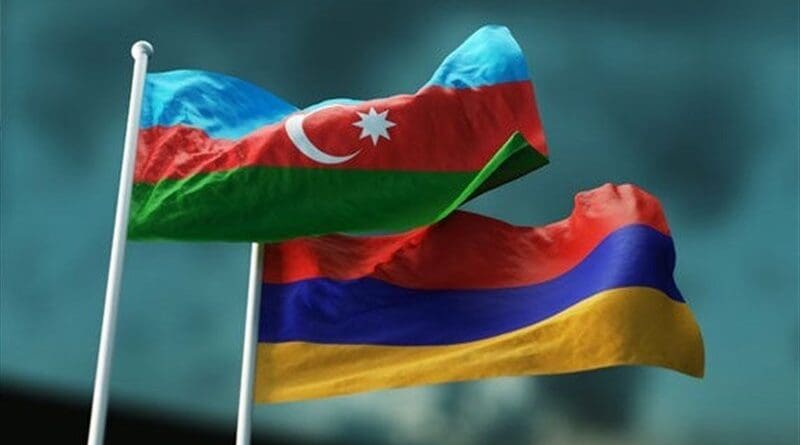
New Realities After The Second Karabakh War And Azerbaijan’s Peace Initiatives -OpEd
The victory achieved by Azerbaijan in the Second Karabakh War not only restored historical justice, but also formed an entirely new political-security architecture in the region. The post-war environment minimized risks and created a real foundation for peace initiatives.
One of the interesting and rare cases in the international relations system is that the victorious country immediately proposes a peace agreement after the war. Thus, in 2021 Azerbaijan presented Armenia with five basic principles for the normalization of relations, putting forward the most concrete and legally grounded proposal in this direction. These principles were the most open and logical format offered in Armenia–Azerbaijan relations over the past 30 years.
However, the existence of separatism in the territories of Azerbaijan at that time and Armenia’s policy aimed at buying time prevented the progress of the process. Despite Armenia’s verbal consent to peace, its actual behavior did not correspond to it. The mechanisms proposed by Azerbaijan were considered by Armenia not out of goodwill, but only after it was forced to accept the new reality created by consecutive political and military defeats.
Delimitation Process and Armenia’s Continued Provocations
In 2022, with Azerbaijan’s initiative, the Delimitation Commission was established between the two countries to clarify borders. The goal was to ensure border stability, prevent provocations, and create a legal basis for a peace agreement. However, Armenia continued its provocations on the border while also strengthening its illegal military presence in Karabakh by building fortified positions.
These actions openly hindered the peace process. Reintegration Initiatives and Calls for Dialogue Azerbaijan demonstrated a humanitarian approach by inviting the Armenian residents of Karabakh to direct dialogue, reintegration, and offering guarantees for their security. Concrete proposals regarding humanitarian support, social integration, and safety were presented to the Armenians living in Khankendi and other areas.
Despite this, separatist forces directed from Armenia increased the number of posts, installed surveillance systems, and carried out new provocations, escalating tensions.
Creation of Humanitarian Routes and the 2023 Anti-Terror Measures
In 2023, Azerbaijan took important steps both to ensure security and to expand humanitarian support: The use of the Lachin road for illegal military transport was stopped, Humanitarian cargo deliveries through the Aghdam–Khankendi road were proposed. However, Armenian armed groups intensified provocations, planted mines, and as a result, both civilians and military personnel lost their lives.
These provocations brought the tension in the region to a peak. As a result, anti-terror measures were conducted on September 19–20, 2023. These operations led to the complete neutralization of separatism, restoration of sovereignty, and the raising of the Azerbaijani flag over all territories.
Post-Separatism Period and Calls for a Peace Agreement
Immediately after the anti-terror measures, Azerbaijan announced once again that it was ready for the prompt signing of a peace agreement with Armenia. As a result of Azerbaijan’s consistent policy, Armenia was forced to approach the negotiations more constructively in 2024–2025.
Armenia began to abandon its previous tactics of prolonging the process by relying on mediator countries. Azerbaijan consistently emphasized that the most effective format is direct dialogue between the two states. During the meeting held in Washington in August of this year, the parties completed an important stage by initialing the peace agreement.
Thus, after the Second Karabakh War, Azerbaijan has been the country putting forward the most concrete and goal-oriented initiatives in military, diplomatic, legal, humanitarian, and economic spheres to ensure full and lasting peace in the region. The military victory was carried out in sync with diplomatic activity, and the existing realities in the region today were shaped precisely as a result of Azerbaijan’s policy based on international law.
This policy is the most favorable path for regional stability and a real alternative for long-term peace.

Like what you read?
Please consider supporting Eurasia Review. Thank you for your consideration!
