
Spain’s Energy Equation: Green Revolution Of Managed Risk? – OpEd
Europe’s energy crisis, the war in Ukraine, and gas price volatility have transformed energy policy from a technical discipline into a strategic national security issue.
In this landscape, Spain stands out.
As of 2025–early 2026, renewables generate approximately 56–57% of Spain’s electricity.¹ Coal has virtually disappeared from the system.¹ Carbon intensity has declined significantly.
On paper, this looks like a textbook success story.
But power systems are not built on percentages alone.
2025–2026 ELECTRICITY GENERATION MIX (%)
(Full-year 2025 data, rounded values¹)
• Wind: 23–24%
• Solar (PV + CSP): 19–21%
• Hydropower: 12–14%
• Nuclear: ~19–20%
• Natural Gas (CCGT): 17–19%
• Coal: <1%
• Other (biomass, waste, etc.): ~4%
Total renewables: ~56–57%
Low-carbon generation (renewables + nuclear): ~75–77%
WIND AND SOLAR: THE NEW BACKBONE
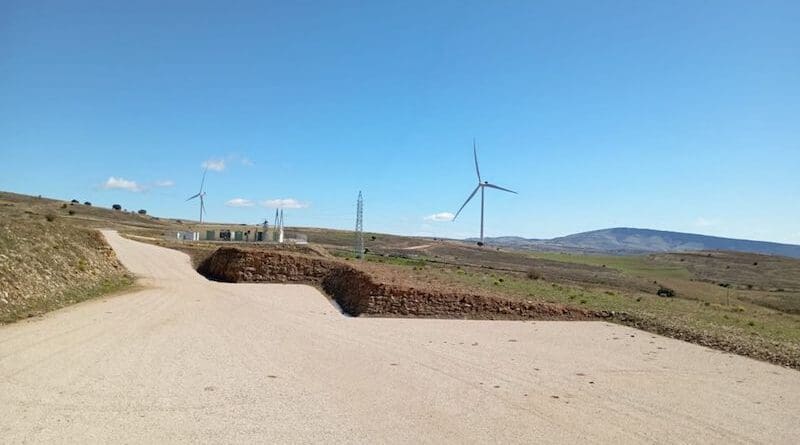
Wind remains Spain’s largest electricity source. Solar has expanded dramatically over the past five years, supported by strong irradiation conditions and competitive project economics.¹
Spain is now one of Europe’s leading renewable markets.
However, a structural question remains:
What stabilizes the grid when the wind slows and the sun sets?
NUCLEAR POWER: THE SILENT BACKBONE
Spain operates seven nuclear reactors supplying roughly 20% of total electricity.²
These plants provide:
• Continuous baseload generation
• Low carbon output
• Grid frequency stability
Under current national policy, Spain plans a gradual nuclear phase-out between 2027 and 2035.²
If implemented as scheduled, approximately one-fifth of stable generation capacity will exit the system.
The key question becomes: what replaces it?
NATURAL GAS: FLEXIBILITY PROVIDER
Combined-cycle gas plants generate roughly 18% of electricity.¹ They offer operational flexibility and rapid ramping capability, essential for balancing variable renewables.
In practical terms, Spain’s system stability today rests on:
• ~20% nuclear
• ~18% natural gas
This structural balance is often understated in political narratives.
IS SPAIN EUROPE’S GREEN POWERHOUSE?
Spain is frequently cited in international energy assessments as a leading example of renewable integration and grid modernization.³
Yet every power system must simultaneously achieve three objectives:
1. Reliability
2. Affordability
3. Decarbonization
Maintaining all three is the true engineering challenge.
THE STRATEGIC TURNING POINT: POST-2030
If nuclear capacity is retired as planned:
• Storage deployment must accelerate significantly
• Gas reliance may increase in the medium term
• Price volatility risks could rise
Spain has achieved remarkable renewable growth.
But the decisive test lies ahead: sustaining grid stability while removing nuclear baseload.
CONCLUSION
Spain today generates nearly 57% of its electricity from renewables — a major milestone.¹
However:
• Around 38% of generation still comes from nuclear and gas combined.¹
• Nuclear alone supplies about one-fifth of stable, low-carbon power.²
Spain’s energy transition is real.
But it remains structurally supported by conventional generation.
Whether Spain can preserve reliability after nuclear phase-out will define the next decade of its energy policy.
FOOTNOTES
- 1. Red Eléctrica de España, Sistema Eléctrico Español – 2025 Annual Electricity Generation Data and Early 2026 System Reports, Madrid.
- 2. World Nuclear Association, Nuclear Power in Spain – Country Profile, 2025 update (including 2027–2035 phase-out schedule).
- 3. International Energy Agency, Spain Energy Policy Review, Paris.

Like what you read?
Please consider supporting Eurasia Review. Thank you for your consideration!
