
Understanding The Balochistan Conundrum – OpEd
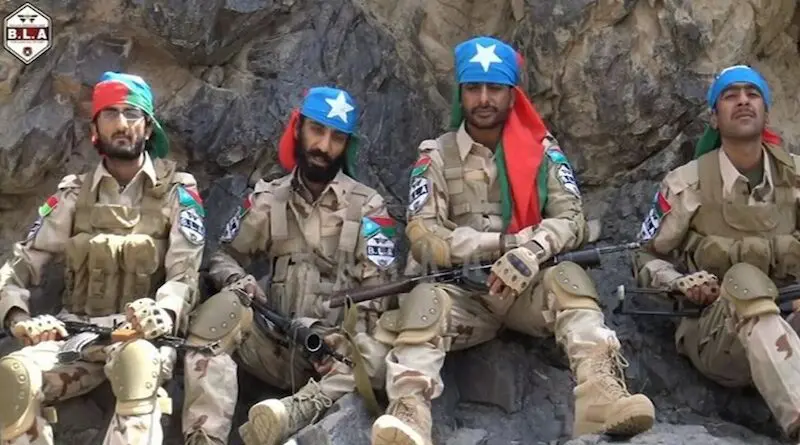
An anti-Pakistani faction, the Balochistan Liberation Army (BLA), an armed group, did not fully embrace the start of 2026 in Pakistan’s Balochistan. Armed with machine guns and rocket launchers, the militant group made an early morning appearance on Quetta’s highways on January 31 in 12 separate spots. They began attacking police stations and banks, destroying a significant number of disabled cars that were being held by the police. The law enforcement forces in Balochistan conducted a shot-to-kill operation on the militants in an effort to combat these persistent extremists. Many BLA officials, police officers, and civilians were killed in this action-reaction cycle. However, the outfit group carried out the strategy as intended and fought the law enforcement agents in Southern Baluchistan’s outreach areas.
This does not surprise us any further that the female youth of Balochistan are now part of insurgencies and militancy in Balochistan. Over 150 BLA militants were killed in southwest of Balochistan and 15 security personnel got killed. This has raised serious concerns upon the prevailing security order of Balochistan which seems to façade due to failed execution of policies and mismanagement of the government, since decades. It appears that Balochistan also remains on the chess-board for international players, however, the internal factors that contribute as a reason for the Great Powers and other States to exploit Pakistan’s internal fault lines.
The China-U.S. global dominance has entered into another level in order to meet their strategic achievements. It is well known that China is making significant investments in its “Belt Road Initiative (BRI)” in order to avoid the security conundrum it faces in the Pacific and Indian Oceans due to the strong naval and military might of the United States. China may become an unchallenged regional hegemon by defending its trade and economic interests. The United States has been making investments to strengthen bilateral ties with the nations in the area, with India that leads the ladder, in an effort to prevent that from occurring.
Pakistan has to keep this in consideration that Gwadar remains the strategic significance in terms of energy and economic corridors. Indispensably, an essential component of the Belt and Road Initiative, China-Pakistan Economic Corridor (CPEC) promises multibillion-dollar development projects as well as regional and economic industrial zones. Although the CPEC has the potential to revolutionize the game, a number of variables must be taken into account for it to succeed.
However, “the rights of Baloch and CPEC” are accompanied by a great deal of mistrust. Regardless of the veracity of these concerns, the seeds of fear stem from the Baloch people’s grievances and their prior interactions with several Pakistani governments. By voicing these concerns in international venues, the foreign powers whose interests clash with the development of this economic corridor are stoking the flames.
Certain multiple socio-economic in the Southwest of Balochistan remains constant realities. But, Baloch are asking for their share in the job quota and in the employment and opportunities under the flag of CEPC. Yet, their desire goes disregarded and this deprivation of fundamental right would end upon extended miseries. Grievances should be adhered strategically and politically before the fire takes the nation in to its flame, before it gets more vicious.
Statistically, the 33% of Balochistan are unemployed and 52% of the inhabitants are living below slandered lives, especially in Southern Balochistan, that means more than half of residents are not even earning $1.25 per day. These drastic issues would compel other evidently in anti-state approaches. This would not only endanger international interests but also could bring internal political and security order at risk. The federal and provincial authorities need to address certain grievances through pragmatic lens and let the peace prevail. Socio-economic deprivation brought miseries upon the lives of poor people such as, the lack of safe drinking water and cholera deaths among the population in the Pir Koh area are not unique to Dera Bugti (the location where natural gas was found at Sui). In the twenty-first century, when young people are developing software and starting businesses, young people in rural Balochistan are largely denied access to any form of connectivity, whether it be digital or physical.
The failed execution of policies appears to have given a chance to Indian authorities to further escalate the tensions for Delhi’s interest on the soil of Balochistan in collaboration with the separatist Baloch nationalist and tribal leadership. The Baloch nationalism movement is proving to be leverage against the growing China in the East, and the Major Powers have a number of interests in the region that they want to protect. Foreign players will continue to take advantage of the separatist elements, as well as the existing ethnic fault lines and complaints of the Baloch, to the detriment of China’s and Pakistan’s important interests if the legitimate concerns of the Baloch are not taken seriously.
In a nutshell, the goal of the international arena is to maximize national interests—namely, prosperity, security, and survival—by pursuing power. It is true that Balochistan, and more especially the Baloch ethno-nationalist movement in Southern Balochistan, has once again been susceptible to being used for the benefit of the big powers due to its geostrategic importance. To discourage anti-security peace, political and military leadership is required to ponder the grievances before it gets too late. World is rapidly moving; technological advancement is easily accessible. Unfortunately, if outfit organizations reached to have an access for advanced technology through proxy servers, it could further endanger the regional peace and national security. Rather than conducting seminars and talk shows, pragmatic approaches are supposed to be carried in order to meet peaceful ends. Because, that is not a matter of security but a matter of nation’s pride and legacy. Let youth carry the legacies of innovations and inventions rather carrying guns and bullets.

Like what you read?
Please consider supporting Eurasia Review. Thank you for your consideration!
