
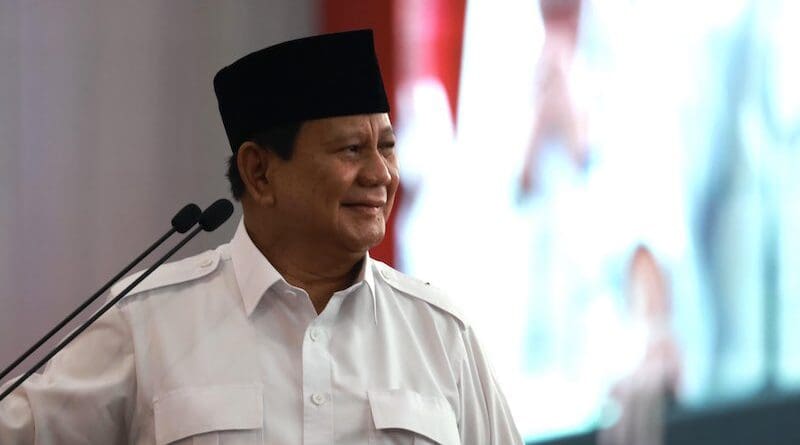
Bridge To Peace: Why Indonesia Under Prabowo Could Mediate Korean Tensions – OpEd
The conflict on the Korean Peninsula presents an opportunity for Indonesia, under President Prabowo Subianto, to serve as a mediator in contemporary diplomatic relations. As the largest economy and population in Southeast Asia, Indonesia’s non-aligned status and Muslim-majority democracy position Jakarta to navigate great-power rivalries while fostering extensive economic relationships across continents.
This paper argues that Prabowo’s dual expertise in defence, along with his successful mediation and negotiation skills and economic pragmatism, provides him with the credibility and networks necessary to facilitate dialogue between North and South Korea. Achieving his ambitions will require addressing regional scepticism about Indonesia’s influence in Northeast Asia and aligning national objectives with foreign policy goals. An analysis of Prabowo’s diplomatic successes in 2025 will evaluate his potential to act as an intermediary in the Korean conflict, highlighting his achievements with the United States, European Union, China, and Russia.
Through his defence-oriented leadership, Prabowo modified Western capitals’ understanding of Jakarta’s strategic goals. Through his military experience, he established direct communication with President Trump in July 2025 to secure a reduction of Indonesian steel and textile tariffs from 32% to 19 %. Washington officially endorsed this tariff adjustment as “a fantastic deal for both countries”, while restoring approximately USD 1.2 billion annually in trade revenue. The Trump administration valued Prabowo’s military experience because his security-first perspective matched their agenda , leading to successful economic negotiations. Through his ability to merge defence cooperation into economic partnership frameworks, Prabowo demonstrates his adaptable method of connecting security discussions with business deals.
During July 2025, Prabowo achieved the long-stalled Indonesia-EU Comprehensive Economic Partnership Agreement while simultaneously developing relationships with the European Union. The parties concluded a trade deal which eliminated tariffs on 80 per cent of Indonesian exports through a five-year agreement covering products from palm oil to footwear. The agreement shows Brussels’ belief in Jakarta’s governance reforms and market liberalisation progress because it will boost bilateral trade from USD 30 billion in 2024 to more than USD 45 billion by 2028. European Commission President Ursula von der Leyen described the agreement as a “diplomatic victory” to showcase Indonesia’s growing status as a reliable negotiation partner. The EU agreement helped Jakarta reduce its dependence on East Asian markets controlled by Beijing’s infrastructure credit, thus allowing Indonesia to develop relationships with multiple countries.
Through his relationship with China, Prabowo demonstrated Jakarta’s ability to maintain equilibrium. The funding from China for infrastructure development in Indonesia reached over USD 20 billion by 2025, supporting projects such as high-speed rail and energy development. During public statements, Prabowo reinforced Indonesian sovereignty claims in the South China Sea while maintaining strict adherence to the ASEAN Code of Conduct and avoiding confrontations. Through its strategic maritime position combined with Belt and Road Initiative participation, Jakarta preserved its economic relationships without compromising national security needs. Through assertive diplomatic actions and commercial practicality , Indonesia demonstrates to both Beijing and Washington that it will not face pressure into making strategic choices between them.
Through its past experience, Indonesia developed its position as a conflict mediator for several Asian disputes, which continued over multiple decades. During the late twentieth century, Jakarta facilitated peace in the Cambodian Conflict and acted as a host for dialogues that supported the Moro Peace Process in the Philippines and contributed to the South China Sea bridge builder and ASEAN’s code-of-conduct negotiations to reduce tensions between claimant states. Through its institutional knowledge and regional networks, Prabowo can start discreet back-channel talks among academics, retired officials and military experts to enable North and South Korean representatives to build confidence without formal diplomatic risks.
The process of transforming potential achievements into real progress in the Korean Peninsula remains difficult to execute. The North Korean government shows no interest in multilateral frameworks; thus, an ASEAN-led forum might not gain acceptance from Pyongyang, which typically seeks bilateral communication with Washington, Beijing or Moscow. The Kim Jong-un administration has refused numerous third-party “mini-lateral” initiatives because it views them as secret efforts to build alliances against North Korea. The deep-seated scepticism of North Korea requires Prabowo to use either humanitarian or non-traditional security issues, such as food security and climate resilience , because these topics need Indonesia’s urgent help and face less political sensitivity.
The South Korean government maintains wariness about Jakarta’s strengthening connections with both Beijing and Russia. Different administrations in South Korea have demonstrated changing levels of acceptance for intermediaries who maintain close relationships with Pyongyang’s alliances since Moon Jae-in pursued indirect talks in Switzerland, and following governments have maintained strong U.S.–ROK security alliance coordination. Prabowo needs to prove to Seoul that his Indonesian initiative supports the strong U.S.–ROK security alliance instead of creating any damage to it.
The domestic agenda of Indonesian voters stands in opposition to Prabowo’s foreign policy focus on the Korean Peninsula. The political agenda consists of economic stabilisation and food security, together with defence modernisation, since inflation is at 4 per cent and global commodity prices remain unstable. The rise of foreign policy activism in a distant region could face domestic criticism because it appears as a diversion from the nation’s key priorities. To sustain public backing, Prabowo should demonstrate how engagement on the Korean Peninsula delivers concrete advantages for Indonesian citizens through expanded export markets, together with strategic technology transfers and joint efforts on cross-border environmental problems.
The implementation of constructive engagement requires several practical entry points that can help overcome current challenges. Through ASEAN’s framework, the hosting of an annual “Bali Dialogue on Korean Peninsula Security” would create permanent opportunities for track 2 and track 1.5 exchanges by gathering scholars and military retirees , and non-governmental experts to develop confidence-building measures such as prisoner releases and joint environmental projects in the Yellow Sea and reciprocal de-mining operations in the Demilitarised Zone. Indonesia’s convening power allows the country to organise humanitarian corridors for North Korea rice and vaccine transport through the Bali Process framework while avoiding direct political requirements. The General Staff talks between Prabowo and defence establishments create possibilities for low-level military communications , which could serve as a confidence-building channel between the Koreas before they initiate official peace talks.
To conclude, President Prabowo Subianto exhibits the unique characteristic of being a good mediator. Through his diplomatic achievements with the United States, European Union, China and Russia in 2025, he demonstrated both his military-to-economic skill in navigating competing foreign powers. President Prabowo needs to focus on non-traditional security matters and humanitarian issues while ensuring that his efforts support the essential priorities of the U.S.–ROK alliance. Through effective Track 1.5 dialogues and ASEAN’s convening power, Indonesia could transition into becoming both a regional heavyweight and a vital peace conduit for one of the world’s most dangerous flashpoints. The fragmented and distrustful international system requires Indonesia under Prabowo’s leadership to establish connections which will make the country a vital force in global affairs.
The opinions expressed in this article are the author’s own.
References
- Reuters. “Indonesia says US trade deal reached after ‘extraordinary struggle’.” Reuters, 16 July 2025.
- Reuters. “EU, Indonesia strike political agreement to advance free trade deal.” Reuters, 13 July 2025.
- The Jakarta Post. “Prabowo’s S. Korean approach.” 9 June 2025.

Like what you read?
Please consider supporting Eurasia Review. Thank you for your consideration!
