
Redefining Counterterrorism: Pakistan’s Global Partnerships And The Quest For Regional Stability – OpEd
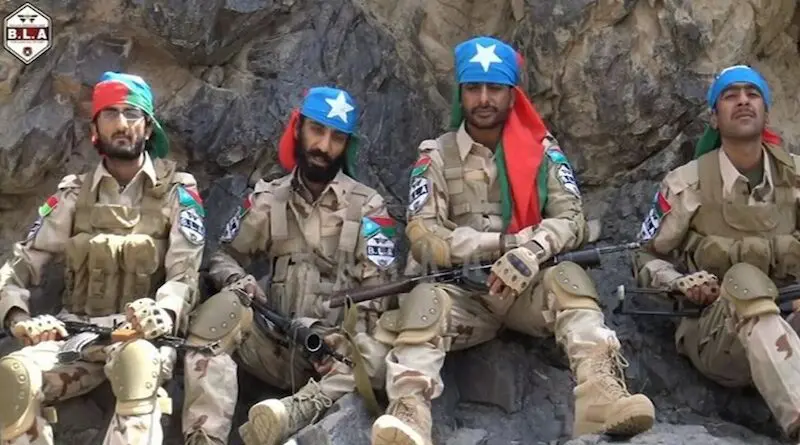
In August 2025, the United States officially listed the Balochistan Liberation Army (BLA) and its offshoot Majeed Brigade as Foreign Terrorist Organizations (FTOs) a milestone marking the end of Pakistan’s years-long diplomatic campaign to gain international recognition for groups destabilizing its southwest province.
This move, after years of Pakistan-U.S. strategic tension, is not only a milestone in counterterrorism; it marks the restoration of Pakistan’s global alliances and the recognition by the international community of its continued commitment to peace and stability in the region.
For years, Pakistan has been a frontline state in the war on terror worldwide. The U.S. action marks a shift from doubts to strategic re-entry, emphasizing that Pakistan’s counterterrorism narrative now more than ever is consistent with global security imperatives.
After the U.S. withdrawal from Afghanistan in 2021, Pakistan-U.S. bilateral ties went into limbo. The fall of the Afghan government, revival of the Taliban, and revival of militant havens reawakened Western fears of regional instability.
But as threats to the world transformed, Pakistan’s counterterrorism diplomacy went unassumingly into overdrive. Islamabad insisted that militant groups like the TTP and BLA were not political movements but terrorist outfits with foreign backing operating to destabilize Pakistan’s internal security and economic growth particularly in Balochistan, where the China–Pakistan Economic Corridor (CPEC) is located.
By August 2025, the U.S. formally endorsed this view. Declaring BLA as an FTO, after previously recognizing TTP in 2010, legitimized Pakistan’s consistent approach that terrorism, irrespective of geography or ideology, has to be addressed through global collective will.
This endorsement has not only rebuilt a damaged partnership but also positioned Pakistan back on the international counterterrorism agenda as a credible and responsible stakeholder.
Washington’s move was not a singular act, it was part of a larger reshuffling of regional strategy. With Afghanistan experiencing instability, Iran’s Sistan-Baluchestan province seeing fresh terror attacks, and naval weaknesses surrounding the Arabian Sea, the U.S. increasingly considers Pakistan a stabilizing anchor.
Islamabad’s effective lobbying for BLA’s international proscription came through intensive diplomatic coordination with allies like China, Saudi Arabia, and the Gulf Cooperation Council (GCC). Pakistan’s recent Strategic Mutual Defence Accord with Saudi Arabia combined with pro-active engagement at the Shanghai Cooperation Organization (SCO) has enhanced its diplomatic influence.
This grand strategic network of alignments is redefining how Pakistan is viewed no longer a “security state” but a regional balancer and a bridge between the West, Gulf, and East Asia.
The U.S. designation of BLA as a terrorist organization has also discredited the slogan of false equivalence peddled by separatist networks overseas, who for years tried to portray the BLA as a “freedom movement.” The international consensus has instead fallen in line with Pakistan’s position that such organizations pose a threat not just to Pakistan but to regional peace, foreign investment, and international trade routes.
Though military action has countered various militant networks, Pakistan’s leadership acknowledges that security, by itself, cannot eradicate extremism.
In Balochistan, Pakistan’s strategy now integrates counterterrorism with economic inclusion through CPEC initiatives, Gwadar Port development, and the integration of local youths in the job market and education schemes.
This dual-track approach lies in the realization that economic discontent is frequently hijacked by terrorist propaganda and that engaging with them deprives recruiters of appeal.
In addition, Pakistan’s intelligence collaboration with neighboring countries and Western nations has evolved considerably. With enhanced Financial Action Task Force (FATF) adherence, terror financing routes have been restricted, while the National Counter Terrorism Authority (NACTA) remains in the process of consolidating provincial initiatives into a national security paradigm.
These measures reflect Pakistan’s transition from reactive counterinsurgency to proactive counter-extremism, by effectively balancing hard and soft power tools.
Despite the progress, challenges persist. BLA and TTP continue to use cross-border havens and diaspora propaganda platforms to radicalize or mislead global opinion.
However, the tide is shifting. Pakistan’s case is increasingly being recognized at multilateral forums like the UN Counter-Terrorism Committee, the OIC, and the SCO Regional Anti-Terrorist Structure (RATS).
The alignment of Islamabad’s and Washington’s narratives on groups such as BLA and the continued engagement with the Taliban-controlled Kabul government shows a move toward comprehensive regional counterterror cooperation.
With the world shifting towards multipolarity, success in counterterrorism will be based on cooperative frameworks, not individual actions. The Pakistani case indicates that enduring stability is achieved by maintaining partnerships based on respect, intelligence sharing, and mutual understanding of security interests.
The U.S. move to declare BLA and its offshoot Majeed Brigade as terrorist organizations is more than a legal designation it is a diplomatic validation of Pakistan’s persistent counterterrorism policy.
Pakistan’s leadership, military and civilian, has shown that strategic patience, consistent diplomacy, and even-handed foreign policy pay long-term dividends.
With emerging alignments reconfiguring the world order, Pakistan is at the intersection of regional security architecture spanning continents, fighting extremism, and ensuring development-driven stability.

Like what you read?
Please consider supporting Eurasia Review. Thank you for your consideration!

“For years, Pakistan has been a frontline state in the war on terror worldwide.” What a lie. Former Pakistani president Pervez Musharraf admitted what India and the world have known for a while now — that the Pakistan government trained terrorists against India and pushed them into Jammu and Kashmir.In an interview to German magazine Der Spiegel, Musharraf said, “(Militant groups) were indeed formed.“In the 1990s, we supported freedom fighters in Kashmir….”
He essentially admitted that militant groups were cultivated as a tool of state policy to pressure India over the Kashmir dispute. Yet, the evidence is undeniable: Pakistan has become a global incubator and exporter of radicalism, not merely tolerating, but actively facilitating the training of terrorist organisations operating from Pakistan’s soil.
Earlier the State Department of the United States reiterated that they have been highlighting for decades Pakistan’s links to terrorist groups. That terrorists find a safe haven in Pakistan is a fact that India has drawn attention of global and multilateral forums for decades.
“Pakistan remains a dangerous place and vast number of Pakistanis have, arguably, given up on Pakistan”. Extract from Pak Editorials.