
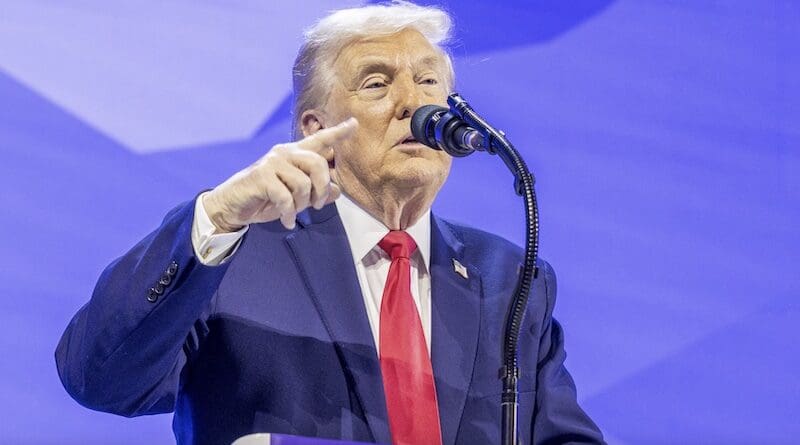
Donald Trump’s Second Term: Unconventional Policies And Emerging Outcomes – OpEd
Donald Trump’s second presidential term has been marked by bold and unconventional policies. While these initiatives have generated significant debate across the world, they have also begun to produce tangible results in several areas. By challenging traditional diplomatic and bureaucratic norms, this approach seeks to defend U.S. interests in a more direct and decisive manner. For this reason, it may be worth asking a question that is often dismissed too quickly: “What if Trump is right?”¹
One of the most notable initiatives has been the DOGE (Department of Government Efficiency) reform program. Through this effort, federal public-sector employment was reduced by approximately 300,000 to 320,000 positions, making it one of the largest workforce reductions in recent decades. The stated goal was to reduce excessive bureaucracy, improve efficiency, and ensure more effective use of public resources. Despite criticism, supporters argue that the reform has led to meaningful savings in government spending and has encouraged job creation in the private sector. Over time, a leaner government structure may benefit both U.S. taxpayers and the overall effectiveness of public administration.²
In Venezuela, the Trump administration adopted a firm stance against the Nicolás Maduro government, which has long been accused of repressing its population. Following allegations linking Maduro to narco-terrorism, drug trafficking, and weapons-related crimes, an operation conducted in January 2026 resulted in Maduro and his wife being brought to the United States. This action has been interpreted not only as an effort to pursue accountability but also as a strategic move targeting drug trafficking networks and their regional security implications. Proponents suggest that this development could contribute to easing the long-standing hardships faced by the Venezuelan people and support broader stability in Latin America.³
On immigration and border security, the strengthening of ICE (Immigration and Customs Enforcement)accelerated the detention and deportation of undocumented migrants. During 2025, hundreds of thousands of individuals were deported, with particular focus on those linked to serious crimes such as homicide, robbery, drug trafficking, and money laundering. These measures have been presented by the administration as concrete steps to improve public safety and reduce crime rates within the United States.⁴
The Greenland issue has re-emerged with important historical context. During World War II, when Denmark was under German occupation, the United States established multiple military bases in Greenland and assumed responsibility for its defense. After the war, Greenland was returned to Denmark, though the U.S. reportedly offered approximately 100 million dollars to purchase the island at that time. Today, Greenland is largely self-governing, with a population of about 57,000, and is covered by ice for much of the year. Despite this, its strategic location in the Arctic makes it highly significant for U.S. defense planning. The northern part of the island already hosts a U.S. military base.⁵
President Trump’s renewed focus on Greenland initially drew surprise and criticism. However, discussions conducted within NATO-related frameworks indicate progress toward a “framework agreement” that could balance competing interests. Such an arrangement may provide the United States with strategic access in the Arctic and cooperation on critical resources, including rare earth elements. A compromise centered on security cooperation, military presence, and resource sharing could address U.S. national security concerns while reducing tensions with Denmark and Greenland.⁶
Donald Trump’s unconventional—or “maverick”—approach may appear radical and divisive at first glance. Yet his efforts to reduce the size of government, confront authoritarian regimes, strengthen border security, and assert influence in strategically important regions have produced measurable outcomes. Rather than focusing solely on criticism, the international community may benefit from assessing these policies through a more objective lens. By challenging established assumptions, Trump’s approach has opened the door to alternative solutions—and this willingness to act decisively may, in time, receive broader recognition.⁷
Endnotes
- The phrase reflects ongoing debates in international politics about non-traditional leadership styles and outcome-based governance.
- Government downsizing initiatives have historically aimed to improve efficiency but often generate debate over service quality and employment impacts.
- U.S. policy toward Venezuela has combined sanctions, legal actions, and diplomatic pressure since the mid-2010s.
- ICE is the primary federal agency responsible for immigration enforcement within U.S. borders.
- Greenland’s strategic importance increased significantly during World War II due to its geographic position between North America and Europe.
- Arctic security and access to rare earth minerals have become central issues in NATO and U.S. strategic planning.
- The evaluation of unconventional leadership often depends on long-term outcomes rather than short-term political reactions.

Like what you read?
Please consider supporting Eurasia Review. Thank you for your consideration!
