
Contextualizing Pakistan’s Actions In Afghanistan – OpEd
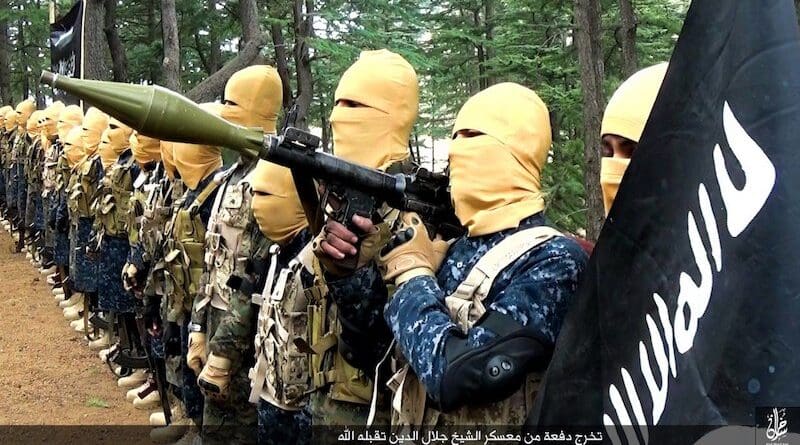
Terrorism remains one of the most critical challenges for Pakistan. The country’s war against this menace stretches to more than two decades. Since 2021, Pakistan has been facing a new surge in its counter terrorism struggle. The fall of Kabul, which offered space to the de facto Afghan regime, has now multiplexed the crisis. Neither the de facto regime distances itself from the terror groups nor does it take actions against the group as pledged in the Doha accord. This unresponsive behavior by the de facto regime has resulted in developing permissive safe havens for terrorist groups in Afghanistan- a fact clearly acknowledged by the latest Monitoring and Threat Assessment Report of the United Nations.
The latest trigger to the counter terrorism dynamics in South Asia is Pakistan’s defensive air strikes against Tehreek-e-Taliban Pakistan (TTP) and Islamic State Khorasan Province (ISKP) hideouts in Afghanistan. These air strikes were carried out in the aftermath of deadly attacks (Bannu attack and the Imambargah attack) by the two groups in Pakistan. Pakistan’s decision to launch aerial attacks against the groups must therefore be understood not as an act of aggression against the neighbor but as a justified act rooted in the principle of self-defense as standardized by the global rules and norms. The Ministry of Information and Broadcasting, Pakistan, has already cleared that the attacks were selective, proportional, and targeted only the terrorist hideouts.
The decision for strikes follows the series of deadly cross-border terrorist attacks inside Pakistan. Not only did these terrorist attacks result in the killing of innocent civilians, rather it targeted senior officials of the Pakistan Army as well. These terrorist incidents should not be viewed in isolation; instead, they denote a broader pattern of escalation linked with the presence of a permissive safe environment for these groups in Afghanistan. Long before the release of UNMT reports, Pakistan highlighted that a permissive safe environment for terrorists in Afghanistan poses considerable threats to the security of the region. The same threats were shared with the international community from the platform of the UN.
Pakistan’s actions are not isolated acts; instead suffice the global norms. Article 51 of the UN Charter mentions that international states possess the inherent right of self-defense. Pakistan, being a signatory to the UN charter, exercised its right of self-defense that cannot be constrained if the citizens of the state face an imminent security threat to their lives and properties. In addition to holding the right to self-defense, Pakistan has engaged Afghanistan at diplomatic levels as well. In Turkey and Qatar, Pakistan presented verifiable evidence of Afghanistan’s land being used against Pakistan. Pakistan decided to lodge an airstrike after exhausting all diplomatic efforts that were met with an unresponsive attitude of the de facto Afghan authorities.
Pakistan is not alone in highlighting the presence of terrorist groups in Afghanistan. This month, a UN report highlighted that Afghanistan houses multiple terrorist groups that exploit instability. The report mentions that from permissive safe havens in Afghanistan, these regional groups plan attacks against their targets. The report also notes that the number of terrorist attacks in Pakistan has significantly increased and nearly every one of these attacks traces back to Afghanistan. These attacks demonstrate that the de facto regime has failed to establish order despite the passage of nearly half a decade.
Why do Pakistan’s actions not account for escalation?
The critics of Pakistan view that Pakistan’s actions are a violation of the Afghan territory, and also, the country targeted the civilian population and not the terrorists. All such explanations of this event lack ground. Through the official press release, Pakistan has clarified that air strikes targeted terrorist infrastructure and were a response to recent mass casualty terrorist attacks in Pakistan. Before launching these strikes, Pakistan had raised the issue of cross-border terrorism multiple time through diplomatic channels. Pakistan’s official sources had cleared that cross-border terrorism would necessitate a defensive action. Lastly, the interim authorities of Afghanistan have a long history of controlling and using terrorist groups (many of which are internationally designated terrorist groups) for gaining strategic edge over rivals.
With Afghanistan, Pakistan has always preferred constructive engagement. Since the fall of Kabul, Pakistan’s government has worked to normalize Afghanistan’s position among the committee of nations; however, Pakistan’s constructive efforts have met cold response from Afghan de facto authorities. Pakistan demands mutual security cooperation with Afghanistan since Pakistan believes that in the absence of verifiable measures to combat terrorism, the dialogue on counter terrorism cannot progress. If viewed this way, Pakistan’s air strikes inside Afghanistan stands not as unilateral actions rather a measured and lawful exercise in wake of its self-defense.

Like what you read?
Please consider supporting Eurasia Review. Thank you for your consideration!
