
Healthy Futures Begin With Educated Women: Bridging The Gap Between Rural And Urban Health And Education – OpEd
The key to improving women’s and children’s health in rural Morocco lies in women’s education.
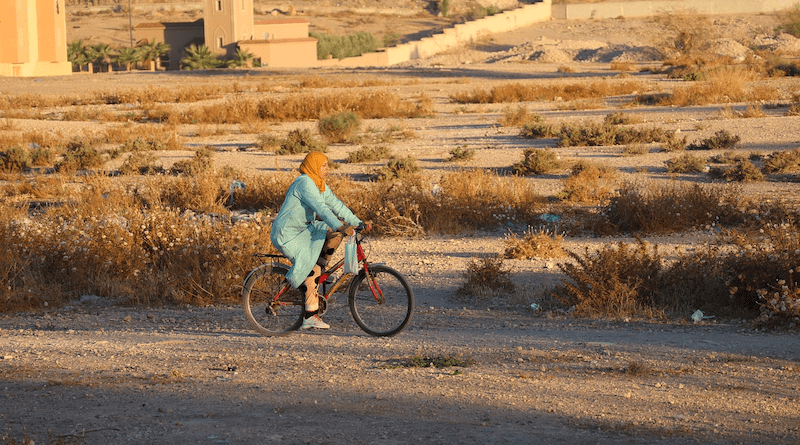
Morocco has spent the last twenty years making dramatic socioeconomic reforms, improving the lives of many Moroccans. In the bustling cities of Casablanca, Rabat, Tangier, and Marrakech, the effects of these economic reforms are evident in the day-to-day lives of those residing there. However, drive 30 minutes outside the city limits, and you will find yourself in a different Morocco. The socioeconomic realities of urban and rural populations are vastly different, especially for women. With 36% of the population living in rural areas, many Moroccans are left out of the transformation process brought about by these reforms, predominantly women.
The reforms in women’s education in the cities can be felt by many, with 90.5% of girls aged 15-17 attending secondary school in urban areas. But in rural villages, only 39.2% of girls aged 15-17 have access to secondary education. Rural women also face greater risks in pregnancy and childbirth than urban women. The maternal mortality rate in rural areas is two and a half times higher than that in urban areas. Infant mortality is 37% higher in rural areas. These disparities can be attributed to the distance to healthcare centers and other geographical barriers.
While the Moroccan government faces the challenge of connecting women in rural areas to the available healthcare systems, another solution could help both women and children in these communities. There is a link between maternal education and child mortality rates in developing countries, as shown by a 2015 article on this linkage in the context of Zimbabwe. Research in Zimbabwe indicates that access to education delays the age at which a woman has her first child. First-time mothers have higher mortality rates, so this delay increases the mother’s and child’s chances of survival. In this study specifically, one extra year of schooling represents a 21.5% decrease in child mortality.
In Morocco, the average age at marriage is 6 years later for women who have completed secondary education, which would result in women delaying the birth of their first child. The average age at first marriage for women is 2 years younger in rural populations than in urban communities. This statistic does not include marriages that are not legally recognized by the government, such as those for girls under the age of 18. There is no readily available data on the age difference at first birth between rural and urban populations in Morocco. However, based on marriage trends, it is more than likely that rural women are giving birth at a younger age than their urban counterparts.
Research has shown that increasing women’s access to secondary education decreases child mortality. Morocco faces issues with women’s access to education and child mortality rates in rural areas. So, if increased access to secondary education for women can help this generation and the next, how can the government enact this much-needed change?
There are three primary obstacles preventing women from accessing secondary education. These include economic, cultural, and infrastructure-related barriers. Limited economic resources often mean families prioritize boys’ education over girls‘. This barrier can be overcome by providing financial assistance to families with girls enrolled in school, as well as through programs that educate community members on the long-term economic benefits of women’s education. This includes benefits related to living standards, job opportunities, and their child’s health and wellness.
Education empowers women with agency and confidence, enabling them to make informed decisions about their lives and futures. Cultures worldwide often assign women to domestic responsibilities, leading to their education being viewed as unimportant or nonessential. This results in a lower enrollment rate for women compared to boys. Community education on the broader range of benefits that women’s education offers can help change the mindset towards women’s education.
The most tangible reforms needed to increase women’s access to education in rural Moroccan communities are infrastructure. Schools are often located far from girls’ villages and require transportation and adequate roads to be accessible. The cost of transportation to schools alone is enough to discourage girls from attending. Additionally, the schools themselves are often rundown and overcrowded. Due to the distance from villages, girls often have to live at the school, where dormitories sometimes lack electricity and bathroom facilities.
Communities need government investment in the infrastructure necessary for education. The investment in adequate roads, transportation, and school facilities would make it possible for many more girls to continue their secondary education.
Inequalities in women’s health and education are not unique to Morocco; they are seen across the globe. Morocco has the opportunity to direct its development towards rural communities, thereby aiding women’s health and education simultaneously. Morocco cannot make progress as a nation without bridging the gap in the lives of its urban and rural communities.
Bibliography
- ‘Child Marriage in the Middle East and North Africa – Morocco Country Brief’, United Nations Children’s Fund (UNICEF) Middle East and North Africa Regional Office in collaboration with the International Center for Research on Women (IRCW), 2017.
- Grépin KA and Bharadwaj P, ‘Maternal Education and Child Mortality in Zimbabwe’ (2015) 44 Journal of Health Economics 97
- Group WB, ‘A New Community Health Model in Morocco Puts Mothers and Children in Rural Areas at the Center’ (World Bank, 29 April 2025) <https://www.worldbank.org/en/news/feature/2025/04/29/a-new-community-health-model-in-morocco-puts-mothers-and-children-in-rural-areas-at-the-center> accessed 17 July 2025
- Impact of Gender Inequalities on Education in Morocco: An Economic Analysis of Barriers and Opportunities. (2024). International Journal of Civilizations Studies & Tolerance Sciences, 1(1), 18-27. https://doi.org/10.1016/haemsz87
- khouloud-haskouri, ‘Access to Education for Rural Moroccan Girls Jumps 34 Points in 20 Years’ (Morocco World News18 October 2021) <https://www.moroccoworldnews.com/2021/10/53906/access-to-education-for-rural-moroccan-girls-jumps-34-points-in-20-years/> accessed 18 July 2025
- ‘Morocco – Rural Population – 2025 Data 2026 Forecast 1960-2024 Historical’ (Tradingeconomics.com2025) <https://tradingeconomics.com/morocco/rural-population-percent-of-total-population-wb-data.html> accessed 18 July 2025
- Nuno A, ‘Morocco Invests in Education and Rural Infrastructure after Earthquake’ (European Investment Bank18 December 2023) <https://www.eib.org/en/essays/morocco-education-earthquake> accessed 18 July 2025
- UNESCO, ‘Q&A: Why Investing in Girls’ and Women’s Education Is a Smart Move’ (Unesco.org, 2024) <https://www.unesco.org/en/articles/qa-why-investing-girls-and-womens-education-smart-move> accessed 18 July 2025

Like what you read?
Please consider supporting Eurasia Review. Thank you for your consideration!
