
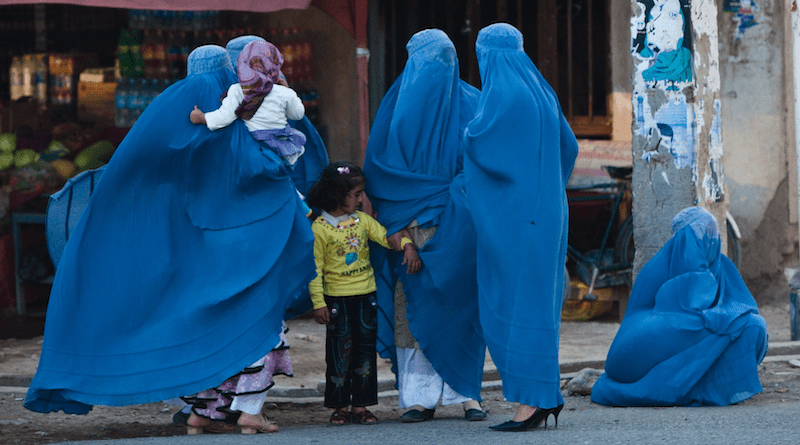
Shadows Of Survival: Afghan Women Struggle Under Taliban Restrictions – OpEd
Since the return of Taliban rule in 2021, Afghan women have faced an increasingly repressive environment, with their participation in public life severely curtailed. One of the most emblematic examples of this regression has been the nationwide ban on beauty salons, an industry that not only served as a rare safe space for women but also functioned as a vital economic lifeline for thousands of families across the country.
The crackdown on women’s economic autonomy has not occurred in isolation. It follows a broader, systematic effort to restrict female visibility and participation in Afghan society. Women have been barred from higher education beyond sixth grade, removed from most public-sector roles, and subjected to increasingly rigid codes governing their behavior and movement. Against this backdrop, the closure of beauty salons in 2023 marked yet another blow to women’s independence and agency.
Before the ban, beauty salons in Afghanistan represented one of the few industries where women could find employment, generate income, and support their families. With over 12,000 salons operating nationwide, the sector had become a vital component of female-led entrepreneurship. These businesses not only provided financial stability for countless households but also fostered social interaction in a society where women are largely isolated from public life.
Authorities justified the closures by claiming salons imposed unnecessary social and financial burdens. Yet the move was widely seen as part of a broader strategy to push women out of public spaces. It sent a clear message that female entrepreneurship and independence would not be tolerated, even in industries that primarily served other women.
Since the ban, many women have been forced into the informal economy, taking up unskilled, low-paying jobs behind closed doors. These roles are often precarious, lack legal protections, and expose women to heightened risk of arrest or harassment. In a country ravaged by four decades of war, where many men are either dead, disabled, or unemployed, Afghan women have emerged as the primary earners in many families. Yet, they are being systematically denied the means to fulfill this role.
The government’s recent approach to female employment has taken a more controlled tone. Officials now claim to permit women to work in specific sectors particularly those involving education, health, or gender-segregated marketplaces. Women may work in girls’ schools, female hospitals, or sell goods in women-only markets. However, these opportunities are narrow in scope and fail to address the broader employment gap.
Even within these approved sectors, women face significant hurdles. They are often required to be accompanied by a male guardian to travel, and vague, inconsistently enforced rules create a constant climate of fear. Businesses are reluctant to hire women due to uncertainty about regulations and the possibility of punitive action. As a result, many qualified and experienced women remain unemployed, unable to contribute to their households or communities.
The worsening economic conditions in Afghanistan have only deepened the crisis. The withdrawal of international aid especially after the U.S. halted most humanitarian and development assistance has shrunk local economies and dried up support for small businesses. Women-led startups and informal ventures are facing falling revenues, increased costs, and little hope for investment. The lack of funding opportunities has stalled many efforts to create or sustain independent livelihoods.
In response, some women have turned to online businesses, selling goods through social media or messaging apps. Digital platforms offer a degree of anonymity, allowing women to maintain income streams while minimizing risk. But even this space is shrinking, as customers cut back on spending and the infrastructure needed to support digital commerce such as reliable internet and financial services remains limited or inconsistent.
While officials point to isolated examples of female participation in economic activity, these are exceptions rather than the norm. The reality is that most Afghan women have been pushed into the shadows, with little opportunity for meaningful employment or advancement. The beauty salon ban was not simply about a single industry it symbolized the broader rollback of women’s rights, visibility, and independence in the country.
Despite these constraints, Afghan women continue to persevere, demonstrating resilience in the face of adversity. But without structural reforms, renewed international engagement, and dedicated support for female-led initiatives, their struggle for autonomy and livelihood will remain a quiet fight, waged in the margins of a society that has all but shut them out.

Like what you read?
Please consider supporting Eurasia Review. Thank you for your consideration!
